How Vendors Are Embedding AI Into Insider Threat Monitoring Without Multiplying False Positives
New AI tools evaluate user context and data meaning to slash insider threat false alarms.

AI-native insider threat platforms cut false positives by evaluating context, identity, role, behavioral history, data meaning, and destination. That shift is the central change happening in insider threat detection right now, and it separates a new generation of tools from the legacy rule engines many security teams still run. The rest of this piece maps the specific mechanisms vendors are using to make that shift work, and what still has to be true for it to hold up in production.
Why static rules generate noise by design
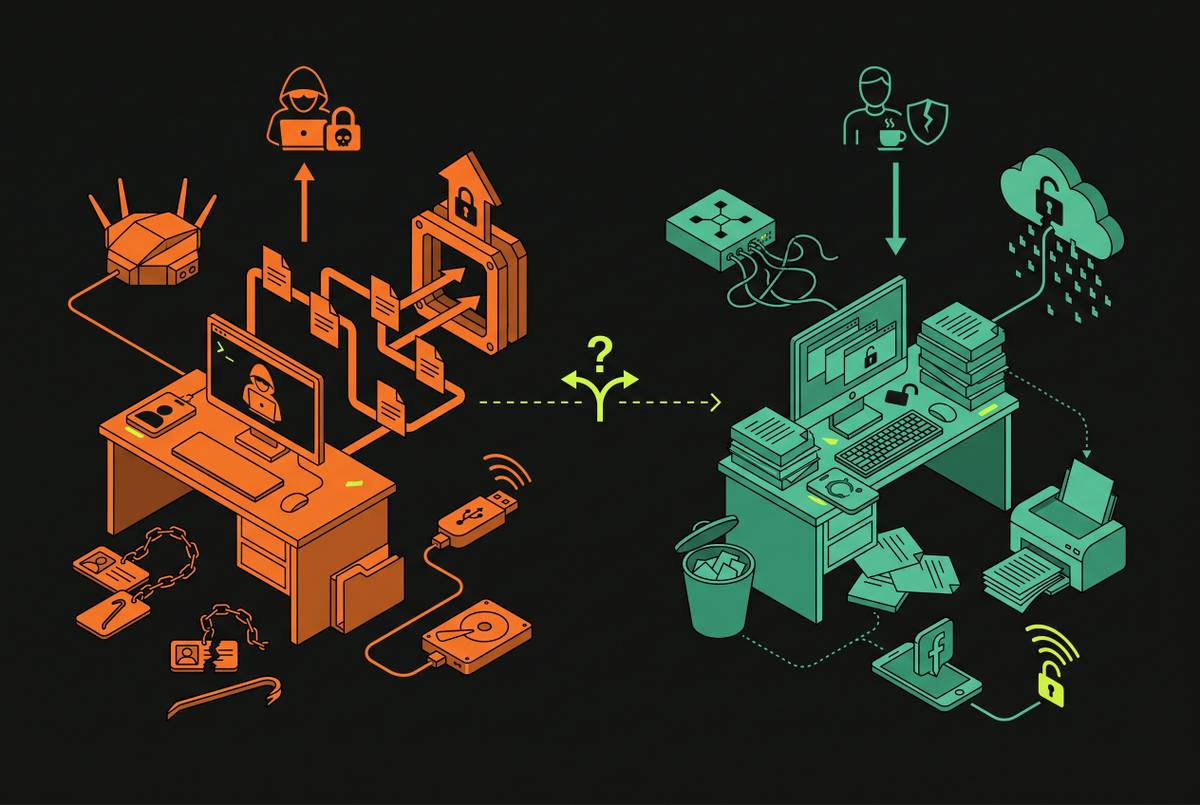
Rule-based insider threat tools generate false positives for a structural reason, not an implementation flaw. Matching events against a predetermined pattern is the wrong model for judging human behavior, because a rule can only describe how data moved, not whether that movement was legitimate. A file transfer that violates a rule and a file transfer that doesn't look identical at the point the rule engine evaluates them. The context that would separate the two, who sent it, why, to whom, never enters the calculation.
Consider a policy that blocks outbound content containing 16-digit numbers, a common proxy for payment card data. Every one of those is a false positive, and every one is indistinguishable from a real exfiltration attempt at the moment the rule fires. The rule has no way to know that the number sequence simply belongs to an invoice template.
The downstream effect goes past noise. The genuinely dangerous event gets the same cursory glance as the invoice. A smarter rule can't fix that, because the problem was never the threshold. It was asking a pattern-matcher to make a judgment about intent.
Generative AI and the widened rule-matching gap
Employee adoption of generative AI tools has opened an exfiltration surface that legacy DLP was never built to monitor. Employees copy text, paste context, upload document snippets, and type free-form prompts into a model, and almost none of it passes through the control points legacy DLP was built to watch, which focus on file transfers and email attachments.
The gap here is less about visibility than about what happens at the moment of action. A tool that can see that a paste occurred but can't evaluate what was pasted, to which model, under which account, or in what business context, has no basis for an intelligent intervention decision. Seeing the paste is not the same as understanding it.
Static rules used to catch structured file transfers over managed channels, and that was the one category they could reliably catch. That is no longer where sensitive data predominantly moves. Behavioral DLP platforms built to profile activity across the full enterprise stack, including browser-based AI tool usage and unmanaged cloud destinations, can intervene at the moment a paste happens by evaluating what was pasted, where it went, and whether that pattern matches how the user normally works. Candor is one platform built on that premise, assessing a paste against the account's ownership context and the surrounding behavior rather than against a fixed list of prohibited strings. That distinction, between seeing an action and understanding it, is what the rest of this piece is about.
Why false positives become false negatives
Alert fatigue does more than waste analyst hours. It quietly degrades the quality of every investigation, a degradation that looks fine on every dashboard until a real incident appears. The metrics can't tell the difference, and neither can anyone reviewing them after the fact.
The miss stays invisible from inside the queue. It becomes visible only in a breach report, and by then the question has shifted from detection quality to incident cost. The signal that mattered, a job offer from a competitor landing minutes before a mass download, lived in HR and recruiting systems, and a rule engine never touches those.
Across cases like this, a consistent pattern holds: the activity was either authorized-looking, insider-originated, or occurred during a window when the rule-based system was watching the wrong signal. None of those failures is a tuning problem. Each one is a missing piece of context, in this case the correlation between an external job offer and a sudden change in download volume, that a context-aware system is built to surface and a static rule has no mechanism to even look for.
That departing-employee pattern, in particular, is the highest-volume archetype insider threat programs deal with, and the broader data backs up why a malice-focused detection model misses so much. Most insider incidents trace back to negligence and compromised credentials, not deliberate theft. If you tune a detection model primarily for the malicious insider, it throws false positives at that much larger negligent population while missing compromised accounts that never deviate from normal access patterns in any way a rule could flag.
The five signals context-aware AI evaluates
Context-aware detection doesn't work by setting smarter thresholds on the same inputs rule engines use. It works by evaluating a different set of inputs altogether: who the person is, what their normal looks like, what the data actually means, where it's headed, and what else is happening around the organization at that moment. Five signals do most of the work.
The first is a behavioral baseline built per user. The practical question for any platform is whether it supports per-user baselines at all, and whether it has enough event history behind each one to make the baseline meaningful.
The second is lifecycle and HR state. A new hire touching dozens of applications in the first week looks exactly like account-takeover behavior to a rule engine, and looks like ordinary onboarding to a system that knows the person joined yesterday. Lifecycle-event false positives, covering role transitions, onboarding waves, and bulk offboardings, rank among the highest-volume sources of structural noise in production identity and insider threat systems, and the fix is integrating the lifecycle platform directly into the detection feed.
The third is workflow and ticket context. Systems that don't integrate the ticketing system are stuck choosing between alerting on every reset, which is noise, or suppressing all of them, which is a blind spot.
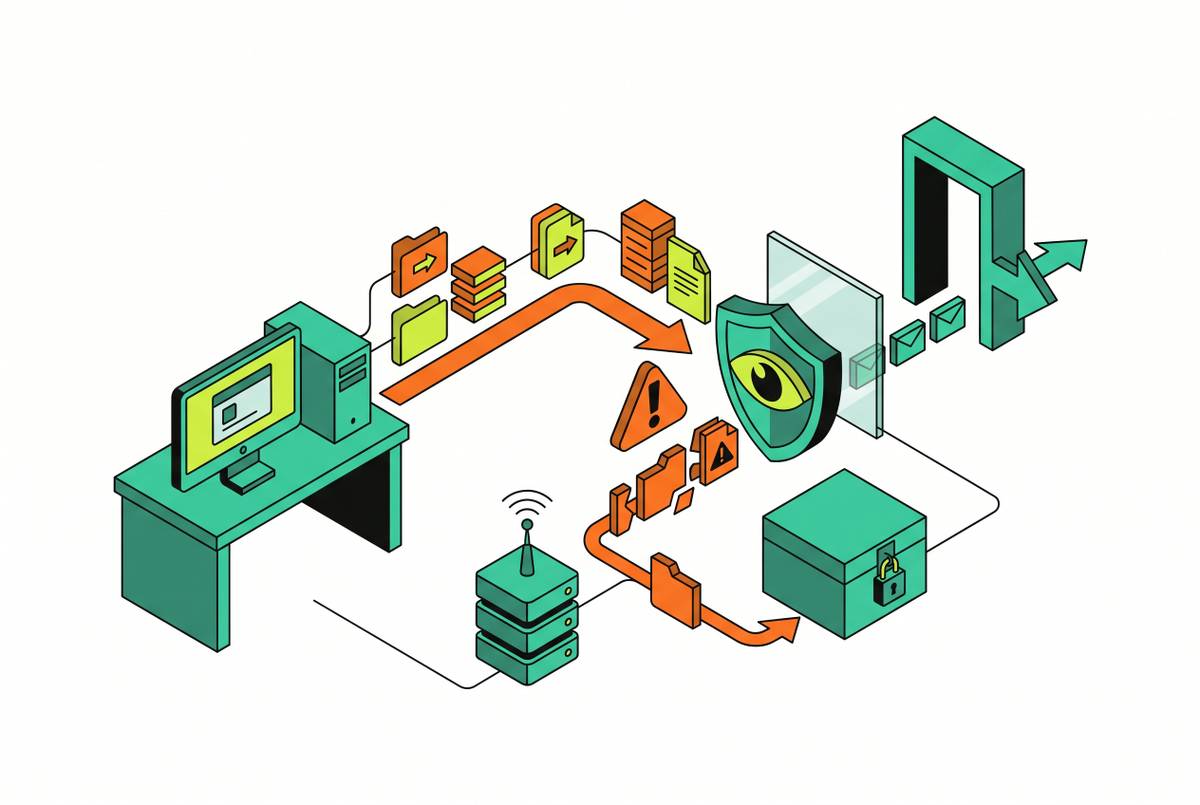
The fourth, and arguably the most consequential, is data meaning and destination. A system that knows only that a file moved has no way to assess risk from that fact alone. A system that understands what the file actually contains, whether it holds crown-jewel IP or regulated data, and whether it's headed to a sanctioned corporate tool, a personal cloud account, or an AI model session, can make an informed call. This is where real content understanding and destination awareness take over from regex matching, and it is the single biggest technical lift separating a context-aware platform from a rule engine with a machine-learning label on it.
The fifth is scheduled and change-management context. Pre-classifying scheduled events strips out an entire category of noise before it ever reaches an analyst's queue.
The common thread across all five is that the event itself rarely carries the signal. What matters is whether the event lines up with the user's history, their current lifecycle state, the workflow around it, and the nature of the data involved. If any one of those inputs is stripped out, the system, no matter how it's marketed, starts behaving like a rule engine again.
The AI methods vendors are deploying
Turning rich context into an accurate risk decision takes a combination of techniques, each addressing a distinct failure mode of rule-based detection.
Unsupervised machine learning anomaly detection spots deviations from a per-user baseline, so you don't need a pre-written rule for every scenario. Carnegie Mellon's Software Engineering Institute built the CERT Insider Threat Dataset v6.2, and researchers widely use it to test these methods against synthetic but realistically modeled enterprise behavior with ground-truth labels, so the field has a shared benchmark for how well anomaly detection actually performs.
LLM-based and iterative learning architectures push this further. Research into on-premises AI-based insider risk management paired an autoencoder neural network with LLM-generated recommendations, and it documented a 59% reduction in false positives alongside a 30% improvement in true positive detection rates. Those gains came from iterative feedback loops, where analyst dispositions retrain the model continuously, so the system improves with every investigation outcome.
Explainability deserves particular attention, because it answers the objection practitioners raise most often against AI-driven detection: that a black-box score isn't defensible. Explainability is the mechanism analysts use to validate a detection, catch model drift before it does damage, and build the record legal and HR need before an insider investigation moves to formal action.
AI-assisted triage changes the economics of the whole queue. That breaks the old assumption that every alert costs a fixed amount of analyst time, since low-risk alerts now get resolved without a human touching them at all, and what's left in the human queue carries a far higher concentration of genuine risk.
AI's dependence on underlying data integrations
AI scoring multiplies the quality of the signal it's given. It doesn't manufacture signal that isn't there. If a system applies machine learning to sparse or siloed telemetry, it produces confident-looking noise, not a meaningful risk decision, and that's what separates a program that actually sees its false-positive rate drop from one that just adds an AI label to its dashboard and wonders why nothing changed.
Without that context, the model simply assigns more confidence to the same blind spot a rule engine had.
An organization turns on a behavioral analytics layer without integrating HRIS, ticketing, and change-management feeds behind it, and that is the most common failure pattern. The model learns from incomplete telemetry and produces high-confidence scores on events an analyst would dismiss in seconds, because the system never knew the user was on a documented business trip or midway through a scheduled offboarding.
The integrations that matter most in practice are concrete and specific: per-user event history long enough to build a meaningful baseline, HRIS-driven lifecycle state visible to the detection layer, ticketing or workflow verification for high-privilege identity events, a change-management calendar for scheduled operational activity, and content understanding sharp enough to tell regulated data apart from operational noise in whatever's moving.
The usual objection is that tuning rules more carefully is cheaper than integrating five separate systems. The counter is direct: tightening a rule narrows what it catches at the same time it reduces noise, and the categories generating the most false positives, lifecycle events, scheduled changes, travel sign-ins, require context a rule engine can't derive from the event itself no matter how precisely it's written. No threshold adjustment can teach a rule what a job offer email means.
A context-aware insider threat platform with working integrations
Candor is built as an AI-native platform, and it combines modern DLP controls with behavioral detection and investigation across enterprise systems. Its architecture is unified rather than modular: content understanding, identity context, behavioral pattern, and destination awareness get evaluated together in a single risk decision, rather than arriving as separate alert streams an analyst has to stitch together by hand. The platform assembles a user's full behavioral timeline around a flagged event, so risk assessment hinges on whether an action fits the pattern of that person's legitimate access and role, not on whether it happened to match a predetermined rule.
Candor evaluates both the data and the person behind an action, what a piece of information actually means to the business rather than just whether it matches a regex or carries a label, where it's going, who is handling it, and the pattern of activity surrounding it across that user's history. Its behavioral detection isn't limited to statistical deviation. The design accounts for the reality that risk can exist from day one, stay statistically unremarkable throughout, or occur entirely through access the user was authorized to have, so the platform weighs intent signals and surrounding context alongside anomaly scores. It also addresses the shadow AI gap directly: controls over sensitive data moving through AI tools are built around what that data actually is, not just where it was sent.
Buyers weighing the field should understand other platforms on their own terms, including one that built its reputation on behavioral intelligence drawn from endpoint telemetry, tracking user activity patterns over time to flag deviations that suggest insider risk, and goes deep on monitoring at the endpoint and on supporting investigations that lean on long-run behavioral history. Darktrace applies unsupervised machine learning across network and cloud environments to build a model of normal organizational behavior, then flags deviations from that model in real time, and this approach extends naturally into broader enterprise security monitoring beyond insider risk.
Evaluating any of these against an older rule-based monitoring tool comes down to a short list of concrete criteria: whether detection runs on AI/ML behavioral analytics or static rule matching, how completely the platform covers endpoints, cloud, SaaS, and identity together, how much its approach actually reduces false positives rather than just relabeling them, whether it supports automated investigation and response instead of alert generation alone, whether it models risk predictively over time rather than reactively per event, and whether it monitors AI agent and generative AI usage at all, a category most legacy tools were never built to see. Measured against that list, the shift from static rules to context-aware AI is a different premise for what a detection system should be allowed to know before it decides something is wrong.