Behavioral Indicators of Malicious Insiders vs. Negligent Users
Context matters more than individual suspicious events when identifying insider threat types.
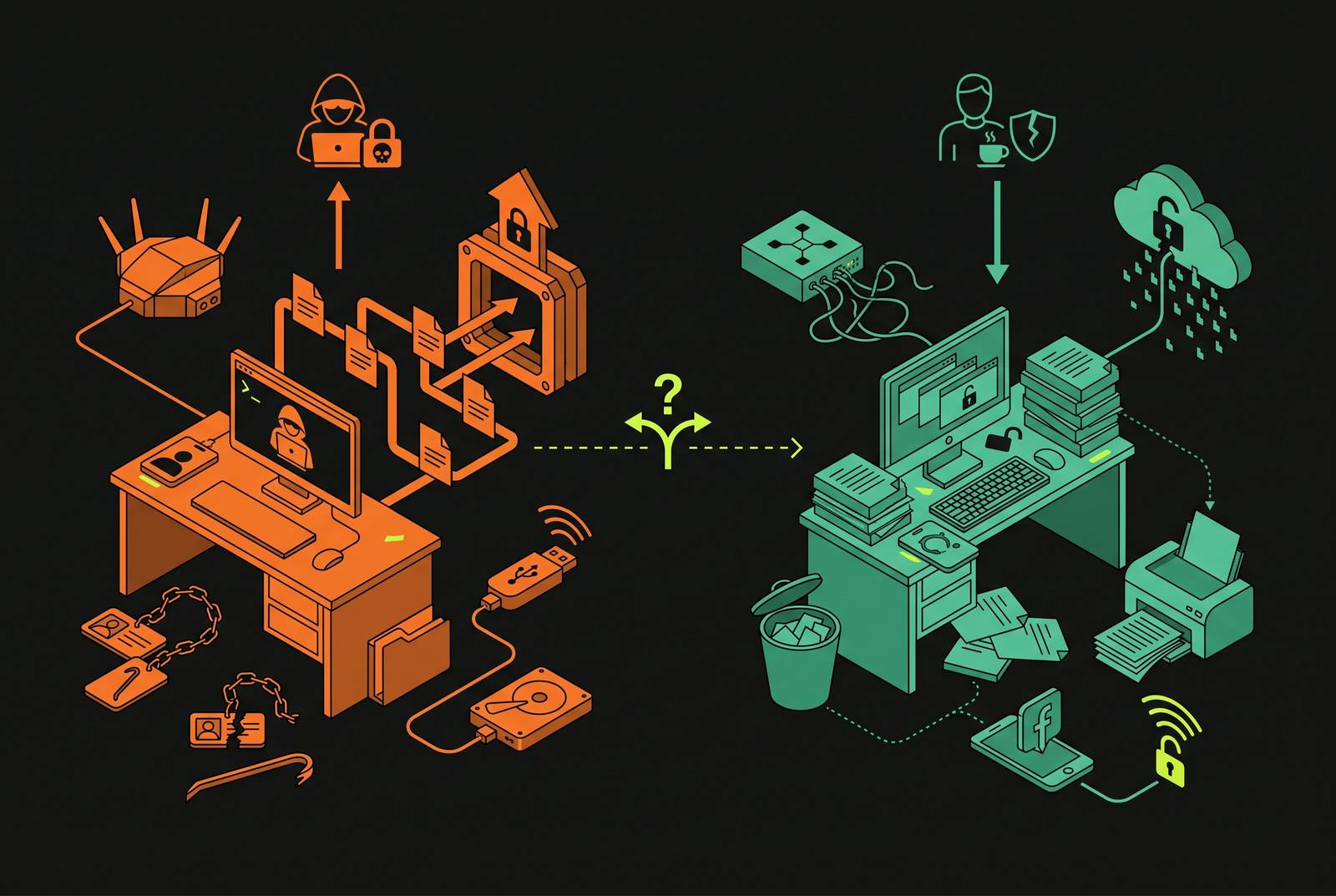
A file copied to a personal drive at 11 p.m. means nothing on its own. If a security team treats the insider threat population as a single risk category, it misses this distinction, and attention and response both end up misallocated. The population actually breaks into three distinct actor types with very different risk profiles: malicious insiders, who act with intent; negligent insiders, who act without hostile purpose; and compromised insiders, whose legitimate accounts have been taken over and weaponized by outsiders. CISA's definition of an insider spans employees, contractors, vendors, and any party granted access, so the population eligible to produce one of these three patterns is larger than most programs account for.
The numbers complicate the picture further. Malicious insiders sit between the two on both measures. The actor type that generates the most caseload for a security team is not the one that costs the most per event, and a program that doesn't separate the three will spend its resources in the wrong place on both counts.
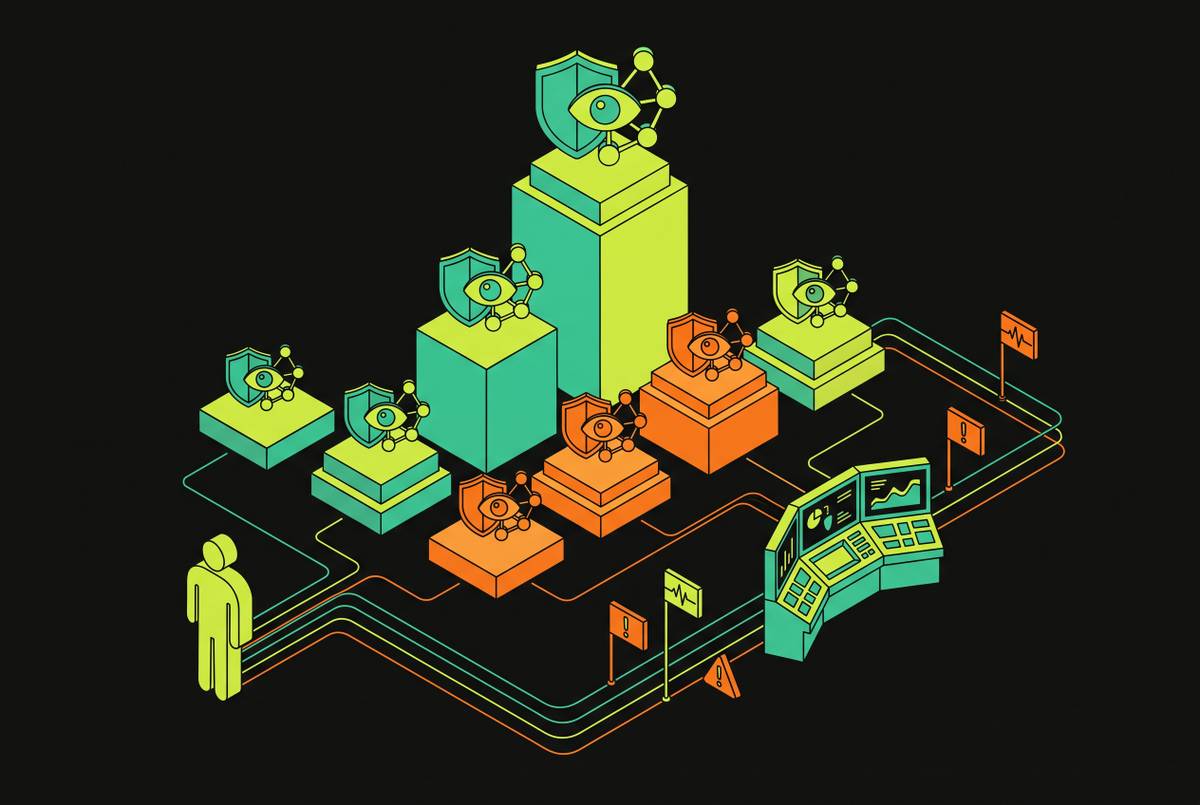
This is why the surface-level event, the file copied to an external drive, the large download, the late-night login, looks identical no matter which of the three actor types produced it. The distinction only becomes visible in what surrounds and precedes that event, not in the event itself. Platforms that assemble multi-source behavioral timelines rather than firing on isolated anomalies are built to surface exactly that kind of contextual pattern, and tools like Candor's are designed around the premise that context, not the artifact, is where the signal lives. A team that treats every anomaly as potential malice burns out its analysts on false positives. A team that defaults to assuming negligence misses the cases where the cost of being wrong is highest. The rest of this piece works through how to tell the three apart, and what has to change in a detection program once the distinction is taken seriously.
Malicious Insider Behavior as a Sequence, Not a Moment
What separates a malicious insider from someone who made a mistake is preparation, and preparation leaves a record. The behavioral trail before an incident, not the incident itself, is what carries the intent: privileged access quietly expanded over months, data staged in a personal cloud account well before a resignation is announced, an exfiltration event timed to land right after a job offer has already been accepted. Taken together, over a timeline, they describe a plan rather than an accident.
Technical signatures reinforce the sequence when they're read in context rather than as isolated alerts: logins that fall outside an employee's normal working hours, access originating from unusual geographic locations, simultaneous sessions opened from multiple locations at once, and data accessed at a rate consistent with automated collection rather than normal human use. Non-technical behavior often precedes the technical record and functions as an early warning rather than standalone proof: increasingly erratic or impulsive conduct, social withdrawal, unexplained changes in financial standing, and communications with competitors all appear in Flashpoint's 2026 analysis as observable indicators that tend to precede illicit activity. None of these on its own justifies an investigation, but combined with a technical pattern, it corroborates intent rather than coincidence.
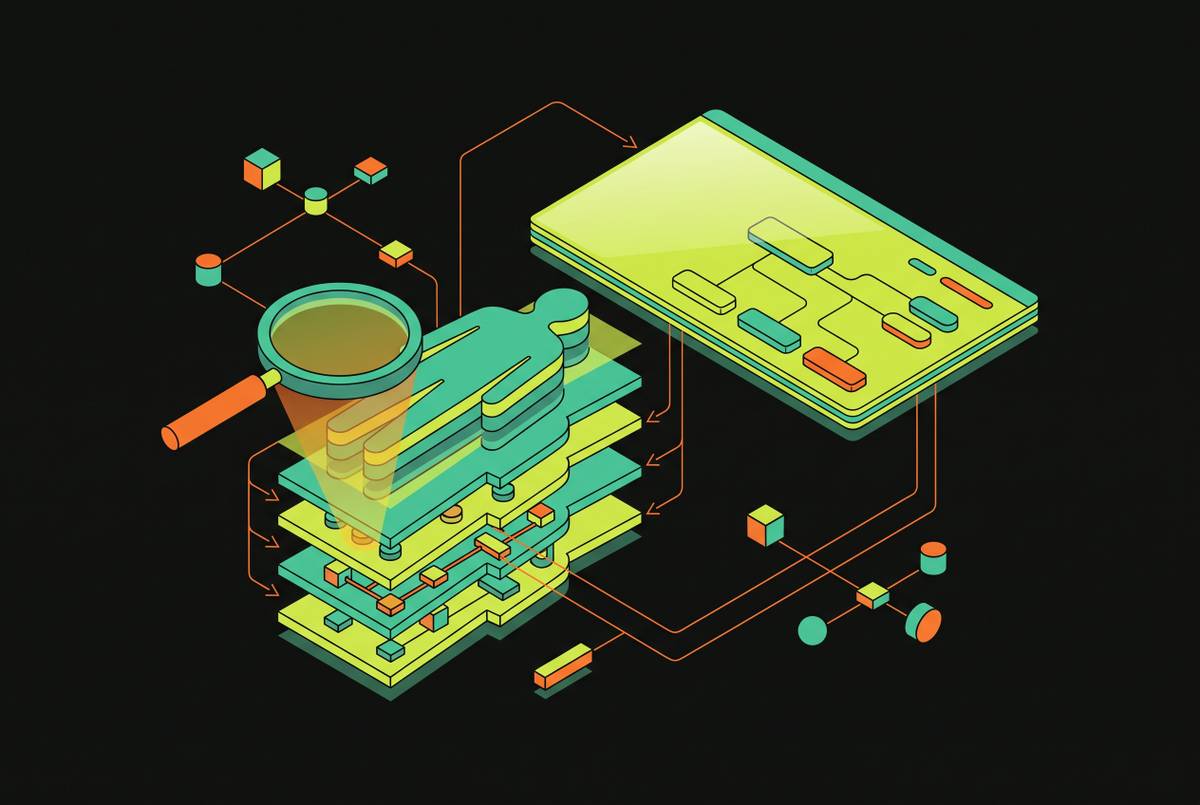
The highest-risk interval in this sequence is the resignation window. Exfiltration in this window is rarely a single clean hop from the source system to an external destination. That staging behavior is the detail a rules-based system is built to miss: it fires on the final hop, the moment data leaves the organization's perimeter, and in doing so loses the behavioral context that would have confirmed intent weeks earlier. If an investigation platform reconstructs the full activity sequence instead of isolating the last event, you can see the progression from preparation through execution, and that is what lets an analyst tell deliberate planning apart from a coincidence of timing.
Negligent Insider Behavior in the Same Data
Where malicious insider activity reads as a sequence, negligent insider activity reads as an absence of one. The harm produced is no less costly, but the record around it shows no staging, no privilege expansion, and no escalation. It's a single poor decision, or a habit repeated carelessly, not a plan carried out on purpose.
The common exposure modes bear this out: misconfigured cloud storage left open to the public, sensitive data sent to the wrong recipient, susceptibility to phishing, unauthorized use of cloud services, and workaround behaviors adopted for convenience rather than for any extractive purpose. Adaptive Security's 2026 guide cites a survey of employees, run between May and November 2025, that found these behaviors widespread and, in many workplaces, treated as normal rather than as a violation.
The data record for a negligent event looks like a single anomalous transfer with nothing building up to it: no prior access changes, no staging, no off-hours pattern. The event stands alone, and the user's surrounding timeline is otherwise unremarkable. That absence of sequencing is itself the diagnostic signal, and seeing it requires the same full behavioral timeline that makes the malicious pattern legible. Negligent incidents call for a different response than malicious ones: policy reinforcement, access hygiene, and training address the problem far better than an investigation posture built for intentional harm.
The two categories do overlap at the edges. An employee who repeatedly violates policy in small ways may be testing limits before escalating to something deliberate, so the line between carelessness and intent isn't a hard boundary but a continuum, and the surrounding pattern, not any single violation, is what determines where a given case sits on it. That overlap is itself a preview of a harder problem: what happens when the account behind the activity isn't even being operated by the person it belongs to.
The compromised insider and the third category that breaks both detection models
A compromised insider produces harm through access that is entirely authorized, which is precisely what makes the case hard: the attacker is deliberately mimicking normal behavior, so the record predicted by neither the malicious template nor the negligent one actually applies. This category covers credential theft, phishing-originated account takeover, coercion, and, increasingly, identity fraud committed at the point of hire.
One classic failure mode involves access that was never revoked. When a former staff member retains working credentials after departure, suspicious activity can go unnoticed for a long stretch of time. Behavioral monitoring of active users would not have caught this, because the problem was an offboarding failure, not a deviation in anyone's working pattern.
Endpoint detection caught the activity on July 15, 2024, and onboarding access was shut down within minutes of the first alert. Both Mandiant and the FBI confirmed the worker was a North Korean operator. Christina Chapman, sentenced in July 2025 to 102 months, 8.5 years, in federal prison, ran the infrastructure side of this same scheme from Arizona: a laptop farm at her home hosted computers for US companies while she shipped laptops and other devices overseas, including to a city on the Chinese-North Korean border, and she was ordered to forfeit the proceeds. Over four months, the pod of operatives behind that single application applied for 170,000 positions and landed 76 of them, a ratio that says as much about the failure rate of passive hiring controls as it does about the scheme's ambition.
What makes this case structurally different from the first two is that behavioral baselines are meaningless when the persona never deviates from normal onboarding behavior. The operator performs the job competently, bills hours, accumulates access, and does nothing a monitoring system would flag as anomalous. The only signal available lives outside the behavioral record entirely: the shipping address a company laptop was routed to, the VPN path the connection takes, the provenance of the identity documents submitted at hire. None of this is a baseline deviation. It's a structural limit on what behavioral detection, by itself, can ever be expected to catch.
Accompanying Behavioral Baselines
A deviation from baseline has to become visible inside the system before behavioral detection fires, so it arrives too late for compromised accounts, fabricated personas, and some pre-resignation exfiltration that never leaves the bounds of normal access. If an operator has studied the baseline, or if an employee performs legitimate work while quietly staging a later exfiltration, you get no deviation to detect until the moment of extraction itself. That's a limitation on what behavioral monitoring can deliver that better tuning can't close.
Identity intelligence closes part of that gap because it works earlier in the timeline. If you can detect exposed workforce credentials, stolen session cookies, and identity artifacts circulating in criminal infrastructure before they're weaponized, you get a signal that exists before any behavioral deviation occurs. Flashpoint's 2026 analysis found that threat actors published an average of 1,162 insider-related posts per month in 2025 as they recruited for and solicited insider access, and that volume shows this is an active market with its own visible footprint outside the firewall. Early signals of risk often originate there, in financial distress, in changes to a person's public behavior, in contact with competitors, in activity visible only outside the corporate network, and a program that monitors only network-bound indicators misses the window when intervention is still cheap.
The DPRK hiring cases make the point concrete. AI-generated resume floods, deepfake interview video, synthetic identity documents, and laptop-farm proxy routing are all detectable, but only at the hiring and onboarding stage, through identity verification controls, hardware telemetry, and external threat intelligence. None of those controls is a behavioral baseline. Behavioral pattern analysis and identity or external intelligence aren't competing approaches to the same problem: they cover different parts of the timeline. Behavioral detection handles the insider who is already inside the organization and is deviating from established patterns. Identity intelligence and pre-hire controls handle the compromised or fraudulent persona who never deviates, because the baseline itself was built on a false identity from the start. A program that wants to cover both needs to extend its detection perimeter past endpoint anomalies and internal misuse, into pre-hire identity assurance, disciplined offboarding revocation, and external threat intelligence feeds that cover what happens before an employee, real or fabricated, ever logs in.
How Legacy DLP Tools Fail at the Malicious-Versus-Negligent Distinction
Legacy DLP tools evaluate individual events against static rules, so if a planned exfiltration and an accidental misdirected email happen to touch the same data type, they produce the same alert. The rule engine can see that a file moved. It has no way to know whether the move was expected for that particular user, whether the destination was unusual, or what happened in the days before the file moved. Context, the thing that actually separates malice from carelessness, sits entirely outside what a regex pattern or a keyword match is built to evaluate.
The operational consequence of that blind spot is volume. A large share of DLP alerts never get investigated at all, because the sheer number of them outpaces what any analyst team can work through in a week. Analysts spend their time closing tickets that were never a real risk, while the events that mattered most sat in the queue looking just like routine work. Most DLP deployments run at a scale of hundreds of alerts a day, and a team can't reconstruct the surrounding behavioral timeline for each one by hand, so the malicious-versus-negligent distinction this piece has been building toward becomes practically impossible to apply at the point of triage.
Generative AI makes the gap unmistakable. A summary, a translation, or a paraphrase of sensitive content can carry everything that made the original worth protecting, even when it holds none of the original text that a keyword filter was built to catch. The negligent behavior documented in Adaptive Security's 2026 guide, employees routinely feeding sensitive work material into personal AI tools, represents a leak channel that static, pattern-matching DLP cannot see by design, not because the rule set was poorly tuned.
What behavioral DLP actually examines to make the distinction operationally viable
Behavioral DLP replaces a single question, did this action violate policy X, with a harder and more useful one: is this action normal for this specific user, in this context, given what the timeline around it shows. That shift moves the evaluation away from a static rule applied uniformly across an organization and toward a dynamic model built around the individual: their role, their access history, how their peer group typically behaves, the time of day an action occurs, the type of data involved, where it's headed, and the sequence of events that led up to this particular moment.
That shift is what makes the distinction this piece has traced, malicious sequence, negligent absence of pattern, compromised account mimicking normal behavior, something a security team can act on at scale rather than reconstruct by hand for every alert. Because malicious intent leaves a trail of preparation across weeks or months, an approach built to reconstruct that full activity sequence, rather than isolate the final event, is what allows an analyst to tell deliberate planning apart from an innocent coincidence of timing. Negligent behavior, by contrast, is visible in the data as an event with nothing behind it, and you need that same full-timeline view to recognize the absence. A security program that builds its detection around the user's history and context, rather than around a fixed rule applied to every event the same way, is positioned to make the call that legacy DLP was never built to make: not whether something happened, but what it means that it happened to this person, at this time, after everything else the record shows.