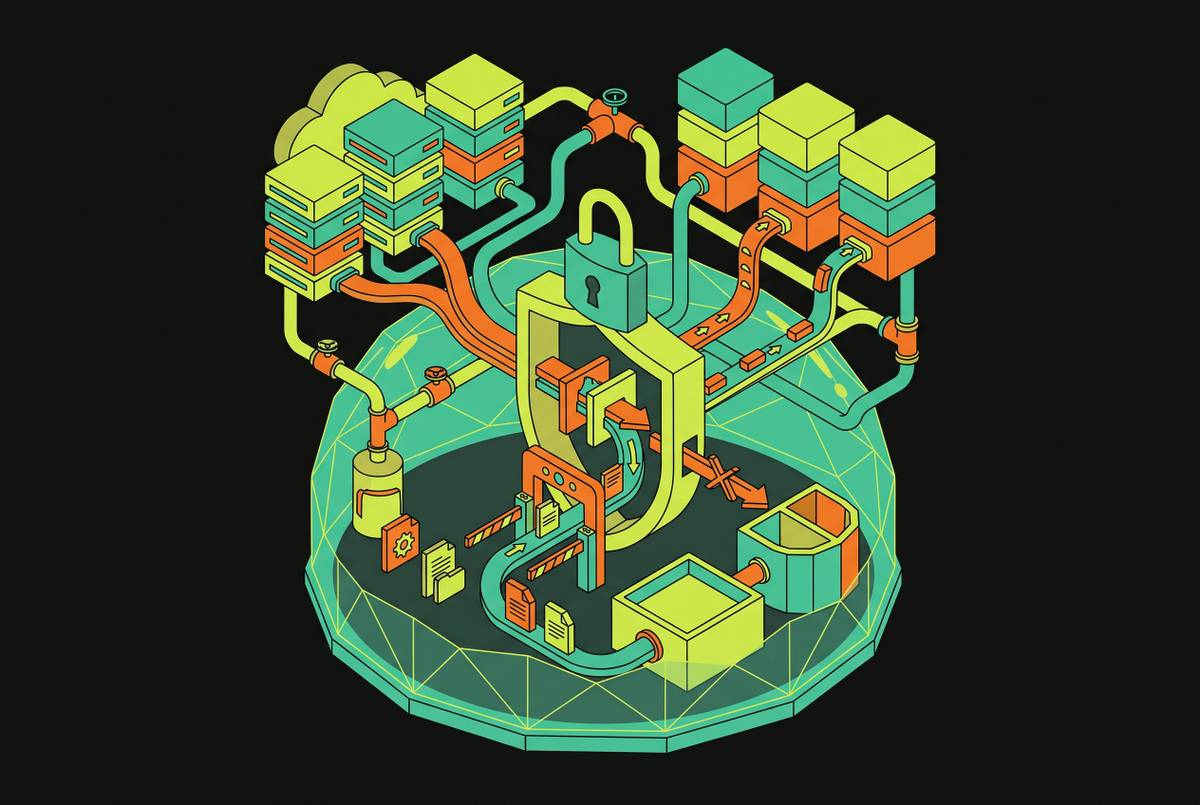
DLP Coverage Gaps in Generative AI Tool Usage
Legacy DLP cannot detect sensitive data moving through browser prompts and personal AI accounts.
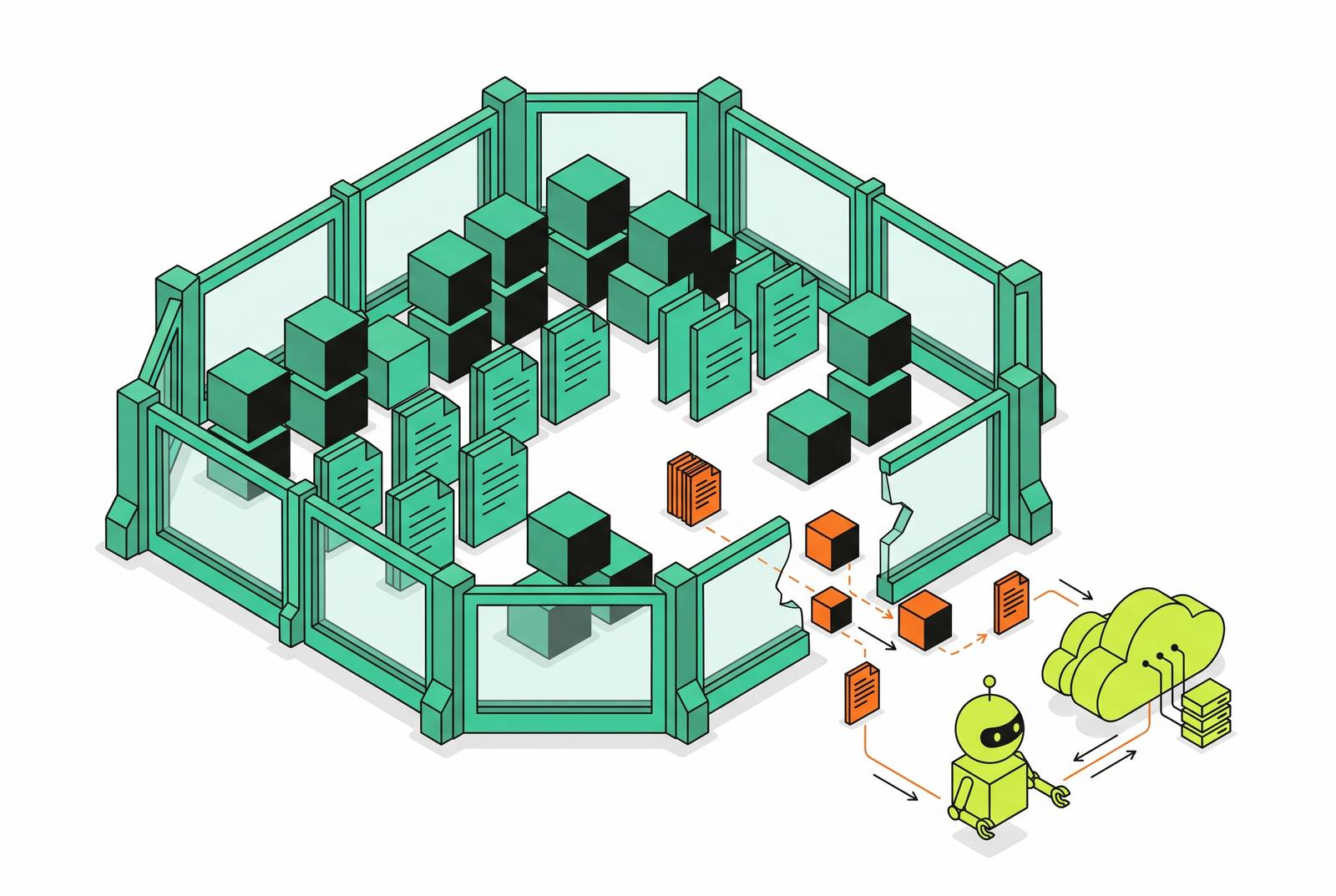
GenAI didn't just add a new file type for security teams to worry about. It broke the entire premise legacy DLP was built on: that sensitive data moves as a discrete object, through a boundary someone can see. Employees now leak proprietary source code and compensation data through browser prompts and personal AI accounts, channels that pattern-matching regex and network proxies were never designed to inspect. The tools built to stop the last decade's leaks cannot see this one at all, and that gap is now the defining exposure in enterprise security.
The distance between how worried security teams are and how little they've actually built to address it tells the real story. Most organizations name AI data leakage as a top concern, yet a large share run no AI-specific security controls whatsoever. Employees at large enterprises routinely put sensitive company data into public AI platforms, and a large share of that traffic runs through personal accounts, entirely outside anything an employer's policy could touch. Security awareness training fails to fix this, because the mismatch is one of speed rather than awareness. It's about speed: employees find and adopt a new AI tool in days, while a security program takes significantly longer to classify and govern it. That lag is structural. It's the persistent condition every enterprise security program now operates under.
How legacy DLP was architected
Legacy DLP rests on a simple threat model. Sensitive data exists as a discrete object, a file, a record, a structured field, and loss happens when that object crosses a boundary someone can see. Email gateways scan attachments. Endpoint agents watch USB drives. Network proxies inspect traffic headed to cloud storage. Detection leans on pattern matching, regular expressions built to catch credit card numbers, Social Security number formats, known document fingerprints. That works fine when the data has a fixed shape and the exit route is predictable.
Most enterprises run endpoint DLP today, but only a small fraction have fully deployed data security in the cloud. That gap tells you what era this architecture came from: pre-cloud, pre-AI, built around a perimeter that made sense a decade ago. Three assumptions hold the whole thing up. Data has a fixed form. It crosses a boundary that's identifiable. The enterprise can see or control that boundary. Generative AI breaks all three at once, and no new policy rule patches that. Gartner's note on the problem, "How to Overcome DLP Challenges Posed by Generative AI," put it directly: conventional DLP "cannot effectively manage GenAI data loss risks, including exposure via encrypted traffic, intent blindness, and shadow AI."
The four specific channels where the architecture breaks down
Most enterprise data leaks now happen directly inside the browser, and the majority of those involve someone copying data into a chat window or an AI prompt. Traditional DLP doesn't watch that space at all, because nothing about a browser paste looks like the file transfer it was built to catch.
Start with paste and type events. No file gets created, no attachment goes out, no network pattern trips a rule, because the data leaves as plain text inside an HTTPS request indistinguishable from any other browser traffic. GenAI tools now account for a large share of all corporate-to-personal data movement, and a meaningful share of files uploaded to AI tools carry PII or PCI data. This is the exfiltration channel legacy DLP has no eyes on.
Then there's the output side. A model can recombine or summarize input in ways that produce information no input-side rule ever anticipated, and prompt injection attacks can push a model to reveal training data or internal details it was never meant to expose. That attack path sits entirely outside any legacy rule set, because the rule set was never built to inspect what a model generates, only what a user sends.
Autonomous agents and MCP workflows open a third channel. Data moves between enterprise systems and external models with no discrete transfer event for a policy checkpoint to catch. Picture a developer wiring up a new MCP connection using an API key copied from a colleague: hard-coded credentials now sit in that environment, no file moved, no policy matched, no alert fired. Microsoft 365 Copilot sharpens this risk further, since a compromised account with Copilot access can query across SharePoint, OneDrive, Teams, and Exchange in seconds, staging data for exfiltration that used to take hours to find by hand.
Shadow AI closes out the list. A majority of AI usage inside the enterprise runs through unmanaged personal accounts that bypass corporate controls entirely, and network-level policy can't reach an encrypted session headed to a legitimate consumer app. Banning a tool doesn't shrink the risk, it removes visibility, and the data keeps moving through channels the organization can no longer watch.
What the Samsung incident shows about how fast an uncontrolled channel compounds
Samsung allowed engineers to use ChatGPT, and within 20 days, three separate leaks had occurred: proprietary semiconductor source code, defective equipment optimization code, and a transcript from a confidential internal meeting. Reports at the time confirmed that Samsung banned ChatGPT, Microsoft Bing AI, and Google Bard company-wide.
Existing DLP could not have caught any of it. Traditional detection relies on pattern matching against structured formats and document fingerprints, and source code pasted into a conversational prompt, mixed in with plain-language explanation, doesn't match any signature those systems were built to look for. Samsung's deeper worry was the data's lifecycle: once submitted to OpenAI's systems, that information could become part of the model's training data, outside the company's control entirely. That's a loop the company has no way to reverse.
Other companies followed with their own restrictions. Reporting at the time also named Amazon, JPMorgan Chase, Verizon, and Walmart among firms issuing memos or bans. A ban only closes the sanctioned channel, though. It does nothing about the personal-account route, which stays invisible no matter how strict the corporate policy gets. The engineers at the center of the Samsung case weren't trying to steal anything. They were trying to debug code faster, and that's exactly why the incident has become the reference case for what an AI insider threat actually looks like.
Why the negligent insider is now the dominant AI risk archetype, not the malicious one
Ponemon Institute's Cost of Insider Risks report puts the average annual cost of insider-related incidents at $17.4 million, and 55% of those incidents trace back to negligence, not malice. The riskiest person in this story is someone careless. It's someone trying to hit a deadline.
The pattern repeats across roles. A developer pastes source code into ChatGPT to debug a function faster. An analyst feeds a quarterly earnings summary into an AI writing tool to draft a board update. An HR manager uploads a compensation spreadsheet to a browser-based AI assistant just to build a pivot table. None of them register what they're doing as a security event, because none of it feels like one. Scaled across a workforce of a few thousand people using these tools daily, the exposure events pile up into the hundreds per week, small on their own, and adding up fast.
The negligent-insider pattern extends to research-intensive industries, where competitive IP is exactly what employees are most likely to expose when reaching for a faster tool. Cisco's research found that 46% of organizations have already experienced internal data leaks through GenAI tools. This risk sits in the present, not some hypothetical future quarter.
Detection built to flag anomalies or malicious intent will miss this population almost every time, because the behavior looks completely normal. These are people doing their jobs, just through a channel nobody's watching. IBM's 2024 research found AI-related breaches cost an average of $5.2 million, 28% higher than conventional breaches, and organizations with heavy shadow AI usage faced an extra $670,000 in breach costs compared to those with little or none. A security program built around catching malicious actors is aimed at the wrong population.
What it would take to close these gaps, and why intent and context must replace pattern matching
Closing this gap means changing what the detection layer actually understands. It isn't a tuning pass on a misconfiguration, and it isn't a threshold adjustment on rules built for a different kind of data movement. A Social Security number regex was never going to catch proprietary source code, or a molecular research summary buried inside a few paragraphs of ordinary conversational text.
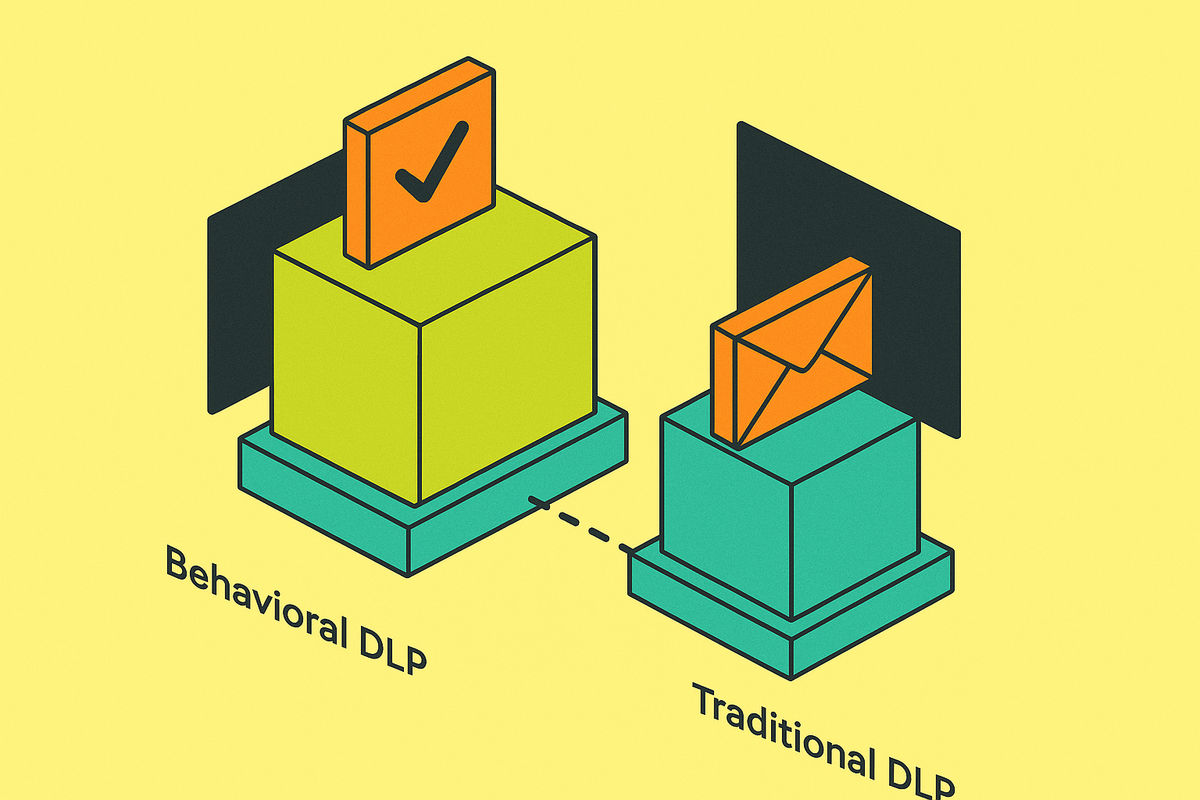
Detection needs to shift toward what the data actually means, weighing that above the shape it takes. It needs a sense of data lineage, tracing where content came from before it hit the browser, so a paste sourced from an internal codebase gets treated differently from a paste of generic text. It needs to know the destination: whether the receiving service is sanctioned, and whether the session belongs to a corporate account or a personal one. And it needs behavioral context, the pattern surrounding a single action, since one paste rarely tells the whole story. Repeated behavior over time raises the risk, not any single event.
AI DLP as a category exists to govern this exact motion: inspecting prompts, chat messages, uploads, and generated responses in real time, coverage that file-based or network-based tools were never built to provide. Enforcement has to be graduated rather than binary. Allow and log low-risk activity, coach on moderate risk, redact sensitive elements, block only the high-risk cases. A strict block-everything model generates so many false positives that security teams end up disabling the controls out of sheer fatigue, which defeats the point of building them at all. Machine-learning approaches to detection consistently reduce false positives compared to static rule sets, and that drop in analyst workload matters as much as raw detection accuracy.
Agent and MCP workflows need their own enforcement surface entirely, since data moving between enterprise systems and external models through an agent has no discrete transfer event to intercept. The control has to sit at the connector layer, not downstream of it. Shadow AI can't get handled through visibility alone, or through blanket bans either. It needs controls based on content, destination, account ownership, and context, catching sensitive data before it leaves rather than flagging it after the fact.
What security teams should evaluate when assessing AI DLP coverage against these gaps
Whether a vendor lists "AI DLP" as a feature is not the useful thing to check. The real question is whether enforcement actually happens where AI data moves: inside the browser prompt, at the upload surface, at the API and MCP connector layer, and across personal account sessions.
A few dimensions matter more than the rest. Rather than just blocking known AI domains at the URL level, is the platform able to inspect the content of a browser paste in real time, before it reaches the model? Can it classify unstructured, unlabeled content, the proprietary research or IP that carries enterprise value but matches no regex and sits in no existing classification scheme? Can it trace where content came from before it entered the browser, so a paste from internal source code gets flagged differently than routine text? Does its reach extend to personal accounts and unsanctioned tools, or does enforcement stop at the corporate network's edge? Does it cover agent workflows and MCP connections specifically, where no file transfer event exists for anything to catch?
Response style matters too. A platform limited to allow or block will generate enough false positives that teams eventually turn it off, so look for warn, coach, and redact as distinct options alongside block. Detection should also account for the pattern around a user's activity, not just a single flagged event, since one paste in isolation almost never tells the full story. When something does get flagged, the platform should assemble the surrounding picture: identity, role, data origin, destination, prior activity, so an analyst can make a call without rebuilding that context by hand every time.
Deployment speed is its own signal. A platform that needs months of tuning before it produces a usable alert is already behind the pace at which employees adopt new AI tools. Favor architectures that produce workable signal within days and improve as usage grows, over ones built like a legacy rule-set configuration project.
Passing a compliance audit is not the same as being protected. A DLP program that covers email and USB thoroughly but misses the browser prompt channel can clear every audit checkbox while leaving an organization's most valuable IP completely exposed. The real test is whether the platform protects the information that actually creates value for the business, not whether it satisfies a checklist written for a different era of data movement. Platforms built around prompt inspection, shadow AI visibility, governance of the layer connecting AI systems to enterprise tools, and behavioral detection across enterprise systems reflect the architecture this threat surface now demands. Every security team should ask whether its current stack can make that claim for AI-specific data movement, not just for the file transfers and email attachments it was built to watch a decade ago.