Privacy Risks of Employee Behavioral Monitoring at Scale
Most employee monitoring collects far more data than security actually requires.

Employee monitoring in the U.S. is now a default condition of work, not an exception, and most programs are built wrong. The failure isn't that they monitor. It's that they collect far more than any actual security purpose requires, and that gap, between what gets collected and what a company could defend in front of a lawyer, a regulator, or an employee, is exactly where legal exposure and eroded trust take root. Programs that name a specific risk first and collect only against it hold up. Programs built on "collect everything, sort it out later" don't, and the data on cost, law, and employee behavior all point the same direction.
What monitoring platforms actually collect versus what insider threat programs actually need
The average cost of an insider-related incident hit $17.4 million in 2024, up $1.1 million from the year before, according to Ponemon Institute research. IBM's 2025 breach report put malicious insider attacks at $4.92 million per breach, the costliest initial attack vector it tracks, with average identification and containment time running 241 days. Insider risk doesn't show up in a single log entry. It builds as a pattern over weeks or months, which is the real argument for sustained behavioral observation, not the argument most vendors actually make.
Set what platforms collect against that backdrop and the mismatch is obvious. Keystroke logging and idle-time tracking measure productivity, not threat. Sentiment analysis and emotion detection have no established link to security risk at all: they're workplace-culture tools wearing a security badge, and they should be treated as such. Predictive turnover indicators are HR signals dressed up as risk signals. Tracking where sensitive data travels across SaaS and cloud paths is a genuine data-lineage problem worth solving. Real-time video capture of a person's work session is a different problem entirely, and any program that treats the two as interchangeable has already gone wrong.
Insider threats split into three distinct types: malicious insiders, negligent insiders, and people whose credentials get compromised by someone else. Each needs different detection signals, and Ponemon's research found that 55 percent of insider incidents come from negligence, not malicious intent. Most programs get built to catch the dramatic minority case anyway, which means they end up collecting on everyone, including the much larger population that just fat-fingered a file share.
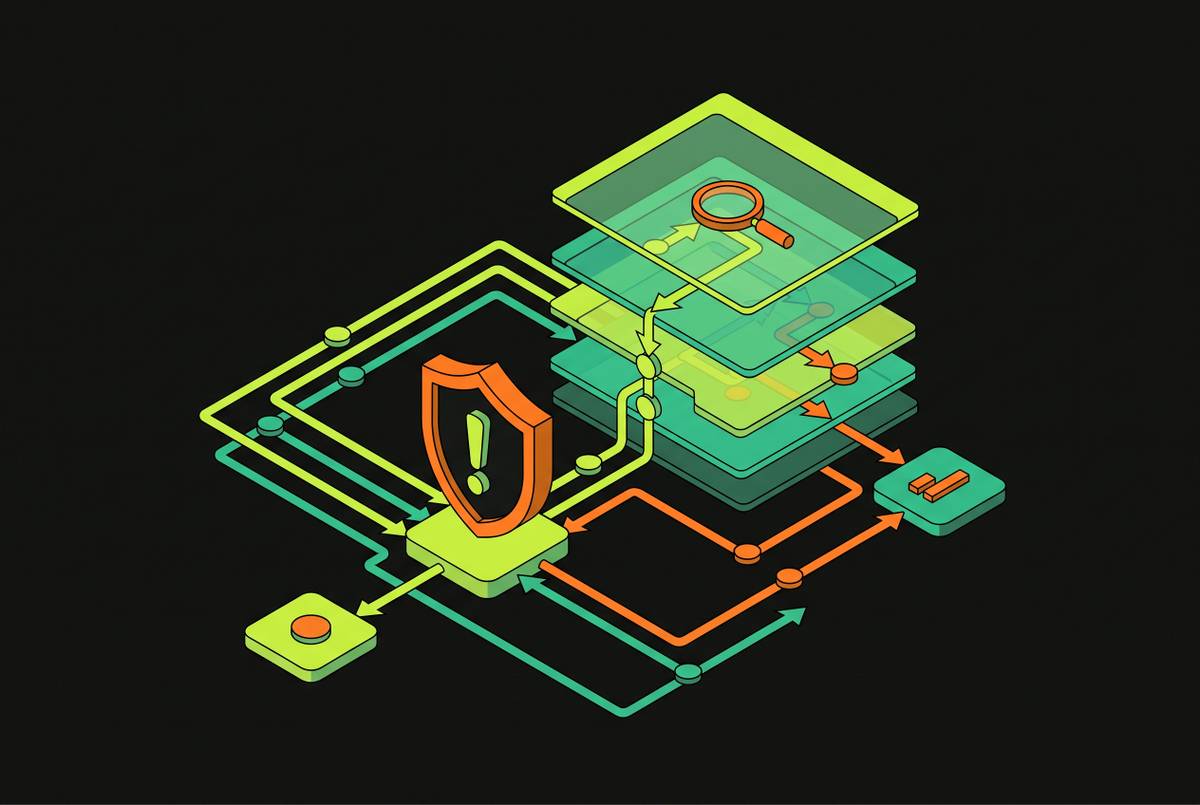
The distinction that actually matters is architectural. Legitimate security monitoring names a specific risk category first, then collects the signals tied to it. Productivity and behavioral surveillance runs the reverse: collect everything, sort it out later. Those aren't two versions of the same program. They're different programs, with different privacy exposure and different legal defensibility. Tracking data lineage addresses a documented exfiltration pattern. Tracking how long someone sits idle at their desk does not, no matter what the dashboard calls it.
Where the legal exposure actually lives, and why it is expanding quickly
The federal baseline is thinner than most employers assume, and leaning on it is a mistake. The Electronic Communications Privacy Act bars interception of electronic communications generally but includes provisions that create space for employer monitoring on company systems. The NLRA has been interpreted to limit surveillance that could chill protected concerted activity, and the FTC has drawn attention to surveillance-heavy management practices as a potential consumer and worker protection concern. None of that adds up to permission. It adds up to a floor.
State law is where this actually gets decided, and the picture is fragmenting fast. Monitoring stays legal in all 50 states, but how you're allowed to do it now depends heavily on where your employees sit. Texas's Data Privacy and Security Act, effective July 2024 with a universal opt-out provision that kicked in this past January, requires detailed notice of what's collected, stored, and shared. Delaware requires written notice before monitoring starts. Illinois's BIPA tightly regulates biometric data, fingerprints and facial scans included. Maine has expanded surveillance restrictions taking effect in 2026, while California's AB 1221 failed during the 2025-2026 session and isn't law, proof this isn't a one-directional march toward more restriction. It's just messier than that.
Internationally, GDPR requires monitoring to be necessary, proportional, and grounded in a valid legal basis, and enforcement has produced billions of euros in cumulative fines across the EU. High-profile enforcement actions against major employers for intrusive surveillance practices have made the proportionality standard concrete instead of theoretical.
A newer legal layer is forming specifically around AI-driven behavioral scoring. New York City's automated employment decision tool law, Colorado's AI Act, and California's Civil Rights Department regulations under FEHA all treat automated decisions about workers as their own legal category, separate from monitoring generally.
Retention is a liability that programs often fail to address adequately. Sensitive behavioral data that sits around past the point it's needed, or isn't secured properly, becomes its own breach risk and its own lawsuit, independent of whatever the original monitoring purpose was. The pattern holds across every jurisdiction above: the legal risk was never monitoring itself. It's monitoring that can't be tied back to a specific, written, proportionate purpose.
How over-collection erodes the trust that insider threat programs depend on to function
Forty-five percent of employees in high-surveillance workplaces report stress, versus 28 percent in low-surveillance ones. A 17-point spread that tracks directly with how much monitoring a workplace runs. Twenty-four percent take fewer breaks specifically so they don't look idle on a dashboard, meaning they've started optimizing for the monitoring software instead of the job it's supposed to be measuring.
Forty-six percent of employers use monitoring data in termination decisions. Once employees know that, surveillance stops functioning as invisible background infrastructure and starts feeling like a loaded gun pointed at their job security. People behave differently around loaded guns, and that behavior generates exactly the kind of noisy, false signal a security team then has to sort through by hand.
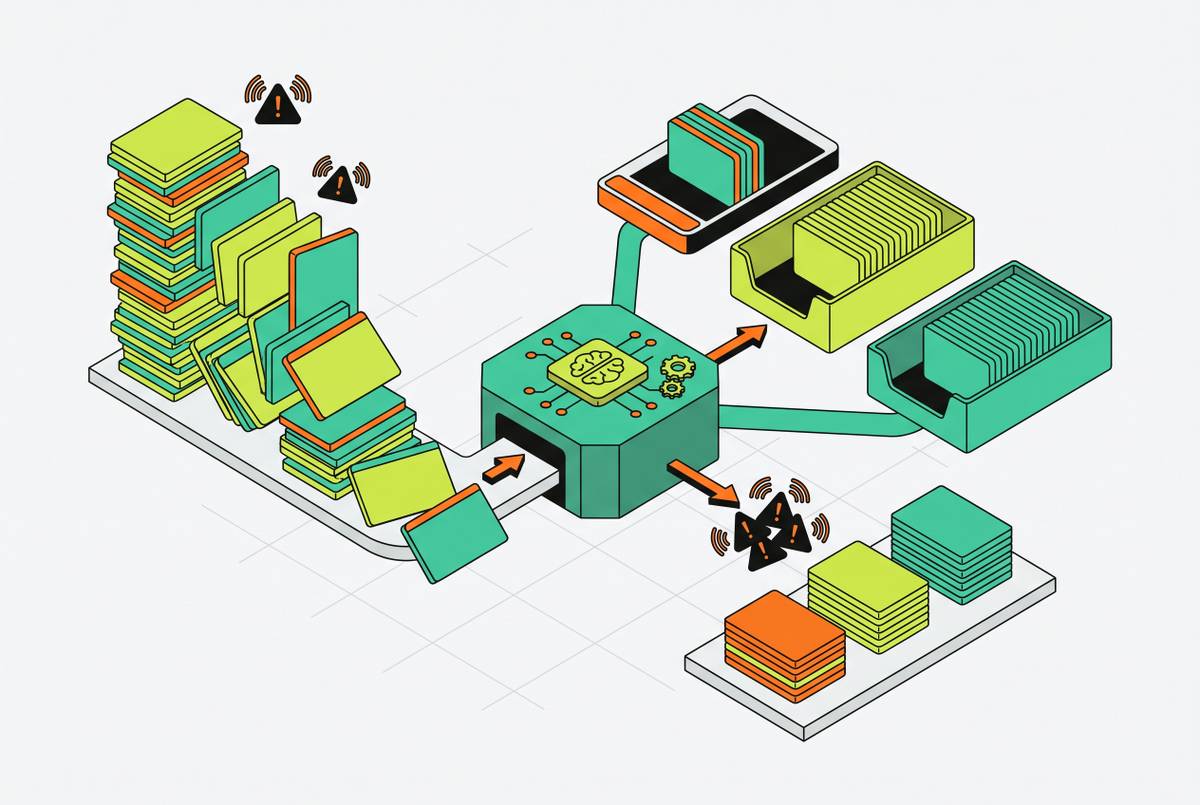
Here's the failure mode for security teams specifically: heavy surveillance produces defensive behavior, a flood of low-value alerts, and investigations that start from suspicion instead of evidence. Analysts spend their time triaging what an algorithm spit out rather than evaluating actual risk. A risk score built from someone's anxiety about being watched is not the same signal as a risk score built from unusual data movement in the days before a resignation, even if both land on the same dashboard with the same color coding.
Trust isn't a soft HR concern sitting off to the side of the security program. It's a detection asset, full stop. Employees who feel safe flagging a coworker's odd behavior, reporting a phishing attempt, or cooperating openly during an investigation are one of the earliest warning systems any insider risk program has, and surveillance that feels punitive shuts that cooperation down before it starts. Program designers tend to overestimate how much of this workforces will tolerate: 61 percent of Americans oppose AI tracking of worker movement, and 56 percent oppose AI monitoring of desk presence specifically.
Proportionality as the operative standard, what it means in practice for a security program
Proportionality isn't an abstraction. It breaks into three steps a security team can actually run. Name the risk specifically first: which threat category, which population of users, which data types, which channels, not "insider risk" as a catch-all. Second, limit collection to signals that speak to that named risk, meaning data lineage across the paths known to carry exfiltration risk, not keystroke logs run against the entire workforce. Third, keep a human in the loop on every conclusion. Behavioral signals should point an investigator toward a question. They should never stand in as the answer.
GDPR's "strictly necessary and proportional" language is the cleanest legal codification of this idea, and it's worth treating as the working standard even outside the EU.
Minimization has to apply to retention as much as to collection. Holding behavioral data past the window relevant to an active investigation turns a security asset into a liability sitting on a server, waiting to surface in discovery. Access discipline matters just as much: not everyone with a login to the monitoring dashboard needs the raw logs behind it, and access should map to what a specific function actually requires, nothing more.
The least invasive method available isn't a box to check for legal cover. It's a design principle that produces a better program outright. Monitoring data lineage and access patterns is less invasive than screen recording, and it produces a sharper, more actionable signal in the bargain. A program that collects less, aimed precisely at the right behavior, beats a program that hoovers up everything and sorts through the wreckage afterward, every time.
None of this holds together if it's run purely out of IT. HR, legal, compliance, and privacy need a seat at the table when a monitoring tool gets bought, when it gets configured, and on a recurring schedule afterward, not just after something's gone wrong and incident response gets called in. Vendors update platforms constantly, and new features sometimes ship switched on by default in ways that quietly widen what a program actually collects. Reviewing what's turned on, and why, has to be a standing task, not a decision made once at purchase and forgotten.
What behavioral monitoring looks like when it is scoped to security risk rather than general surveillance
A well-built insider threat program rests on a few components that have to come before any tool gets deployed: governance and policy, defined risk indicators and behavioral baselines, the monitoring tools themselves (DLP, UEBA, SIEM log analysis), a response protocol, and ongoing training. Buy the tool first and try to retrofit the policy around it, and the program spends its whole life playing catch-up. That sequencing matters more than which vendor wins the contract.
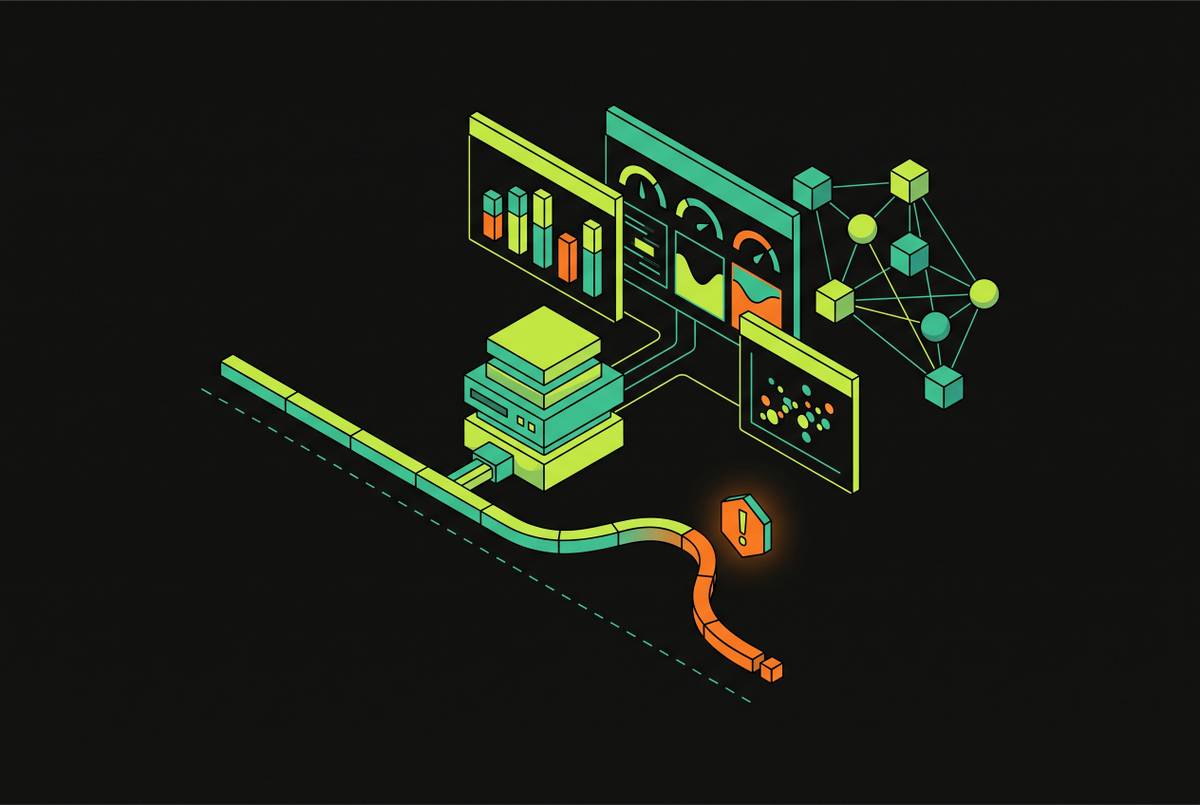
Baselines matter because deviation only means something once you know what normal looks like for a given user. Someone suddenly moving large volumes of sensitive files off a shared drive is a signal only if the program already knows that isn't how that person usually behaves. Data lineage tracking, meaning who created a file, how it changed hands, who touched it, and what they did with it, gets at documented exfiltration patterns without throwing a surveillance net over unrelated activity. That's a fundamentally different architecture than keystroke logging or a productivity score, and the two should never get filed under the same label.
The fact that 55 percent of insider incidents come from negligence rather than malice should shape detection design from day one, not get treated as a footnote. A system tuned only to catch the malicious minority will misclassify most of what it actually finds: false positives piling up on one side, real negligence cases slipping through on the other.
Early warning signs often show up outside a company's own systems entirely, well before anything trips an internal alert. Internal telemetry tends to catch problems mid-stream or late, so a proportionate program pulls in outside context instead of treating its own endpoint logs as the whole picture.
AI-native behavioral analysis, done right, changes the shape of the problem rather than just automating the old approach. Instead of hoovering up everything and filtering with a pile of rules after the fact, it builds context from a narrower set of targeted signals pulled from systems already wired into the company's stack. The detection surface becomes a person's activity pattern across tools the enterprise already uses, not a new surveillance layer bolted on top. Explainability isn't optional here, either legally or operationally: a risk score that can't trace back to specific, auditable signals fails the AI regulations described above, and it's dead weight to an analyst trying to decide whether an alert is worth escalating.
Which leaves one test for any monitoring feature a security team considers switching on. Can the team say plainly which specific risk it addresses, and would that explanation hold up in front of legal counsel, a regulator, or the employee whose data got collected? If the answer is no, the feature doesn't belong in the program, whatever else it might be good for.