Behavioral DLP vs. Traditional DLP Architecture
Behavioral analysis spots insider risk patterns that content rules alone cannot detect.
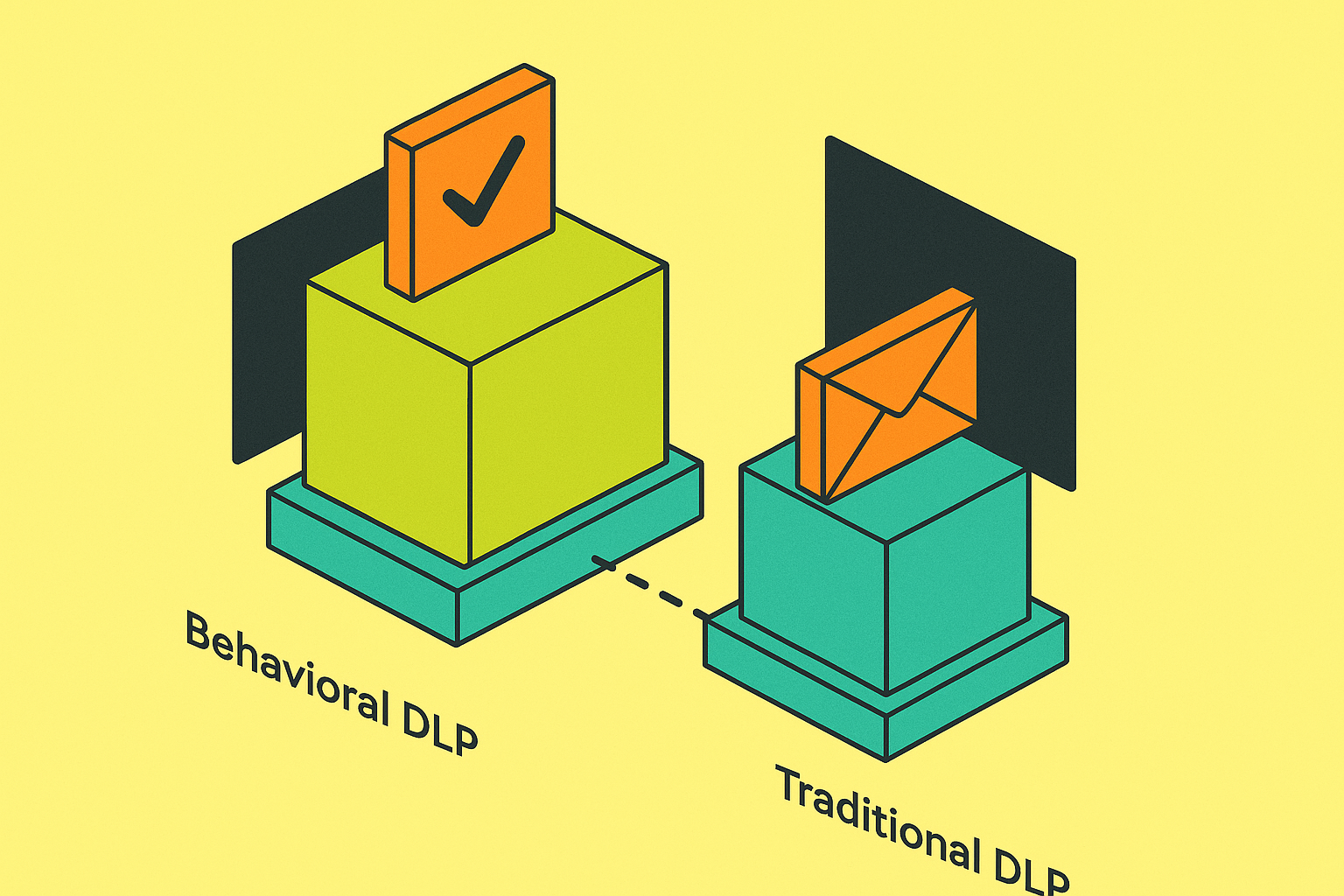
Traditional DLP inspects content at fixed checkpoints (the email gateway, the endpoint agent, the network proxy) and runs it against a library of patterns: regex, keyword lists, exact data matching, classification labels. It was built for structured, identifiable data types: credit card numbers, Social Security numbers, regulated PII, the kind of data where a pattern match reliably means something. If the content matches a rule, block it. If it doesn't, let it through. That was a sound design for a perimeter-centric world, where sensitive data was mostly structured, mostly labeled, and moved through a handful of monitored channels.
Three layers typically make up a traditional deployment. Network DLP inspects traffic at the gateway and still held 34.23% of DLP market revenue in 2025, per Mordor Intelligence. Endpoint DLP runs as an agent on the device, watching file operations, USB transfers, and print jobs. Email and cloud gateways scan attachments and message bodies before anything gets delivered.
None of these layers carry a model of the person behind the action, and that omission is the whole story. The same file transfer, performed by a policy analyst doing routine work and by an employee packing up before a resignation, looks identical to a content scanner: no memory of what that user did yesterday, no reference to a pattern over the past month. There's no concept of lineage, either. Once a file gets renamed, copied, or pasted into a new document, most tools lose the thread entirely. And there's no way to read intent: a regex match can't tell negligence from malice, because it was never asked to. These aren't bugs. They're the direct consequence of what the architecture was built to prioritize, and for a long time, that priority made sense. It stopped making sense once the biggest source of loss moved from unencrypted email to authorized users doing ordinary-looking things with sensitive data.
How content-only inspection produces the alert dynamic that defeats the program
Pattern matching has a math problem baked into it. A sixteen-digit string might be a credit card number, or it might be a product serial number. A nine-digit string might be a Social Security number, or an internal order code. The rule fires on both, because the rule can't tell the difference.
That ambiguity lands on the analyst. In a typical legacy deployment, analysts spend a significant share of their investigation time on events that never warranted a second look. Alert fatigue doesn't stop at wasted hours, either. Once analysts learn to expect noise, they move faster through the queue, and genuine signals get lost in the same pile as the false positives. The false positive problem becomes a false negative problem on a delay.
The second failure mode is worse, because it's self-inflicted. When a tool keeps blocking legitimate work (a sales rep's email with pricing details, say), employees find a way around it. They move the conversation to a channel nobody's watching. This pattern is well recognized: the DLP program, by being too blunt an instrument, pushes risk into places it can no longer see. That's the opposite of the outcome the program exists to produce.
Shadow AI is the sharpest edge of that blind spot. Employees paste sensitive data into AI tools regularly, and traditional DLP has no visibility into any of it. It can't see the paste, can't block it, can't confirm afterward that it happened. IBM's 2025 findings put a number on the exposure: 20% of breaches involved shadow AI, and 97% of those occurred at organizations with no AI access controls in place, per reporting by Kiteworks. That's a significant unprotected leak vector, and it's a direct consequence of an architecture that was never asked to watch a browser text field.
None of this gets cheaper to run over time. Rule libraries need constant tuning, and tuning takes analysts who understand both the technical side and the business context behind each data type. Without that staffing, the program slides into a low-value alert engine, a dynamic widely recognized in DLP program maturity discussions. The spending pattern that results tells its own story: organizations put roughly $211,021 into containing the average insider incident but only $37,756 into monitoring for one, a nearly 5.6-to-1 gap, according to Ponemon and DTEX data reported by Swif. That ratio is what a reactive architecture looks like once it shows up in a budget line.
The specific scenarios where the architecture gap lets insider risk through
Four situations show where content rules run out of road, and none of them are exotic.
Authorized access exfiltration is the cleanest case. An insider moves sensitive files through a channel they use every day, one they're fully entitled to use. No rule fires, because no rule gets broken. The risk isn't in the content. It's in the volume, the timing, and the destination, none of which a content-only scanner was built to track.
Negligent disclosure looks different but breaks the same way. An employee emails a sensitive file to a personal account, genuinely believing it's a harmless draft. Content inspection will flag the file correctly, but it can't tell the analyst whether this is carelessness or theft, and the response to each should look nothing alike. That distinction matters more than it might seem: 55% of insider incidents in 2025 were driven by negligence, not malice, according to Ponemon data via Exabeam.
Compromised credentials break the model even more directly. When an outside attacker is operating inside a stolen employee account, the account is authorized, the access is authorized, and to a content scanner, the activity looks exactly like the real employee's. The only thing wrong is the behavior itself, which is precisely the layer traditional DLP doesn't read. It's also the most expensive incident type on record: $842,462 per event in 2025, up from $779,707 in 2024, per Ponemon data via Swif.
Then there's the data that never had a label to begin with. Proprietary source code, product designs, M&A strategy documents, competitive analyses: none of it matches a regex, because its sensitivity comes from what it means to the business, not from its format. Legacy DLP isn't weak against this category. It's structurally blind to it, and no amount of tuning fixes a blindness that's built into the checkpoint model itself.
Negligence and compromised credentials together account for 75% of insider incidents in 2025, per Ponemon via Exabeam, and those are the two categories content rules handle worst. These aren't edge cases carved out for a thought experiment. They're the majority of what's actually happening, which is why mature, well-funded DLP programs keep reporting losses anyway.
How behavioral DLP closes the gap: what changes at the architectural level
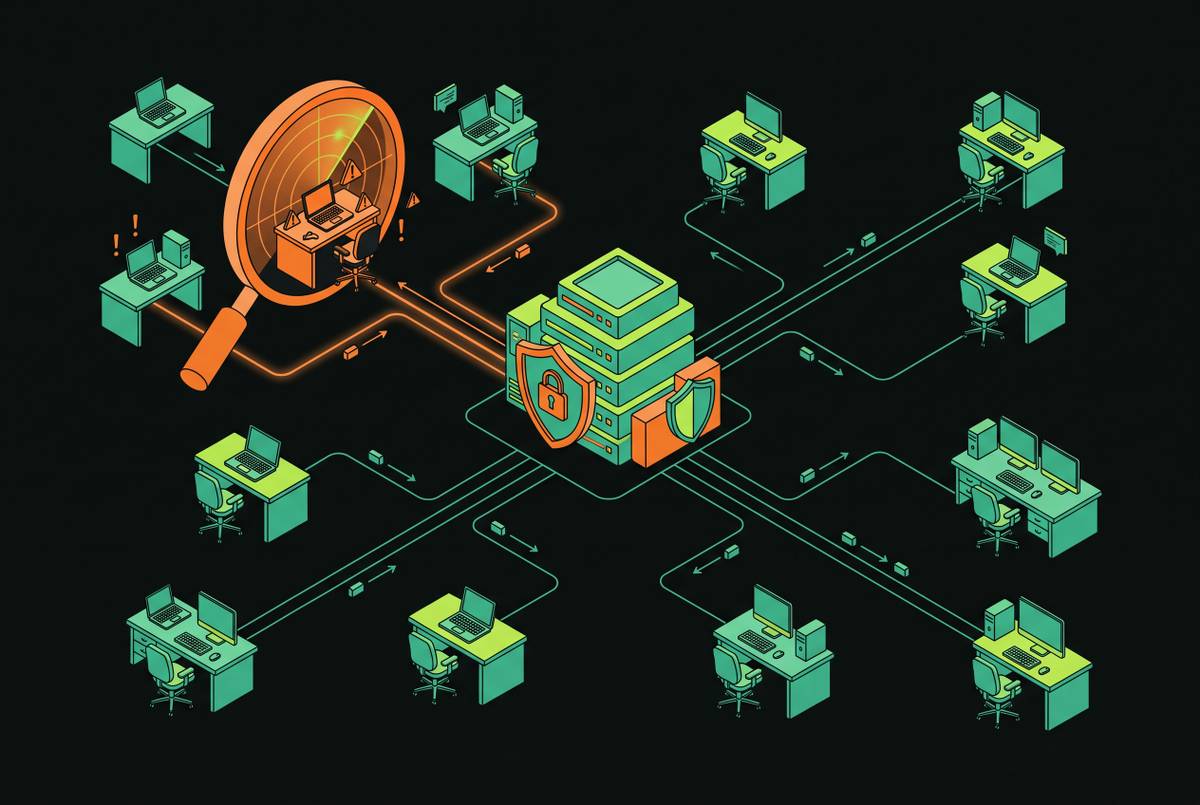
The shift is structural, not cosmetic. Identity, role, and the activity surrounding an event become signals the system reads at the same level as content, not context bolted on after the fact. The platform stops asking only what moved. It starts asking who moved it, from where, at what time, and whether any of that lines up with how that person normally behaves.
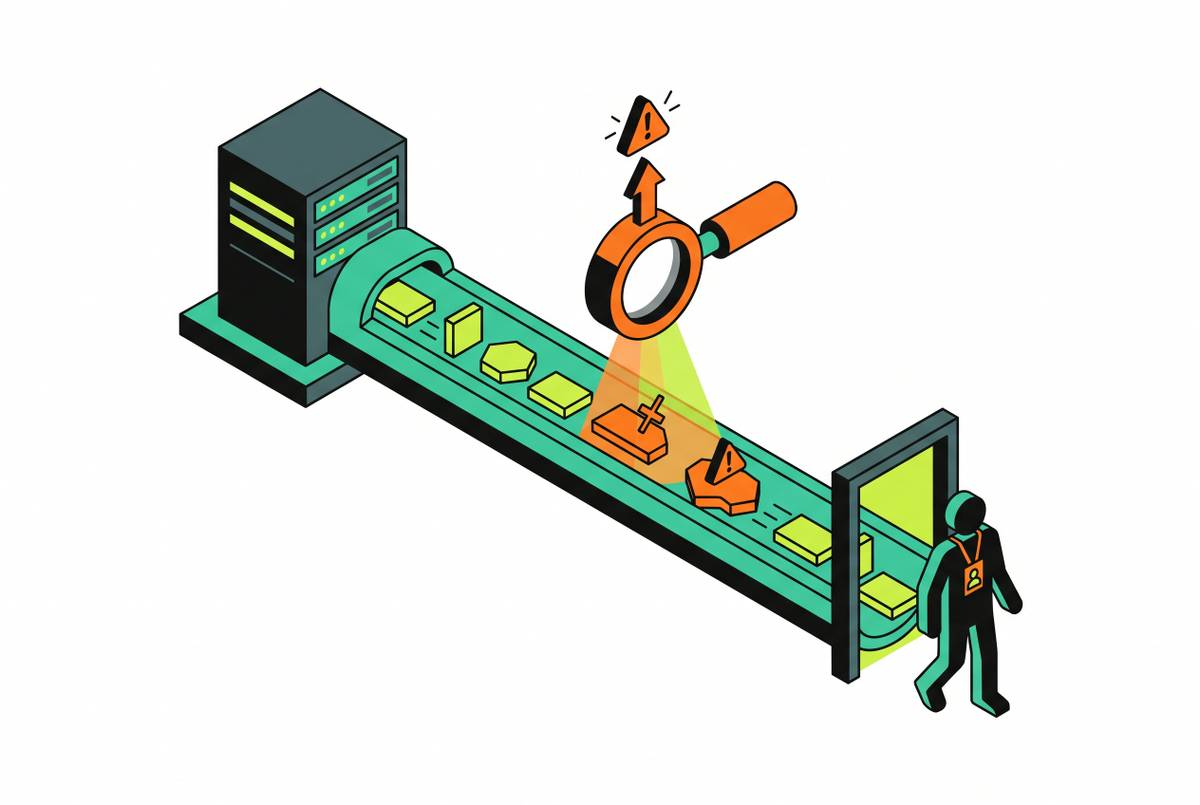
Three additions make that possible. A user behavioral baseline gives the platform a working model of normal activity per person and per role: which files someone typically touches, what hours they work, which devices they use, how their pattern compares to peers doing the same job. Deviations get scored across several risk factors at once instead of tripping a single yes-or-no rule, a model Cyberhaven has built its platform around. Data lineage tracking follows content through its whole life, from origin, through every edit, to wherever it ends up, so a file that's been renamed and pasted into a new document is still recognized as a descendant of the original sensitive source. Contextual event scoring treats the sequence itself as the signal: a download that means nothing on its own becomes significant once it's preceded by a resignation letter, a spike in access volume, and a new personal cloud sync appearing on the device.
The practical difference shows up cleanly in a side-by-side. Two employees download the same customer database. One is the analyst who runs that exact report every Tuesday morning, and the system lets it through without friction. The other submitted a resignation last week and started downloading files at midnight, and that one gets flagged. Adoption reflects the shift, with a growing share of organizations moving toward behavior-based tools for insider threat detection over rule-based monitoring.
AI-assisted classification extends the same logic to unstructured content: contracts, source code, product designs, strategic memos, material legacy DLP always missed because no pattern could capture why it mattered. On shadow AI specifically, a behavioral architecture can weigh destination, account ownership, content, and context before deciding whether to intervene. Visibility alone doesn't solve the problem, and neither does a blanket ban on AI tools. The right response depends on what the data is, where it's headed, and who's sending it.
One caveat matters here, and any vendor pitch that skips it is overselling. Behavioral baselines alone aren't enough. Risk can exist on someone's first day, before any baseline has formed. It can stay statistically unremarkable the entire time. It can happen entirely through channels the person is authorized to use. The architecture needs content understanding and behavioral context working together. Neither one covers for the other.
What the two architectures produce differently for the analyst doing the investigation
Legacy DLP hands an analyst an event: a file moved, a rule matched, a user ID attached to it. From there, the investigation starts from zero, pulling logs out of separate systems just to reconstruct what happened and when.
Behavioral DLP hands the analyst something closer to a finished case file. The alert arrives with the behavioral pattern already assembled: what the user did beforehand, what changed, what the content actually is, where it was headed. That's not a minor convenience. Cutting the time it takes to investigate an alert matters as much as catching the right one in the first place. A platform that flags the correct event but still forces an analyst to rebuild context from raw logs by hand hasn't solved the real problem, just moved it downstream.
The talent shortage makes that distinction urgent rather than academic. The global security talent gap is projected to top 3.4 million unfilled roles in 2025, and analysts who can actually interpret behavioral data are scarcer still, per Mordor Intelligence's insider threat management market research. A workflow built on the assumption of plenty of skilled analysts on hand to stitch logs together is a workflow built for a staffing level that doesn't exist. Legacy tools compound the problem: most weren't built to integrate with SIEM, UEBA, or automated response platforms, so analysts end up pivoting between systems just to build a timeline.
The organizations that made the switch report a real payoff. Among those with an insider risk management program, 65% said it was the only security strategy that let them catch risk early enough to head off a breach before it happened, per Ponemon and DTEX data via Swif. The dollar figures back that up directly: privileged access management saves an average of $6.1 million per organization, and user behavior analytics saves $5.1 million, according to the same Ponemon and DTEX research.
One more thing matters at the investigation stage, and it doesn't get enough attention: explainability. A system that flags a user but can't show the evidence trail behind that flag isn't usable in an HR proceeding, and it isn't usable in a legal one either. The behavioral evidence has to be auditable. An algorithm's internal reasoning is not a substitute for a record a human can walk through, and any platform that can't produce one has only solved half the problem.
How to evaluate whether a DLP architecture actually closes the gap, and which platforms represent each model
Five questions cut through the vendor pitch and get at the architecture underneath it. Does the platform model the user, or only the data, meaning does it build per-user behavioral baselines, role-aware scoring, and peer comparison, rather than a content classifier wearing a new label? Does it track lineage across transformations, following a file that's been copied, renamed, and pasted somewhere new, rather than inspecting content at a single checkpoint? Does it cover where data actually moves in 2025: SaaS apps, browser-level AI tool inputs, cloud sync, not just email and the network gateway? Does it cut the analyst's workload rather than just the raw alert count, meaning does the investigation arrive pre-assembled instead of leaving someone to rebuild context from scratch? And is the detection explainable enough to survive HR and legal scrutiny, rather than defensible only as an algorithm's output?
Gartner's 2025 Market Guide, as reflected in Safetica's analysis, sorts the market into three broad categories, and they are not equally likely to close the gap this piece describes. Enterprise DLP offers deep policy control across endpoint, email, and network, built for large regulated organizations, though it's slower to deploy and costly to run; vendors here include Symantec/Broadcom DLP and Forcepoint DLP. Integrated DLP comes bundled into a broader platform such as Microsoft 365 or Palo Alto's ecosystem, cheap to turn on and quick to activate, but limited once you step outside that ecosystem, and prone to high false-positive rates. Cloud-native DLP is built for real-time coverage at the browser and app level, aimed at SaaS-first and hybrid workforces, though it can lack endpoint depth unless extended with additional tooling. Of the three, only cloud-native and select enterprise players are actually building toward the behavioral model. The integrated tier, bundled in for convenience rather than designed for this problem, is the one least likely to close the gap, because closing it was never the reason it got built. An organization choosing DLP mainly because it shipped free with the office suite is choosing the tier built to check a compliance box, not the one built to catch a resignation-week download at midnight.
Among platforms built specifically around the behavioral model, Cyera's Omni DLP takes what it calls a "Data DNA" approach, layering in context on who's using data, why, and what's actually at risk, with policies that build and tune themselves. It's agentless and deploys in minutes rather than weeks. GigaOm named it a Leader and Fast Mover in its October 2025 Radar for DLP, and as of its January 2026 Series F round, the company reported serving 20% of the Fortune 500, ahead of a $600 million Series G that valued it at $12 billion in June 2026, per B2B News Network's coverage.
The broader lesson holds regardless of which platform a given organization lands on. The architecture question comes first, and it settles the matter before a single feature comparison starts. Whether a system was built to read the person behind the data movement, or only the data itself, determines what it can catch and what it will always miss, no matter how many rules get added to the library later.