Insider Threat Detection in Remote and Hybrid Workforces
Old detection logic collapses when work leaves the office walls.
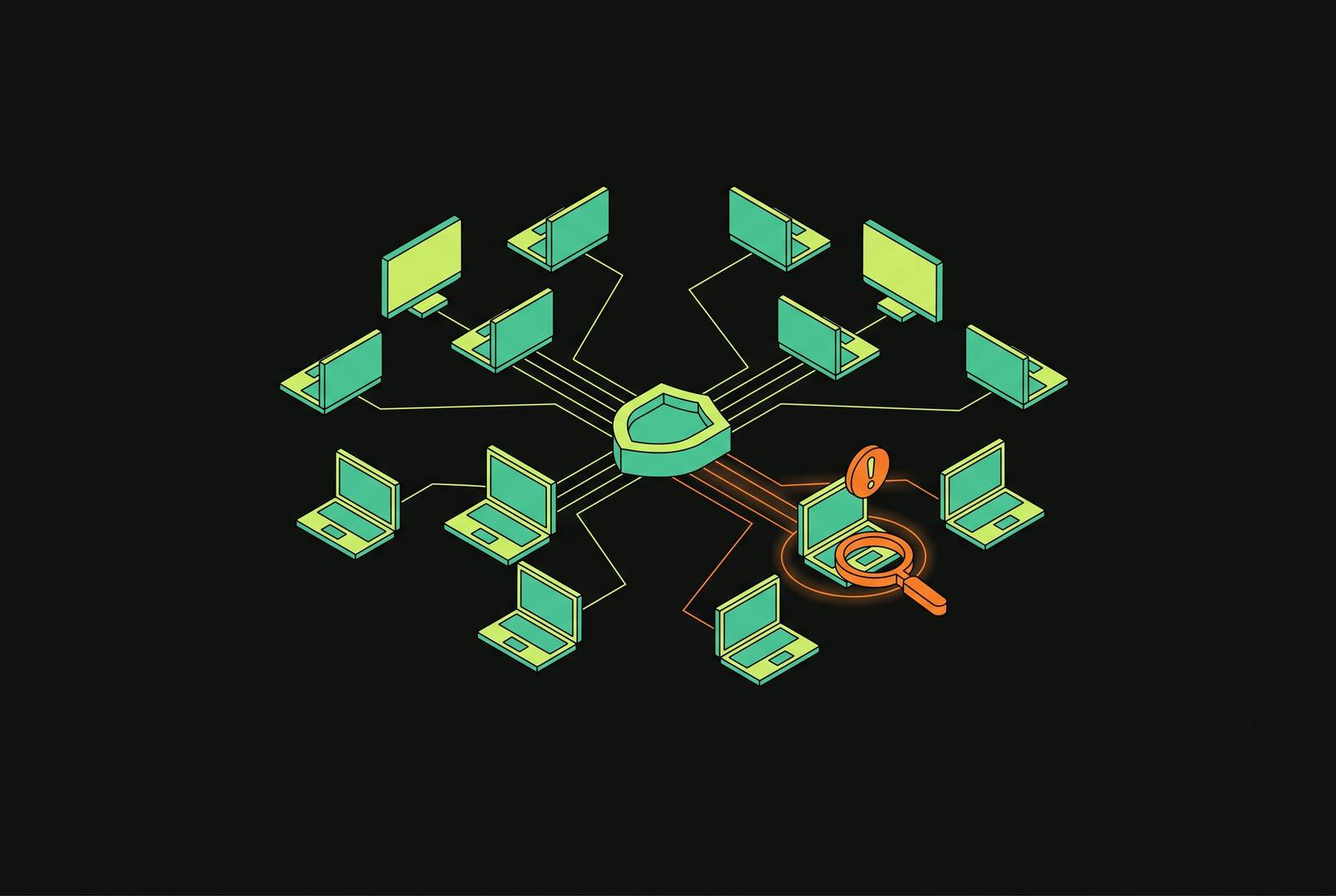
Insider threat detection was built on a premise that no longer holds: that sensitive data lives in a bounded, observable space where the organization can see it move. Perimeter-era programs assumed a corporate network, a managed endpoint, an on-premises file server, a set of environments stable enough that anomalous movement stood out against a known backdrop of normal. That premise depended on physical and logical containment, not on any particular cleverness in the detection logic itself. Once the environment stopped being contained, the logic had nothing stable left to measure against.
Remote and hybrid work took that containment apart permanently. The workforce now operates across home networks, personal devices, unmanaged IoT, and an expanding stack of SaaS and cloud platforms, generating activity outside any traditional monitoring perimeter. A majority of insider-style incidents now involve cloud resources or SaaS platforms rather than on-premises systems, and insider threats increased by roughly 58% after large-scale remote work adoption. The data plane that legacy tools were built to watch has largely emptied out, and the tools pointed at empty space produce either silence or noise, neither of which is detection.
Volume is not what makes these signals hard to read; their legibility has collapsed. Late logins used to imply risk; now they imply a time-zone difference. Unusual file movement used to imply exfiltration; now it implies a contractor working from a different device on a Sunday. The signals a perimeter-era program relied on to flag deviation now blend indistinguishably into the texture of normal distributed work, because the behavior that once stood out against an office backdrop has no backdrop left to stand out against.
Federal guidance has caught up to this shift, if belatedly. In September 2026, CISA updated its Insider Threat Mitigation Guide, first published in 2020, specifically to address the rise in hybrid and remote work and advances in AI. That update matters because CISA's guide is the foundational federal reference point for insider risk programs across government and industry. When that document is rewritten to account for a structural change in how work happens, it confirms what practitioners have been contending with directly: the old model is not simply outdated in a few particulars, it is built on assumptions the modern workplace no longer supplies.
The broader threat population in a remote workforce beyond the classic malicious-insider model
The classic insider threat model imagines a single kind of actor: the disgruntled employee, deliberately siphoning data on the way out the door. Most insider incidents are driven by negligence and ordinary mistakes rather than premeditated theft. The typical insider is an employee operating in an increasingly complex digital environment, making an error that a perimeter-era control was never built to catch because it was looking for malice, not for an error.
Remote onboarding and SaaS-heavy environments widen that gap further, since the verification steps and access reviews that once happened in person now happen, if at all, through a portal.
Polywork adds a category of exposure that internal telemetry was never designed to detect. The risk accumulates in the overlap itself.
Falsified credentials present a related problem at the point of hire. Insider risk and third-party risk converge at precisely the moment an organization has the least visibility into who it is actually hiring.
A final expansion of the threat population has nothing to do with people. The machine and AI identity population now vastly outnumbers human employees in most large organizations. Compromised service accounts and unauthorized AI agents constitute an insider risk category that legacy programs were never scoped to govern, because those programs were built around human behavior, human schedules, and human motive. A program calibrated only to catch deliberate human data theft will miss the negligent employee, the under-governed contractor, the polyworker, the fraudulent hire, and the compromised machine identity, all of them operating in conditions where their activity is now harder to distinguish from legitimate work than at any point before.
Shadow AI and the expanding data exfiltration surface
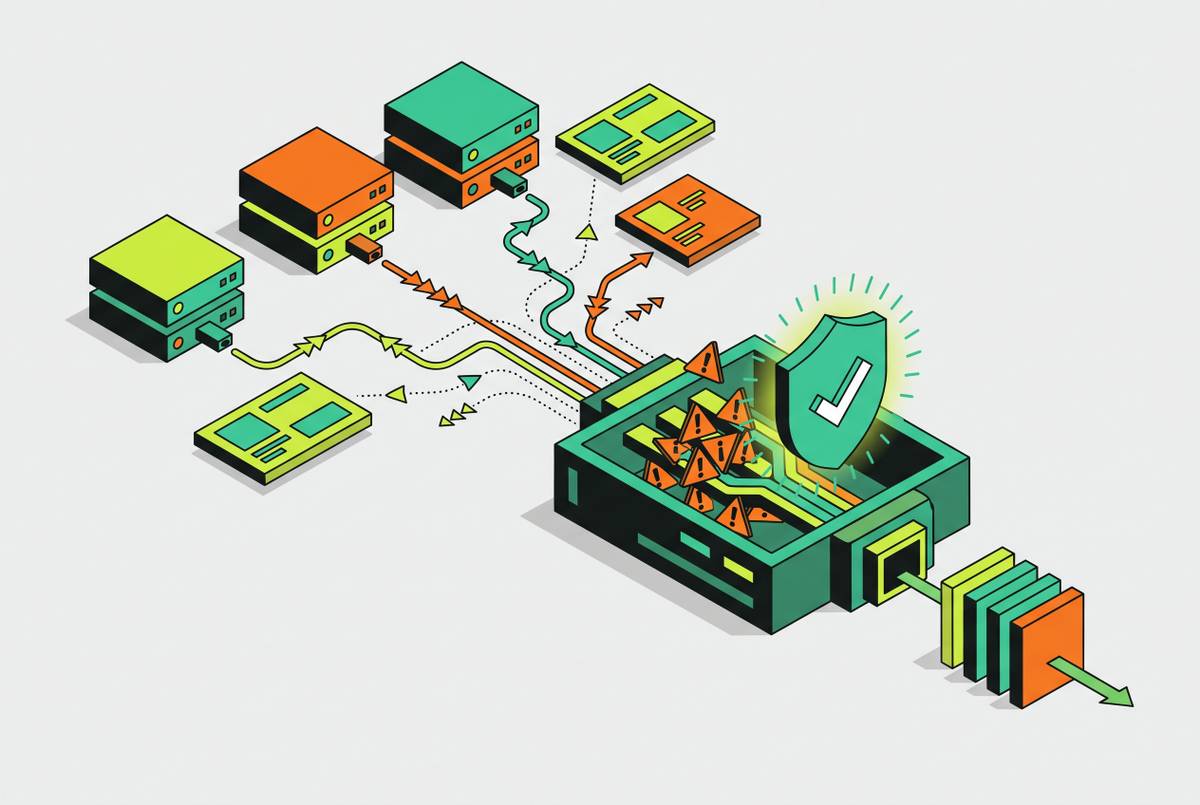
Shadow AI describes employees using generative AI tools outside any sanctioned channel, and it has opened exfiltration pathways that bypass legacy DLP. The failure here is architectural. Employees are not circumventing a control so much as using tools the control was never built to see: browser-based assistants, AI coding tools, and productivity integrations that move data through channels a rules engine cannot reliably classify or intercept.
Concern about this gap is already widespread. A significant share of organizations report concern specifically about employees pasting proprietary material into tools like ChatGPT or Copilot without triggering any control, and a majority of security leaders name unauthorized shadow AI access as a top concern for insider-based data leaks. The concern is justified by how the architecture actually works. Legacy DLP does not fail here because no one wrote a rule for ChatGPT; many organizations have added exactly that rule. It fails because the underlying architecture was built around predictable enforcement points, a known file type crossing a known boundary, and it has no mechanism for evaluating paraphrased content, AI-generated prompts, screenshots, or workflows that don't resemble any pattern it was trained to recognize. Candor, a behavioral DLP platform for enterprises that profiles activity across the full stack to surface risk by context rather than content signatures, is built to address precisely this gap.
Safetica's H1 2026 data offers a concrete measure of how quickly this enforcement surface can shift. One widget, deployed across a single web property, rewrote the entire top-blocked list for its category. A static rule list built around last quarter's known offenders has no way to anticipate next quarter's, because the thing being blocked is not a fixed signature, it is a constantly shifting set of tools employees discover and adopt faster than any rule list can be updated.
The industry's response to this gap is what has come to be called agentic DLP: a move away from static rule matching toward autonomous evaluation that weighs the actor, the data, the destination, and the action together. Rather than checking content against a known list of banned patterns, an agentic system reasons about context, who is doing this, with what, headed where, and whether that combination is consistent with legitimate work. That shift means the exfiltration surface created by shadow AI is a moving target that only a system capable of judgment, rather than pattern-matching, has any chance of covering.
Static rules, noise, and buried signals in distributed environments
Legacy DLP's deepest failure is that it works exactly as designed, and that design generates a volume of noise that buries the signals a system was supposed to surface. The rules fire whenever data moves in a way that matches a pattern, alerts accumulate by the thousands, and analysts spend their shifts closing tickets that were never a real risk. Meanwhile, the activity that actually mattered looked, on paper, identical to routine work, and got the same cursory review as everything else in the queue.
A rule that flags any transfer of a file containing a string of digits that resembles a social security number cannot distinguish a payroll administrator doing her job from an unauthorized transfer, because the rule was never built to know who she is or what her job entails.
Alert volume across security operations stays very high even when organizations invest heavily in tools meant to reduce it. It takes an average of 70 minutes to fully investigate a single alert because the sheer volume turns triage into the entire job, leaving no capacity left for the deeper investigation that distinguishes a real incident from a false alarm. Even tools built to improve on legacy DLP, including behavioral analytics platforms, can reproduce this same failure if they are deployed without enough context or calibrated against organization-wide averages instead of the peer group a given employee belongs to. A tool that flags every deviation from a broad average, rather than a deviation from what is normal for this person in this role, simply relocates the noise problem instead of solving it.
The operational conclusion is unambiguous: static thresholds and average-user baselines cannot function in distributed workforces, where what counts as normal varies enormously by role, time zone, and individual work pattern. Peer-group baselining and contextual evaluation are requirements for a system to produce usable signal at all, not refinements layered on top of an already-working model.
Three exfiltration archetypes that expose what detection programs are missing
Three documented patterns show precisely where detection breaks down in practice, and what unites them is more significant than any one of them individually.
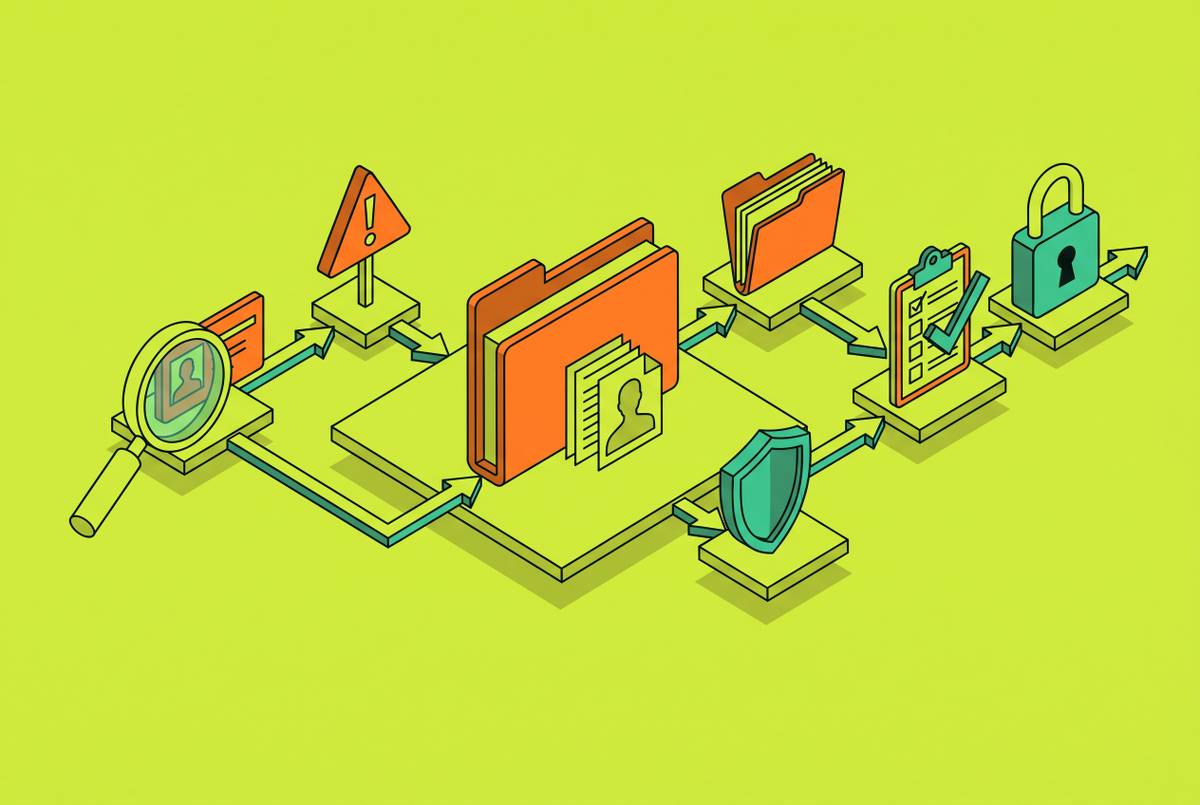
The departing-employee window is the most reliably studied high-risk period in insider threat research. Employees who have submitted their resignation, who are under HR investigation, or who hold access to an organization's most sensitive systems represent a concentrated, time-bounded risk. Graduated enforcement models, ones that tighten monitoring and access as risk indicators accumulate, can address this window well. That only works if the detection system is correlating HR status with data activity in real time, rather than treating HR records and data movement logs as separate systems that never talk to each other.
The DPRK fake IT worker scheme represents the most structurally novel case, and the hardest for a traditional program to catch, because the threat begins before employment even starts. It does not enter through a compromised credential or a policy violation. It enters through the hiring pipeline itself. At a conference, an FBI deputy assistant director disclosed that a DPRK remote IT worker had been found performing work for a U.S. federal government agency, the first confirmed penetration of a government entity by this scheme. The United Nations estimates these operations generate hundreds of millions of dollars annually for North Korea, with operatives active across dozens of countries.
None of these three archetypes gets caught by a rule watching a single data movement event. The departing employee's risk is a pattern that accumulates over weeks of staging behavior. What makes all three hard to catch is the same structural gap: the absence of cross-timeline, cross-platform behavioral correlation. A system built to evaluate discrete events will keep missing patterns that only resolve when the full timeline is assembled.
What detection programs must do differently in distributed environments
Effective detection in a distributed environment requires evaluating the actor, the data, the destination, and the surrounding behavioral pattern together. A system that evaluates only one of these dimensions will reproduce the same failure modes already documented: noise without signal, visibility without judgment, rules without context.
Detection has to begin before employment does. Pre-hire signals documented by Nisos, including a new or limited online presence, avoidance of on-camera interaction during interviews, and requests to ship company equipment to addresses inconsistent with submitted identity documents, are now the earliest available indicators of identity fraud in a remote hiring context. Internal telemetry alone is insufficient for a distributed workforce. External intelligence, undisclosed employment on freelance platforms, affiliations with competitors, suspicious recruiting behavior, signs of prior data exposure, turns ambiguous internal signals into context that changes how that telemetry should be read.
Peer-group baselining has to replace static, organization-wide thresholds as the core architecture. Distributed workforces carry too much legitimate variability in login times, device types, and data access patterns for a single company-wide average to produce usable signal. Risk scoring needs to account for what is normal for a given person, in a given role, within a given peer group, rather than measuring everyone against the same flat line.
Shadow AI requires controls built around the data, the destination, and the account together, not a blanket block on AI tools and not a permissive allow either. The intervention has to happen before sensitive data actually leaves, informed by context about what the data is and where it is headed.
Containment speed carries real financial weight. SentinelOne's 2026 data shows containment time has dropped to 60 days in better-performing organizations. Reducing mean time to identification is a direct cost lever, and a platform that surfaces the right alert while still burying analysts in triage has not solved the underlying problem. Speed and signal quality have to improve together, or the improvement in one gets erased by the failure of the other.
Assembling the Full Behavioral Picture for Distributed Detection
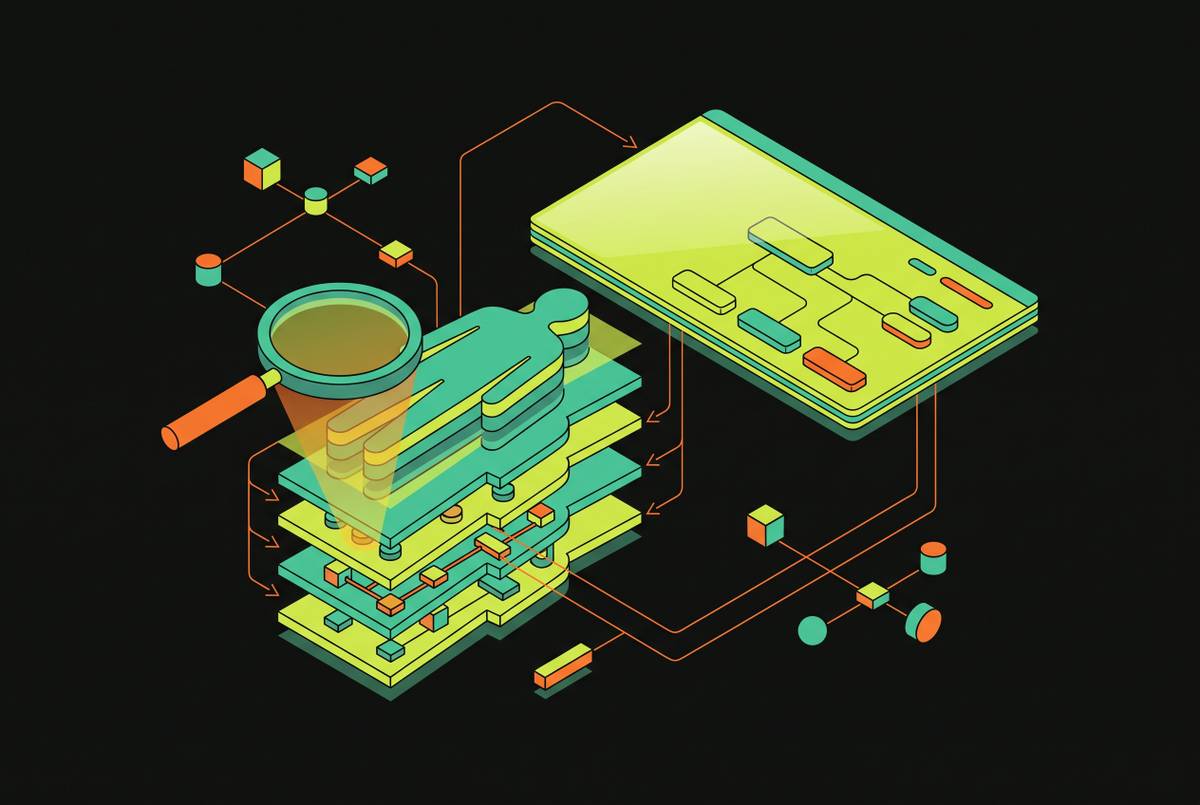
A detection architecture built for this environment has to do several things at once: understand the data well enough to know what matters, understand the person well enough to know what is normal for them specifically, and understand the destination well enough to know whether a given movement is consistent with legitimate work. None of these capabilities substitutes for the others. Destination awareness without either of the other two cannot distinguish a sanctioned cloud backup from an unauthorized upload to a personal account.
Platforms built for distributed environments bring these threads together instead of treating them as separate systems that happen to share a dashboard. They baseline against peer groups rather than organization-wide averages, so a contractor's late-night login reads differently from an executive's, because it should. They evaluate AI tool use by data, destination, and account together, rather than issuing a blanket verdict on an entire category of software that employees will keep using with or without permission.
What ties all of this together is the shift from watching individual events to assembling a continuous behavioral record across time, systems, and identity. The departing employee, the fraudulent hire, the polyworker, the compromised machine account: each becomes visible only when a system can trace a pattern across weeks or months rather than inspecting a single transaction in isolation. That is the capability that perimeter-era detection never needed and that distributed work now makes indispensable.