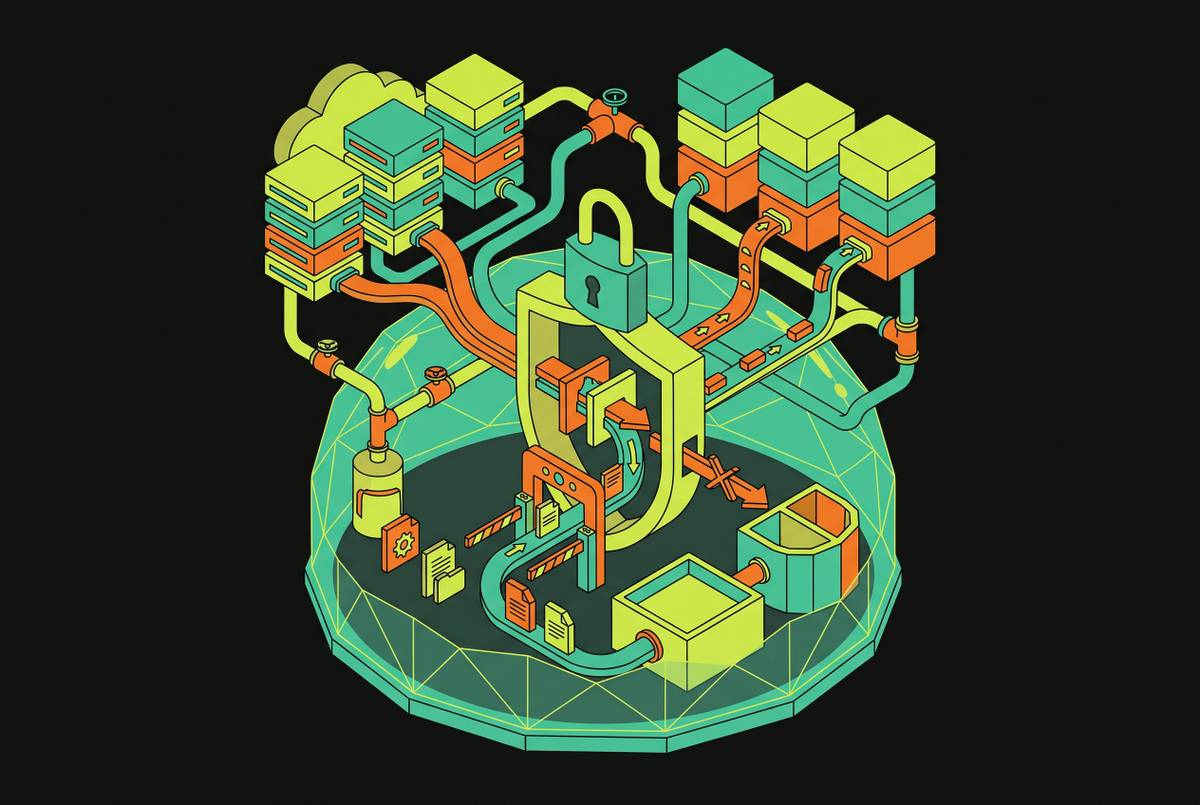
Insider Data Exfiltration via Personal Cloud Storage
Cloud storage has become the easiest way for employees to steal company data.
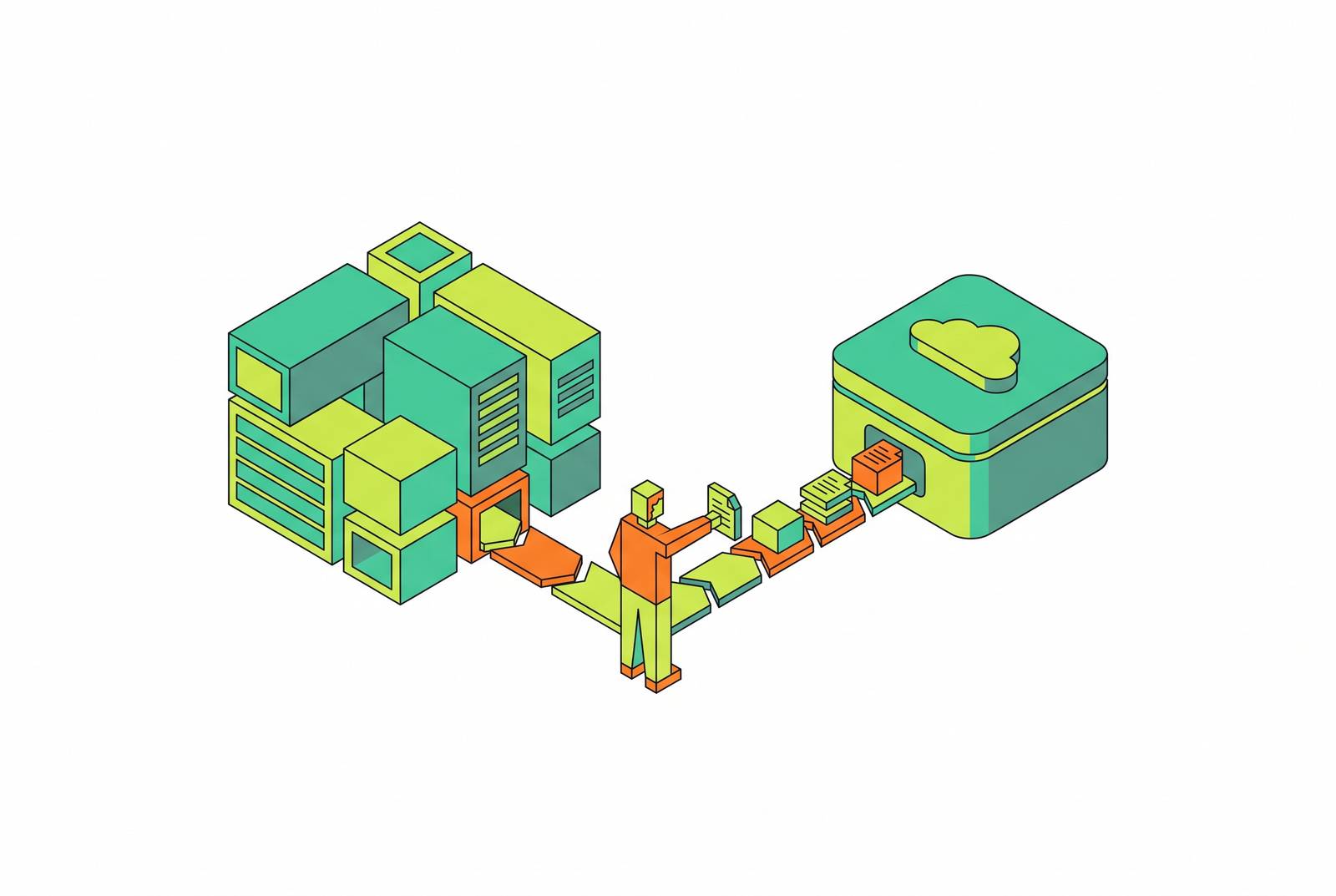
Personal cloud storage is now the single largest channel for insider data theft, ahead of removable media, ahead of email, ahead of generative AI tools. It works because it doesn't break any rules the way a hack does. An insider with legitimate access to a file just moves it somewhere the company can't see, and to a security system watching for intrusions, nothing about that looks wrong.
That's the core problem this piece sets out to unpack. Personal cloud exfiltration doesn't exploit a vulnerability. It exploits permission. The employee already has the keys; they're just walking out a different door with them. And because tools like Dropbox, iCloud, Notion, and Slack sit inside the normal rhythm of a workday, a file sync to a personal account looks, on the wire, almost identical to a file sync for a work project. The traffic is encrypted. The destination is a legitimate domain. The user is authenticated. None of the old tripwires fire.
Industry data on malicious insider cases backs this up at scale. One study of legal documents covering 1,002 malicious insider cases found that exfiltration occurred in 909 of them, roughly 91%. Across the broader landscape of insider cases, cloud services (both company-sanctioned and personal) are closing in on email as the dominant pathway out. The tools have changed. The incentive to take data with you hasn't.
What the financial stakes look like when insiders move data out
The 2026 Ponemon Cost of Insider Risks Global Report, sponsored by DTEX and built on 8,750 interviews across 354 organizations, puts the average annual cost of insider risk at $19.5 million in 2025. North American organizations run higher still, averaging $24 million. Back in 2018 that same average sat at $8.76 million. That's a 123% increase in seven years, a pace that outstrips inflation and most other line items on a security budget.
Frequency is climbing too. Organizations report an average of 13.5 insider threat events per year, Securonix's 2025 research found, and 76% of organizations say that number is going up, not down.
Break the cost down by incident type and the picture sharpens. Ponemon and DTEX figures show malicious insider incidents averaging $715,366 each. Credential theft, which is frequently the mechanism that enables cloud exfiltration in the first place, averages $779,707 per incident, the costliest category tracked. Healthcare organizations face per-incident costs as high as $12.6 million. Financial services leads all industries at $20.68 million annually in average annual insider risk costs.
None of these numbers describe the theft itself. They describe what happens after: containment, forensic investigation, legal escalation, remediation. The Cybersecurity Insiders 2025 Insider Risk Report found that 93% of security leaders consider insider threats as hard or harder to detect than external attacks, and yet only 23% feel confident they could stop one before serious damage is done. That gap between perceived difficulty and actual confidence is where personal cloud exfiltration lives.
How insiders use personal cloud storage to move data (the mechanics)
The mechanics break down into three recognizable patterns.
The first is the silent sync client. An employee installs a personal Dropbox or Google Drive client on a work laptop, and it starts mirroring a local folder to a personal account continuously in the background. There's no upload button pressed, no command-line activity, no login anomaly to catch. It's just a process quietly running for weeks, sometimes months, doing what sync software is built to do.
The second is the manual upload, usually timed to a decision point. The insider knows what they want, picks the files, and pushes them out in a browser session. In one documented manufacturing case, a computer forensics team found Dropbox installed on a company laptop three days before an employee's resignation, with R&D documentation for a new product uploaded to a personal account in the days that followed. The install date alone is a strong tell, in hindsight.
The third layer is obfuscation. VPNs, mobile hotspots, private browsing sessions, encrypted messaging apps: all used to mask either the destination of the data or the session moving it, which makes network-level traffic analysis and destination blocking far less useful than it sounds on paper.
What's actually being taken tracks closely with what's valuable. Client and customer data leads at 31.2% of exfiltrated content, and source code is among the most commonly stolen categories. The behavior leading up to the theft often starts long before anyone hands in a notice. Directory lookups, access to file-author metadata, a dry-run copy of a folder just to see if it works: these appear as reconnaissance well ahead of the actual event. Measurable signs of exfiltration activity can appear as much as 200 days before an employee's departure, reflecting a process rather than a last-minute grab. That's not a last-minute grab. That's a process.
And this is where blocking Dropbox or Google Drive company-wide breaks down: you can't just block them, because those same services often run legitimate parts of the business. A blanket block breaks real workflows. A targeted block requires knowing, in advance, which account on the other end is personal and which is sanctioned. Most organizations don't have that visibility. The pattern around it is the signal: timing, account ownership, and what data is actually in motion. It's the pattern around it: timing, account ownership, and what data is actually in motion.
Behavioral patterns and timing that distinguish exfiltration from normal cloud use
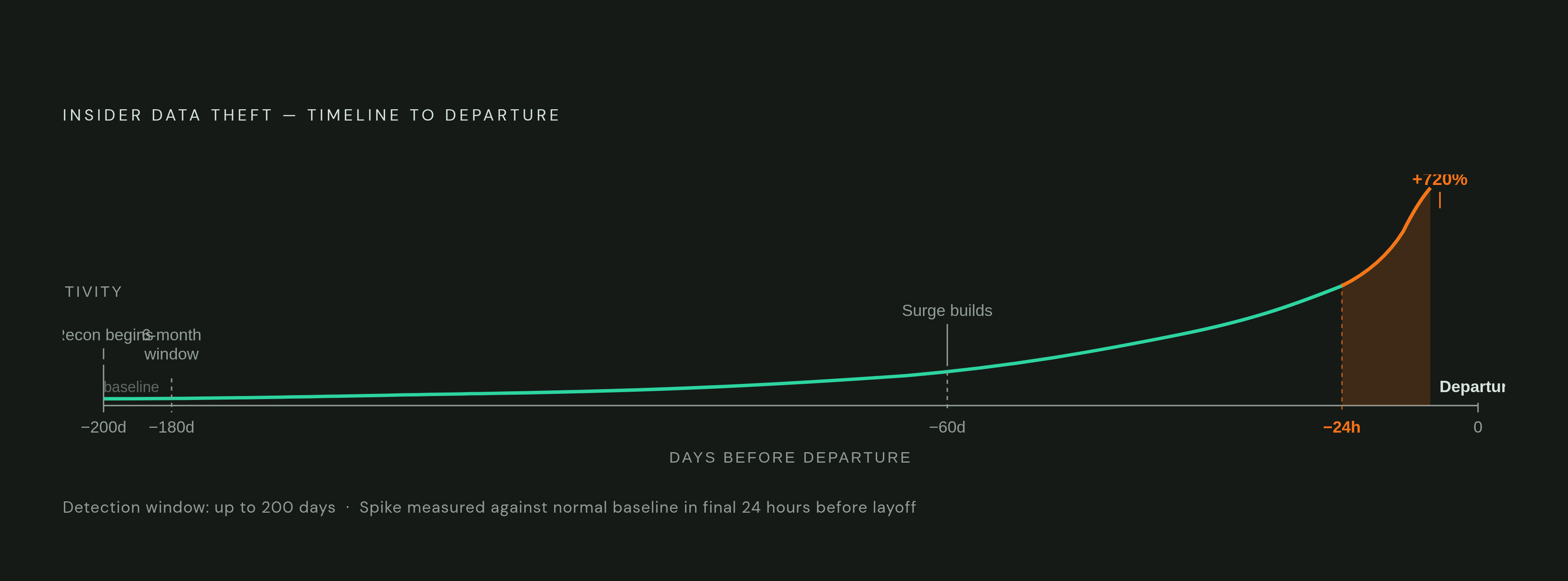
The clearest and most heavily documented pattern is the pre-departure surge. Organizations see a 720% spike in data exfiltration activity in the 24 hours before a layoff compared to normal baseline behavior, and in some cases suspicious activity begins as much as six months before that.
A handful of behavioral indicators tend to appear across case after case: first-time connections to unfamiliar devices paired with mass file copies, email forwarding rules quietly redirected to personal accounts, sudden use of cloud apps the employee has never touched before, file wiping or endpoint agent removal near the last day on the job, and printing spikes for contracts or pricing sheets or engineering diagrams that have nothing to do with the employee's actual role.
None of these, taken alone, means much. A Dropbox install by itself isn't evidence of anything. A Dropbox install combined with a sudden spike in file access combined with a resignation letter on file is an entirely different story, and the risk lives in that combination, not in any single event.
Context that security teams rarely have automatic access to changes the read on all of this substantially. An employee on a performance improvement plan, someone in a known layoff cohort, a person mid-notice-period: these are HR facts, and they usually sit in a different system than the one watching file activity. The two signals never meet.
The legal-document study referenced earlier breaks its 909 exfiltration cases down further: 771 happened during active employment, 255 happened after employment ended, and 117 spanned both. Retained cloud credentials after an employee leaves represent a distinct failure mode that gets skipped most often in offboarding, separate from the in-tenure theft everyone plans for. Retained cloud credentials after an employee leaves represent a distinct failure mode, separate from the in-tenure theft everyone plans for, and it's the piece of offboarding that gets skipped most often.
Case archetypes that show the range of how this plays out in practice
A senior engineer at one organization synced source code and design documents to a personal cloud account through a sync client that ran quietly in the background for weeks. No suspicious command-line activity, no odd login pattern. The theft only came to light when a competing company shipped a product with calibration routines that matched, almost exactly, the original engineer's work. Detection happened at the company that received the stolen data.
The manufacturing case mentioned earlier follows a more familiar shape: Dropbox installed three days before resignation, R&D documentation uploaded to a personal account, discovered only after the fact by a forensics team reviewing the departed employee's laptop.
Scale looks different in the Tesla case. TechCrunch reported that two former employees leaked more than 23,000 internal documents, roughly 100GB of confidential material, including personal data for over 75,000 employees, customer bank details, production secrets, and customer complaints tied to Full Self-Driving features. Tesla responded by pursuing lawsuits to seize the former employees' devices, which shows how far the legal response can extend once the theft is confirmed.
Not every case runs through cloud storage at all. Cameron Curry, a contractor at Brightly Software (a Siemens company), used data-analyst access he was fully authorized to have in order to steal employee personal information, then sent more than 60 extortion emails demanding $2.5 million. A jury found him guilty on March 20, 2026, BleepingComputer reported. The access itself was never the problem. It was appropriate for his role. What he did with it wasn't.
Post-termination sabotage tells a related but distinct story. Sohaib Akhter was convicted on May 8, 2026 for deleting government databases immediately following their firing on February 18, 2025, BleepingComputer reported. That's not exfiltration in the strict sense, but it shares the same root cause: an offboarding process that didn't close access fast enough.
The furthest edge of this problem doesn't even involve traditional employees. Kejia "Tony" Wang was sentenced to 108 months and Zhenxing "Danny" Wang to 92 months on April 16, 2026 for helping North Korean IT workers pose as U.S. residents. Using more than 80 stolen identities, those workers landed jobs at more than 100 companies in that country. TechCrunch and DOJ reporting found that the scheme generated roughly $5 million for North Korea and stole export-controlled data from a California defense contractor. That case stretches the definition of "insider" well past the employee badge, into embedded third-party actors who never needed to hack anything because they were hired straight into the access they wanted.
Every one of these cases shares a thread. The actor had legitimate access. The method exploited that access rather than working around it. And discovery came late, often through forensics, litigation, or a competitor's product launch rather than through any control that caught the theft as it happened.
How generative AI tools have added a parallel exfiltration channel alongside cloud storage
Generative AI tools now account for 13.1% of insider exfiltration incidents, already the third-largest vector behind personal cloud storage and removable media. Data sent to GenAI apps grew 30-fold in a single year, and the average organization now shares more than 7.7GB of data with AI tools every month.
A meaningful share of that data shouldn't be leaving the building at all: 22% of files and 4.37% of prompts sent to these tools contained sensitive material, including source code, access credentials, proprietary algorithms, M&A documents, customer and employee records, and internal financial data.
Gartner's November 2025 report, "How to Overcome DLP Challenges Posed by Generative AI," states that "conventional DLP cannot effectively manage GenAI data loss risks, given encrypted traffic, the invisibility of user intent, and the spread of shadow AI." Shadow AI is the operative phrase there: employees adopting AI tools nobody approved, moving sensitive data through pathways that don't appear on any list of known destinations a security team is watching.
The parallel to personal cloud sync is almost exact. Just as a sync client runs quietly in the background moving files to a personal account, an AI coding assistant that ingests a chunk of proprietary source code, or a productivity tool fed customer data for a quick summary, is moving sensitive information to an external system, often without the employee grasping what that means for data handling. Blocking these tools outright isn't realistic; they've become part of how developers and analysts actually work. The same logic that applies to cloud storage, tracking account ownership and understanding what data is moving where, has to extend to AI destinations too. Destination-aware controls alone won't cut it when the traffic is encrypted and the intent behind it is invisible to the tool watching the wire.
Where legacy DLP controls break down against personal cloud and AI exfiltration
Legacy data loss prevention was built for a different era of data movement: files on servers, email as the primary pipe out, USB drives and FTP as the escape routes. Rules-based scanning made sense for that world. It doesn't make sense for this one.
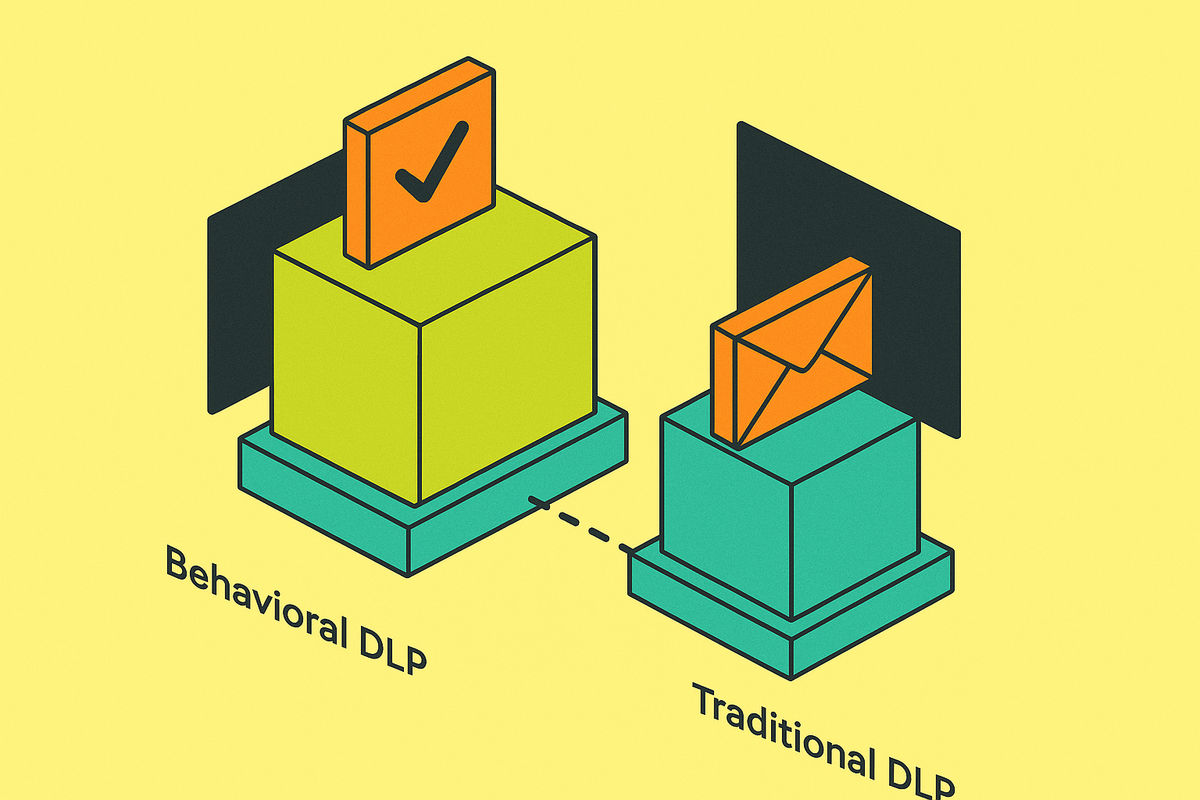
The core limitation is simple to state: legacy DLP looks at what data contains, not what a person is actually doing with it. A policy analyst copying a customer file into a shared work folder and a departing employee copying that same file to a personal cloud account produce an identical signal to a content scanner. Both are just a file, matching a pattern, moving somewhere.
Personal cloud exfiltration slips past this kind of tooling for a handful of concrete reasons. Traffic headed to well-known cloud domains often isn't inspected at all, or is allowed through by default because blocking it would break legitimate work. The upload itself looks exactly like ordinary collaboration. Sync clients operate without any human clicking anything, and that automatic operation means there's no discrete "upload" event for a rule to catch. And encrypted traffic closes off payload inspection at the network level entirely.
Too many false positives makes all of this worse, not better. Most DLP programs don't fail because they miss the alert. They fail because they generate too many of the wrong ones, and without a way to score risk based on context, the system produces noise instead of signal. Security teams stop chasing low-confidence alerts because there simply isn't time, and that's exactly where a real exfiltration event gets lost in the pile.
The data itself is unclassified and unlabeled, which undermines detection before it even starts. A company's most valuable material, source code, design documents, early-stage research, often carries no formal classification label at all. It's sensitive because of what it means to the business, not because it matches a regular expression somewhere in a policy engine. Legacy DLP can't protect what it can't first identify. The Cybersecurity Insiders Insider Risk Index for 2025 found that 72% of security leaders admit they lack full visibility into how users interact with sensitive data across endpoints, SaaS apps, and GenAI tools, exposing a gap in the underlying model rather than a tuning issue. That's not a tuning issue. That's a gap in the underlying model.
Adding AI on top of an existing rule engine to sort and prioritize alerts faster is a real improvement, but it's not the same thing as an architectural shift toward behavioral and lineage-based detection. One makes the old model faster. The other replaces it.
What effective detection of personal cloud exfiltration requires
The shift detection needs to make is a shift in the question being asked. Instead of "what does this data contain," the question has to become who is moving it, to which account, in what pattern, and at what point in that person's tenure or behavioral history.
Data lineage gives a more reliable signal here than keyword matching. Knowing how a file was created, who has touched it, and where it's traveled since gives a far more reliable signal than scanning its contents for a match. A design document with zero classification label is still identifiable as core intellectual property once you look at its creation context and its access history, rather than waiting for it to trip a keyword rule it was never going to trip.
Account ownership has to become a first-order signal, not an afterthought. The same Dropbox destination might be a legitimate shared work folder or a personal account collecting stolen files, so telling them apart requires resolving whose account is actually receiving the data, not simply which domain the traffic is headed to.
None of this works as a snapshot. It has to be read as a timeline. The 200-day run-up before a departure, the 720% spike in the final 24 hours before a layoff, the reconnaissance-style file access that appears months before anyone hands in a resignation letter: these only mean something in sequence, tracked against a person's normal baseline and their position in the employment lifecycle. A single flagged event will almost always look, in isolation, like an ordinary workday. The theft is visible only in the pattern building around it.