Endpoint DLP vs. Network DLP for Modern Enterprise Environments
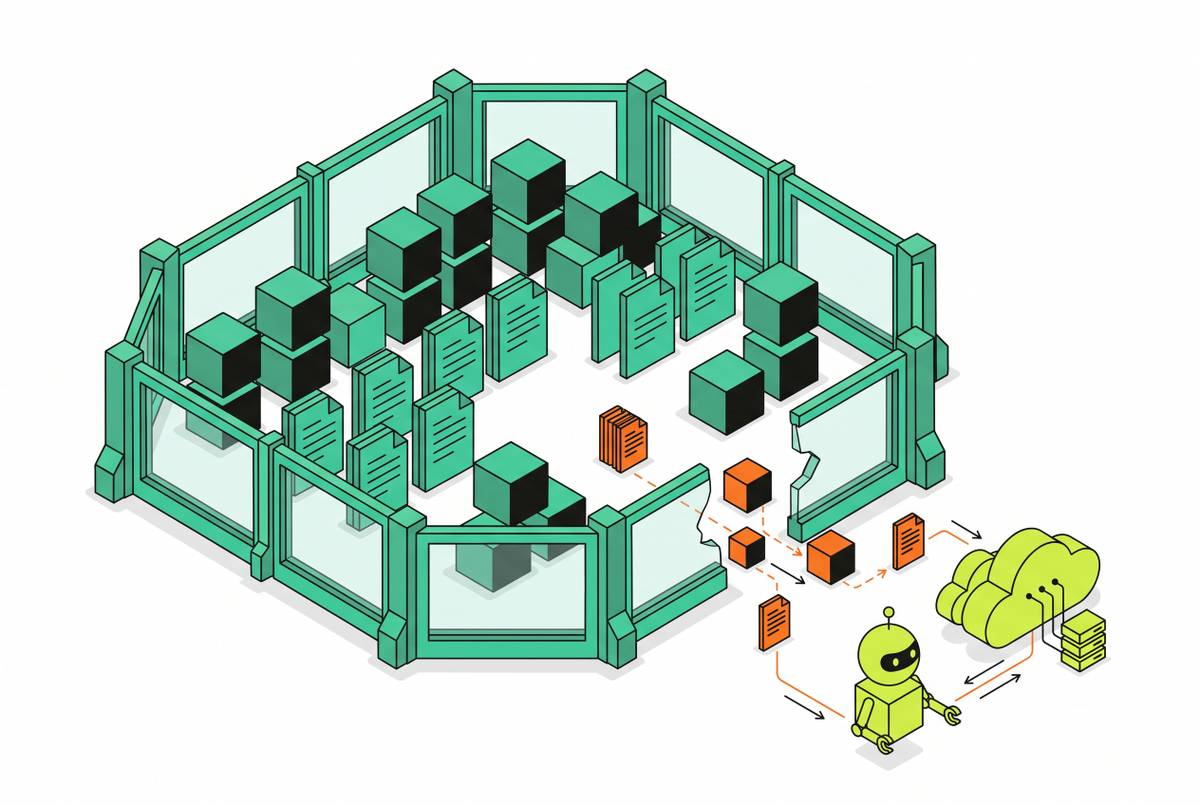
Network DLP alone can't catch modern exfiltration through AI, remote work, and encrypted SaaS.
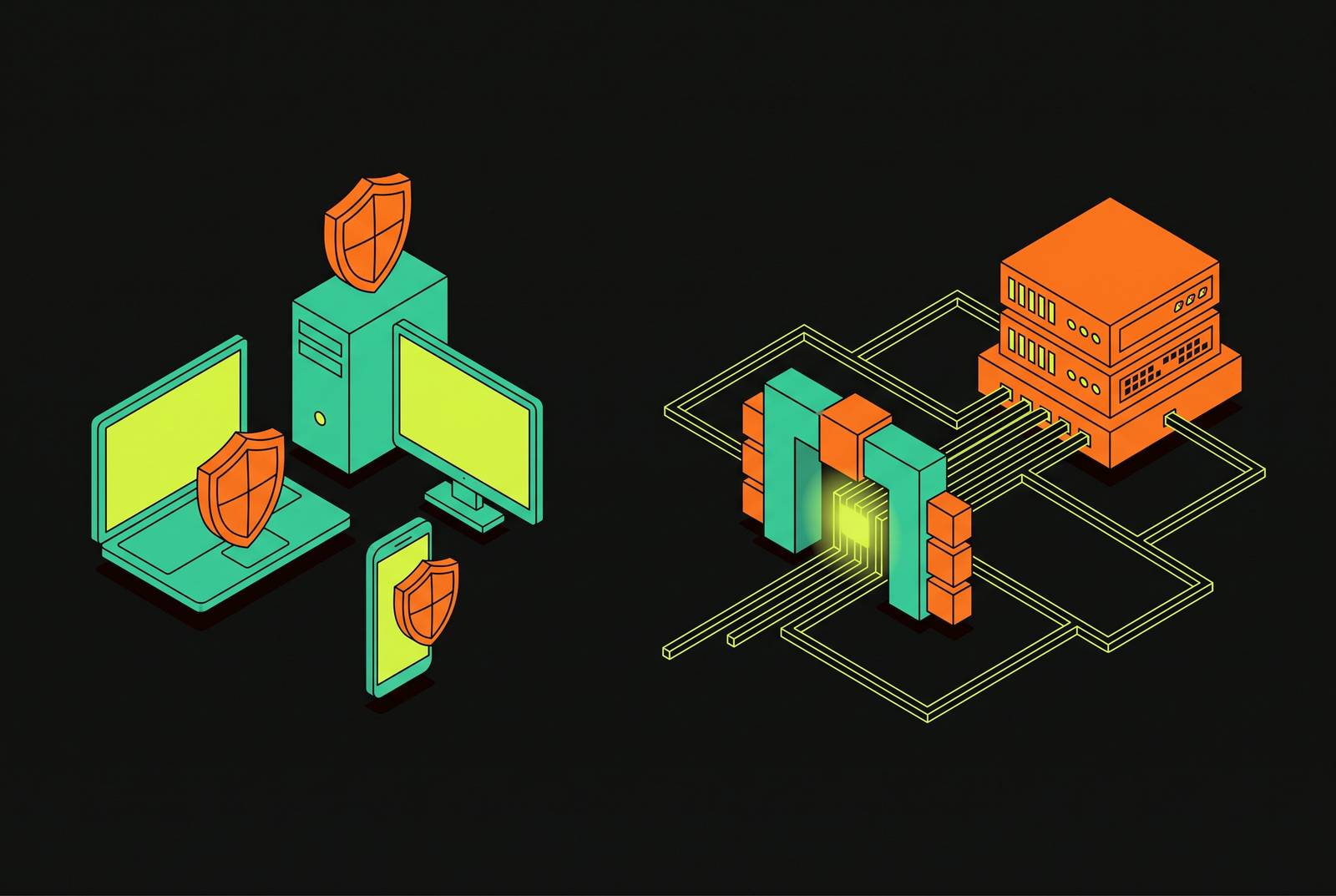
Endpoint DLP and network DLP protect data at two different points in its journey, and most enterprises still choose between them out of architectural habit rather than any real look at where their risk lives. The right answer depends on how data actually moves through a given organization: who touches it, what device it sits on, and whether it ever crosses a network choke point a security team actually watches. That third condition gets met less often every year, and for remote workforces, encrypted SaaS traffic, and AI tools running locally on laptops, network DLP alone is no longer a defensible answer. This piece makes the case directly: network DLP still has a job, but treating it as the primary control in a hybrid enterprise saturated with modern software tools is a mistake most security teams haven't caught up to yet.
What network DLP still does well
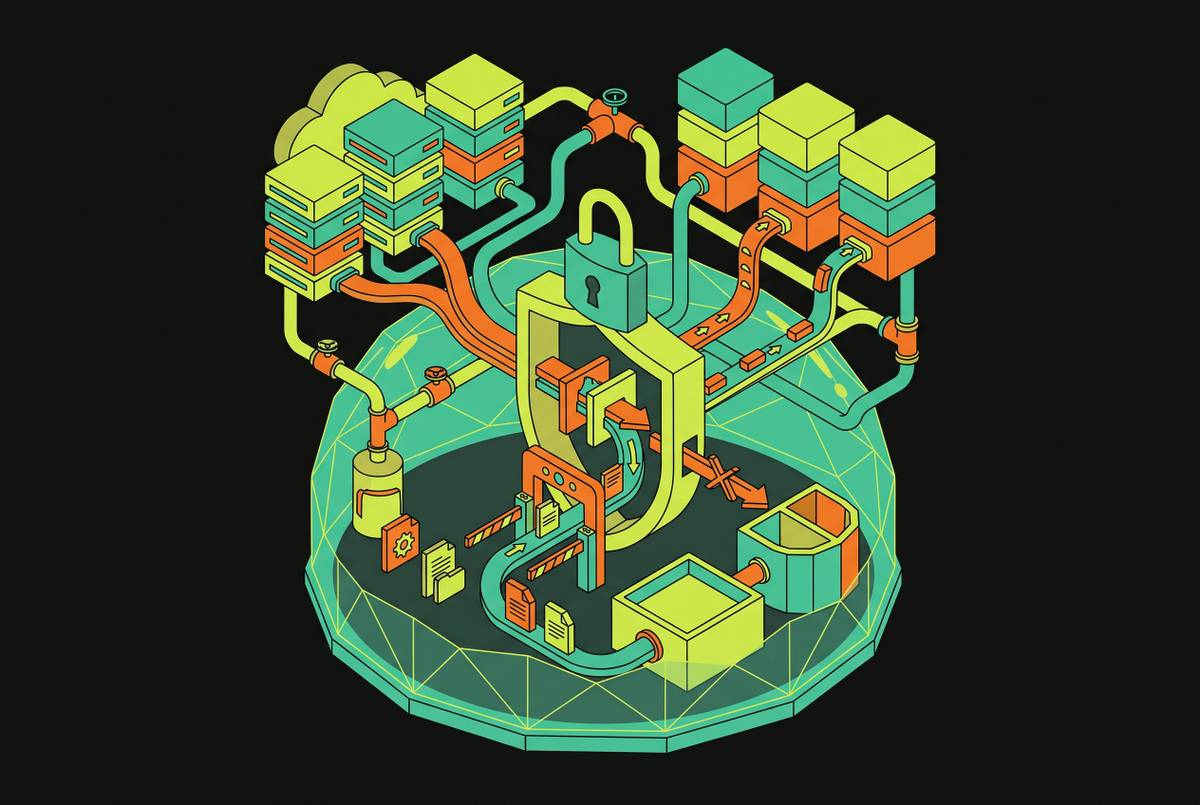
Network DLP sits at a gateway, a corporate web proxy, an email gateway, or a network appliance, and inspects traffic as it flows through that choke point. The detection method is pattern matching applied to data in transit: credit card number formats, Social Security number strings, document fingerprints matched against a file someone tagged as sensitive months earlier.
That design made sense in the environment it was built for. Most users sat on the corporate LAN, most outbound traffic ran through the email gateway, and most sensitive data lived on network shares or mail servers. Watching the gateway meant watching almost everything that mattered, because almost everything that mattered had to pass through it.
Network DLP still earns its place in a few specific spots. Outbound email inspection matters for regulated industries with heavy mail-based workflows, and server-to-server flows that genuinely cross a known network boundary remain a legitimate catch point (per dope.security). Compliance reporting also benefits from a control tied to a specific, auditable perimeter. There's a real structural advantage too: a single network deployment gives centralized visibility across a large user population without installing an agent on every device (per Forcepoint).
That strength comes with a condition attached. Network DLP can only enforce what actually crosses its inspection point, and in a modern enterprise, less of the workflow does that with each passing year.
Five specific ways the modern environment breaks network DLP's coverage
The structural limit is simple to state and expensive to ignore: if the traffic doesn't cross the sensor, the sensor doesn't see it (per dope.security). Five gaps follow from that limit, and none of them count as edge cases anymore.
A remote employee uploading a customer database to personal cloud storage over home Wi-Fi never touches the corporate web proxy. The leak happens quietly, with no gateway log to flag it (per dope.security).
SSL inspection has become a losing fight on top of that. Modern apps pin certificates, use mTLS, or reject the corporate intermediate certificate outright, so a network DLP tool that can't inspect the encrypted body of a request falls back to filtering on hostname alone, roughly the functionality of a web filter from twenty years ago (per dope.security, 2026).
AI prompts sidestep pattern rules. An employee pasting sensitive contract language, or layoff planning details, into an LLM client produces conversational text with nothing a regex can latch onto. No pattern fires because there's no pattern to find (per dope.security).
Clipboard activity is invisible by design, too. When someone copies a customer list out of Salesforce and pastes it into a chat window, no file ever transits the network; the gateway just sees an ordinary HTTPS request (per dope.security).
And personal SaaS accounts sit in a genuine blind spot, since personal Google Drive, personal OneDrive, and personal AI accounts often share the same domain as the sanctioned enterprise version. Without inspection at the device itself, the corporate gateway has no way to tell one tenant from another (per dope.security). Taken together, these five gaps describe the majority of high-impact exfiltration patterns in a hybrid, SaaS-first enterprise.
Where endpoint DLP's blind spots lie
Endpoint DLP runs as an agent on managed devices and intercepts data as users and applications act on it, before it ever leaves the machine. The control point follows the user rather than the network path, so policy gets enforced on the office LAN, a hotel network, or home broadband the corporate appliance has never touched (per dope.security; Forcepoint).
That gives endpoint DLP a wider reach across data states than network DLP ever had. It covers data in use, meaning copy-paste actions, print jobs, screen captures, and USB transfers, and it covers data in motion at the device level, meaning file uploads through any browser to any destination, sanctioned or not. It also covers the newer AI-specific channels: prompts typed into LLM clients, drag-and-drop into desktop AI apps, clipboard pastes into web forms, uploads from native applications. And because the agent lives on the device, it keeps enforcing policy even when the device has no network connection at all (per Forcepoint).
None of that makes endpoint DLP complete, and the gap it leaves is a real one. It requires a managed device, full stop, so contractors, BYOD users, and personal endpoints have no agent to enforce anything against (per Forcepoint). A user with local admin rights who installs an application outside the DLP tool's supported list turns that app into an uninspected path for data to leave through (per Endpoint Protector). Rolling out agents across a large fleet, keeping them updated, and tuning policy per endpoint also raises a real operational cost that grows as deployments mature.
Endpoint DLP's blind spot is the unmanaged device. Network DLP's blind spot is everything that never crosses its inspection point. These gaps don't overlap, they sit side by side. That is why the two layers keep getting paired rather than pitted against each other.
How agentic AI and shadow AI have shifted the enforcement calculus toward the endpoint
AI tools have pulled a large and growing share of sensitive data interactions off inspectable network channels and onto the device itself, and that shift makes endpoint-level inspection necessary, not optional, for an expanding category of risk. Developer adoption of AI coding assistants has already crossed the halfway mark among developers, and endpoint-based AI agents grew sharply through 2025, which puts agentic AI's presence in enterprise environments well past the experimental phase (per Cyberhaven Labs).
Network DLP runs into a classification problem here that pattern matching can't solve, not with more tuning, not with a bigger rule library. A user pasting a contract draft, pricing data, or engineering IP into an LLM prompt produces conversational text: no file, no fingerprint match, no regex trigger. The data is sensitive and the format is invisible to anything built around pattern inspection (per dope.security).
Shadow AI makes the problem worse. Users paste fragments, summaries, code snippets, or paraphrased material into AI tools, and exact-pattern or file-fingerprint detection struggles badly with content that's been transformed or reworded rather than copied outright (per research brief).
Agentic AI adds a separate risk category on top of that. These systems move data across applications, run commands, and connect to APIs on a user's behalf, and if they're misconfigured or manipulated, they can become exfiltration channels nobody designed on purpose. Sensitive data now moves through AI prompts and clipboard pastes more than through the file-transfer workflows network DLP was built to catch decades ago, and enforcement has to live where those interactions actually happen: on the device, not at the gateway. Banning AI tools outright isn't a workable answer here. What works is context-aware intervention at the exact point where data meets the AI interface, before it leaves the machine.
Why static rules fail both network and endpoint DLP
Legacy DLP, whether it sits at the network layer or the endpoint, runs on a binary assumption: if data matches a rule, block it, and if it doesn't, let it through. That answers one narrow question well: does this data match a known sensitive pattern. It fails at nearly everything else (per research brief).
A policy built to catch Social Security numbers fires on any nine-digit string in the right format, including test data and internal documentation that was never actually at risk. The result is noise. It's noise, and noise buries the real signal underneath it.
AI-powered inspection adds three things static rules can't reliably copy. Context understanding lets a system distinguish a doctor forwarding lab results to a referring physician from that same doctor sending the same file to a personal email account late on a Friday night (per research brief). Behavioral baselining learns how each user, team, and application normally handles data, so it flags deviations instead of just matching content. And the model adapts as data types and workflows shift, rather than requiring an analyst to rewrite hundreds of rules by hand every time the business changes.
Data lineage tracking sits a layer above that: modern AI-powered DLP can watch how a file was created, shared, or transformed as it moves through an environment, not just inspect its content at one frozen moment. The false-positive problem that has plagued DLP for years was never a tuning problem at root. It's a structural consequence of rules that can't understand context in the first place, and AI-based inspection fixes that at the architecture level rather than through more analyst hours. The broader industry direction points toward AI-powered DLP enforcing Zero Trust data policy at the point of access as well as at the perimeter.
None of this changes based on where enforcement sits, but it matters more at the endpoint than at the gateway. User actions, application context, timing, and data lineage are all visible on the device in a way the network simply doesn't capture.
The insider risk patterns that expose the endpoint/network coverage gap most clearly
Pre-departure exfiltration is the clearest, most common form of critical insider risk, and it rarely looks like a single event. Suspicious activity often starts building months before someone's formal last day, accumulating gradually rather than happening all at once (per research brief).
The channels involved make the coverage gap concrete. Bulk downloads from shared drives or a CRM system are detectable at the endpoint, right where the download starts. Emailing documents to a personal address is catchable at either layer, but only if that email actually crosses a monitored gateway. Personal cloud storage, the most common channel in these cases, goes invisible to network DLP the moment someone accesses it from home, which leaves endpoint-level inspection as the only real catch point (per research brief). USB copying is invisible to network DLP no matter where it happens, full stop. Printing sensitive documents needs endpoint visibility into the print job itself, since nothing about a print job crosses a network gateway.
The Rippling-Deel case from March 2025 shows what this looks like in practice. An alleged insider planted with legitimate access to Rippling's Slack, Salesforce, and Google Drive pulled customer lists and related sensitive data over four months without detection, using channels that looked completely ordinary because the access itself was authorized. Network-only inspection had nothing to flag, because nothing about the activity looked like a network event.
Servers deserve more attention here than they usually get. Servers deserve more attention than they usually get, since insiders with legitimate credentials often use them to quietly stage sensitive data well before any exfiltration happens, in a pattern indistinguishable from routine maintenance right up until it isn't.
The DPRK remote IT worker pattern pushes this same logic further. Sophisticated actors posing as ordinary contractors do real work while collecting or transmitting data on the side, and some cases have escalated into active data extortion (per research brief). The person appears legitimate, the access is authorized, and the exfiltration channel is completely ordinary. Perimeter inspection has nothing to catch here. Only behavioral pattern detection, read across a timeline rather than a single moment, has a chance.
The throughline across every one of these cases is the same: the risk is never one anomalous event. It's a pattern across a user's timeline that only becomes visible when context, data lineage, and sequence get read together, and a layered approach still has to account for contractor and third-party populations that often sit on unmanaged devices, outside the reach of endpoint controls.
How to sequence endpoint and network DLP based on your actual risk profile
The starting point is a plain look at where the highest-risk data paths actually run in a given organization, rather than a preference for one architecture baked in from a prior deployment.
A workforce that's mostly remote or hybrid should start at the endpoint rather than the gateway. When most users work off-network most of the time, a centralized choke point loses much of its value, because sensitive data moves straight to SaaS applications from home connections and often never touches a monitored corporate gateway. A regulated industry with heavy email-based workflows and a mostly on-network population is a different case entirely: network DLP still functions as a meaningful first layer there, especially for compliance reporting and server-to-server flows that genuinely cross a known boundary. An organization with a large contractor or BYOD population runs into the opposite problem again, where endpoint-only controls leave predictable gaps at every unmanaged device, which makes network or cloud DLP a necessary complement rather than a redundant one.
Running both is a deliberate layering decision. It's a deliberate layering decision. Network DLP gives centralized inspection across the major egress channels: email, monitored web traffic, and server-to-server flows. Endpoint DLP closes the gaps around removable media, local device actions, remote work, and AI tool usage that the network was never built to see. Cloud DLP adds a third layer on top of both, covering data stored, shared, or accessed inside SaaS environments, which matter more every year as cloud platforms absorb a growing share of how enterprise data actually moves (per research brief).
The sequencing question comes down to matching a program to where an organization's own data actually travels, and being honest about which paths get watched and which ones don't. Get that wrong, and the layering decision stops mattering, because the gaps that count most were never the ones anyone was arguing about.