Third-Party and Contractor Insider Risk in Enterprise Environments
Contractors get the same access as employees but without the oversight that catches insider threats.
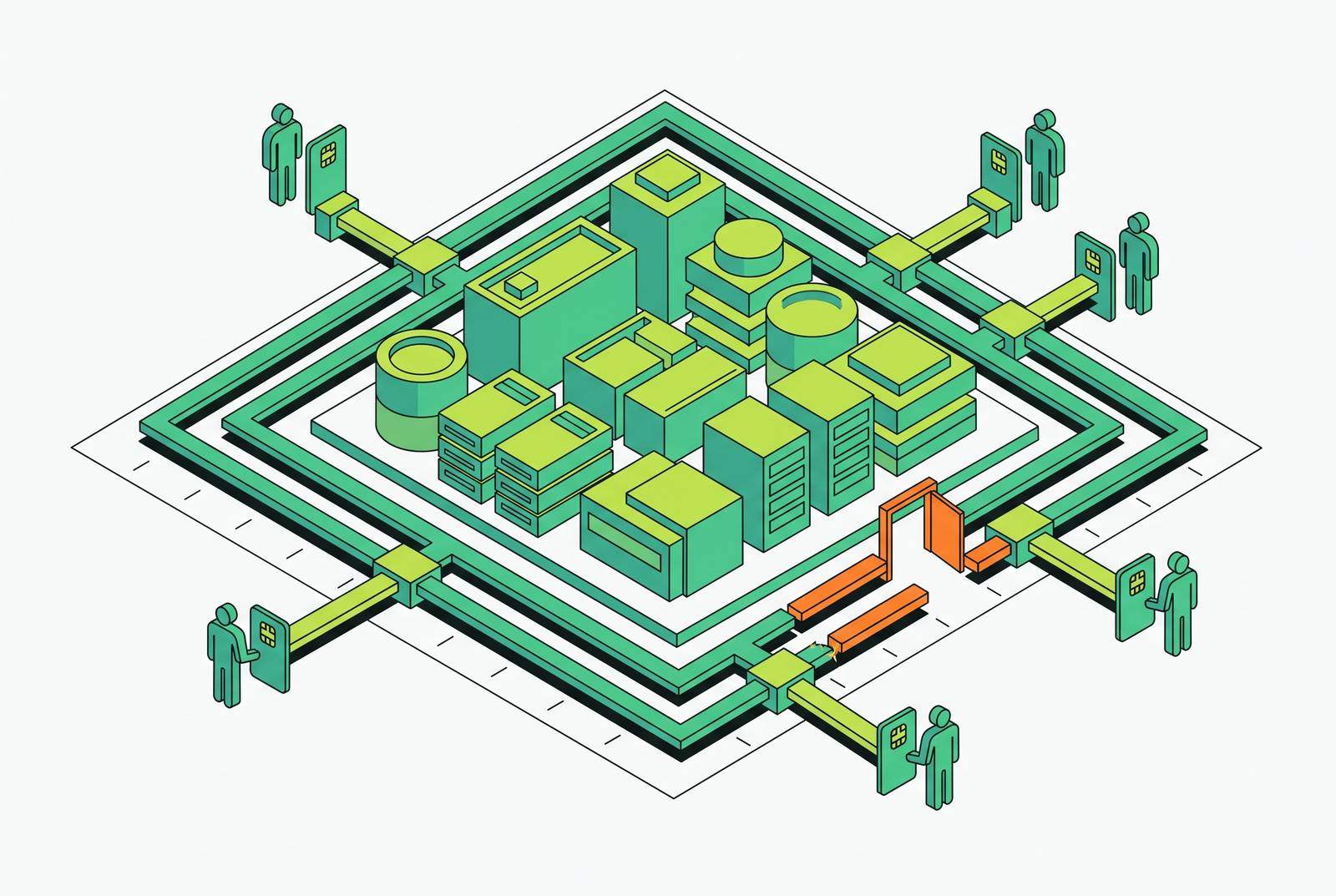
Third-party contractors and vendors carry the same data access as full employees but almost none of the tracking that makes insider risk programs work. No behavioral history, no HR paper trail, no clean offboarding. That gap is why third-party access is the category of insider risk most likely to sit undetected the longest. Most programs still treat it as a subset of standard employee monitoring, and that is the mistake worth naming plainly: it's the wrong model.
The term covers more ground than most security teams give it credit for. Contractors and consultants with scoped project access are the obvious case, but so are managed service providers running IT functions, vendors with API-level hooks into core systems, and offshore development shops brought on for staff augmentation. Hybrid work and the shift to cloud and SaaS erased the old perimeter that used to keep this kind of access physically contained. It's now routine for an enterprise to hand an outside party access to source code, customer records, financial systems, and internal chat tools, often within the first week of a signed contract.
None of this makes third parties more prone to bad behavior than employees. It makes their risk harder to see, which is a detection failure rather than a character flaw. Employees build up months or years of behavioral context that security tools can measure against. Contractors show up with none of that. The HR signals that would normally flag a role change or a termination don't exist for them, and access granted for a single project tends to outlive the project itself because nobody owns the job of turning it off.
How common third-party involvement in breaches actually is
Ask security professionals to rank the riskiest categories of insider access, and third-party vendors land near the top consistently. That tracks with breach data. Verizon's 2025 Data Breach Investigations Report found that third-party involvement in breaches roughly doubled year over year, which means exposure is growing faster than the controls meant to catch it.
The Adidas breach in May 2025 shows what that looks like in practice. Attackers never touched Adidas's own systems. They went through a third-party customer service provider and got out with customer contact details: verified emails, phone numbers, shipping addresses. No Adidas employee did anything wrong. The perimeter simply didn't include the vendor, so the vendor became the door.
FinWise shows the opposite failure mode, and it's the more instructive one. A former staff member used access that was never revoked to get into bank records, exposing Social Security numbers and account details for a large number of customers. The breach ran for more than a year before anyone caught it — the predictable result of nobody watching an account after the relationship that justified it has ended. Adidas is a live vendor connection getting exploited. FinWise is old access that was simply never closed. Between the two, that's the entire structural map of third-party risk, and most breaches will fall on one side or the other.
The access lifecycle problem: provisioning is disciplined, offboarding is not
Most enterprises are reasonably good at the front half of this. Granting access when a project starts is a solved problem: there's a ticket, an approval chain, a provisioning step. Turning that access off is where the process falls apart, and it falls apart for a boring, specific reason. Removal is tied to a contract end date nobody actually watches, or it's routed through an offboarding workflow built for employees that never accounted for anyone outside HR's system of record.
That leaves orphaned credentials sitting active long after the engagement that justified them has closed. These accounts generate no terminations, no role changes, none of the HR events that would normally trigger a review, so they never get the scrutiny an employee's login would. From an attacker's side, a stale vendor credential is about as quiet an entry point as exists: valid, unwatched, and rarely tied to anyone who'd notice if it moved.
Scope creep is the parallel problem during active engagements, and it's arguably the less visible one, because nothing looks wrong while it's happening. A contractor brought in to work on one system tends to pick up visibility into adjacent systems as the relationship goes on: a permission added here to unblock a task, another added there to speed up a handoff. Those additions rarely get reviewed or pulled back later. Compounding it, organizations running dozens of SaaS platforms and cloud environments have no single place to see all third-party access at once, so deprovisioning means touching several systems by hand, and missing one is enough to leave a door open. Closing that gap is not a security team problem alone; it needs HR, procurement, and IT working off the same list, and most organizations simply don't have that list.
The DPRK fake-contractor threat as an extreme version of the baseline problem
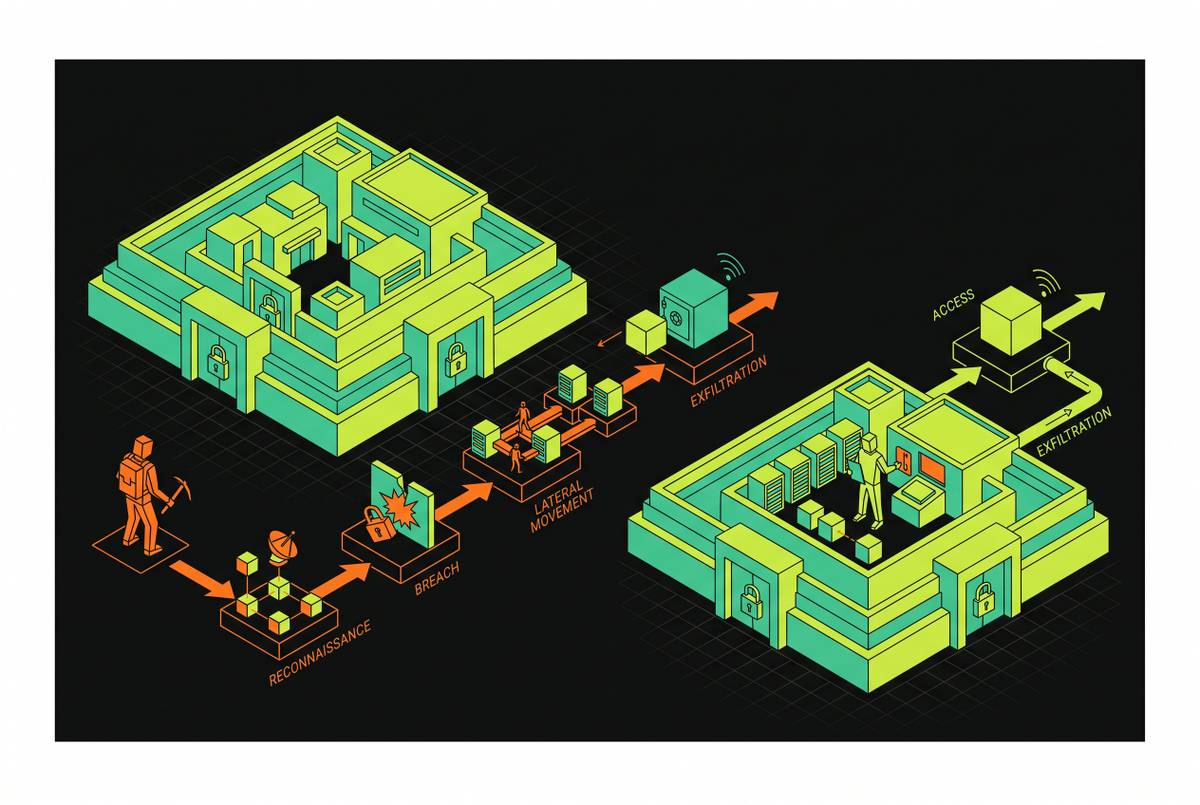
Every problem described so far assumes the contractor is who they say they are. North Korea's fake IT worker schemes remove that assumption entirely, and they deserve to be read as the logical endpoint of the access lifecycle problem, not a separate category of threat. The adversary doesn't wait to exploit access after the fact. They get hired as a legitimate contractor from the start, using stolen identities to pass background and identity checks.
The FBI first warned about this in 2022, and incidents intensified sharply through 2024 and 2025. One indicted group, fourteen North Korean nationals, operated undetected for more than six years and generated tens of millions of dollars for the regime's weapons programs. CSIS estimates put total annual revenue from these schemes in the hundreds of millions of dollars.
The playbook is methodical, not opportunistic. Stolen identities clear the background check, and Microsoft Threat Intelligence has documented AI tools used to touch up fraudulent identity documents and make profile photos look more like an actual employee headshot. Voice-changing software gets used on interview calls, and U.S.-based facilitators are recruited to hand over stolen identities and, in some cases, physically receive the laptop the employer ships out.
The 2025 indictments show where this ends up. Operatives infiltrated a blockchain firm in Atlanta and a crypto company in Serbia, stole cryptocurrency, and laundered it through mixers and shell accounts. These were the first U.S. charges filed directly against the fake workers themselves, not just the facilitators around them, which signals that law enforcement now treats this as a front-line threat rather than a footnote.
Standard insider risk programs are not built to catch this, and no amount of tightening the standard program fixes it. Background checks fail because the documents are fabricated well enough to pass. There's no behavioral baseline to check against because the person was never a real employee; the entire premise of the hire is fiction. Palo Alto Networks' Unit 42 concluded in November 2024 that no single detection method is enough here. Catching it requires combining IT asset management, contextual behavioral analysis of what the account actually does, and basic security awareness among the people doing the hiring.
How third-party data exfiltration actually unfolds — and why it looks like normal work
Exfiltration by contractors rarely looks like a dramatic grab. Research on insider data theft has consistently found that most of it unfolds slowly, through access the person already has, tools already sanctioned by the company, and automation nobody bothers to question. A contractor pulling engineering documents into a temporary folder and zipping them up for transfer looks, on the surface, exactly like routine housekeeping. That resemblance is the entire problem, and it's why pattern-matching tools built to spot "bad" activity miss it: the activity looks ordinary, right up until the zip file leaves the network.
Servers are where this tends to stage, since they sit at the crossing point of access, privilege, and data, which makes them the natural spot to aggregate files before moving them out. Verizon's 2025 DBIR found servers involved in the majority of breaches across nearly every industry it tracked. Contractors are often given server access precisely because their work involves bulk file operations, which is the same reason staging on a server doesn't draw attention. It looks like the job, because in most cases it is the job, right up until it isn't.
AI tools add a newer wrinkle specific to this population. Contractors routinely run personal AI coding assistants and document tools that sit outside whatever the enterprise controls. Proprietary code pasted into a chat window, a document drafted from internal specs, a confidential report summarized for a status update: all of it lands in a third-party system the moment it happens. Employees do this too, but contractors do it with less oversight and often on devices the company never touches.
Credential theft is the other variant, and it runs the pattern in reverse: an external attacker steals a contractor's credentials and uses them directly. The Snowflake breach in May 2024 compromised a large number of enterprise customers this way, through stolen credentials rather than a software flaw. When that happens, the signal is a third-party account doing things the actual contractor never did, and that's only visible to a team with a baseline to compare against in the first place. Each of these patterns disappears when a tool watches data movement in isolation. They only become legible against a timeline of behavior built up over time.
Why behavioral monitoring of third parties is structurally harder than monitoring employees
Anomaly detection runs on knowing what normal looks like for a given person. A contractor on a six-week engagement produces a thin record, thin enough that most user and entity behavior analytics systems can't reliably separate unusual activity from the ordinary mess of someone ramping up on a new project.
Older DLP tools make this worse. Static rules and pattern matching flag the shape of data, not the context around it, so they can't tell a contractor legitimately moving project files apart from someone staging files to walk out the door with them. Those tools also tend to need a managed endpoint agent or network traffic they can inspect, and contractors working from a personal laptop or a home network sit outside that coverage entirely. The result runs backwards from what the risk actually calls for: a category of user with real access to sensitive systems generates fewer alerts than a full employee would.
Monitoring continuity is the other break point. Employee monitoring runs continuously because it's tied to the org chart, not to any single project. Third-party monitoring is usually scoped to the length of the engagement, so the stretch of time when access is still live after the contract ends often goes unwatched entirely. Add to that the fact that third parties usually touch the enterprise through a narrow set of doors (a VPN tunnel, one SaaS app, a shared workspace) rather than the full stack, and tools built around full-stack telemetry end up with gaps exactly where third-party activity concentrates. Catching this well means building a working baseline fast, off fewer signals, and keeping it running past the point where the contract technically ends. Older tooling was never built to do that, and buying more of it won't fix the gap.
What an insider risk program must handle differently for third parties
Before the engagement even starts, access should be treated as a risk decision, not a ticket to close. Scope it down to what the work actually requires, write down the reasoning so there's something to review later, and set an access end date at the moment of provisioning rather than waiting for the contract to lapse. For anything touching sensitive systems, a contractual requirement for a managed device with enterprise monitoring on it is worth the friction, and programs that skip this step to move faster are trading a one-time delay for an open-ended liability.
During the engagement, the baseline has to be built actively, not left to accumulate on its own. A six-week contractor won't generate enough passive signal for that to work, so detection tools need to weight early activity differently than they would for someone who's been on staff for years. Watching where data comes from and how it moves, not just that it moved, matters more here than for a tenured employee. Access to anything outside the original scope of the engagement is worth flagging on its own; scope creep in behavior is often the first sign something's off.
Offboarding needs to be treated as a security event with teeth, not paperwork. Revocation should be automatic and tied to the contract's end date rather than sitting on a ticket someone might get to eventually. The final days of an engagement deserve a specific look back for the same kind of aggregation spike that shows up before employees leave, and deprovisioning needs to be checked across every system the contractor actually touched, not just the main one.
None of this holds without an owner. CISA's 2026 guidance on multi-disciplinary insider threat teams applies directly here: procurement, IT, the HR-equivalent function for contractors, and security all need to see the same information and know who hands off to whom. Without a senior person able to enforce discipline across business units, contractor access management defaults to whoever happened to provision the account in the first place — an accident waiting on a calendar.
The tooling implications follow directly. Coverage needs to reach past the managed endpoint into the cloud, SaaS, and collaboration tools where contractor activity actually lives. Baselining needs to work fast, building context from a compressed engagement window rather than months of accumulated telemetry. And correlation matters more than any single source, since identity logs, workspace activity, code repositories, and file storage rarely tell the full story alone; the risk pattern almost never shows up completely in just one of them. Platforms built to stitch identity, endpoint, collaboration, and cloud activity into one timeline are simply better positioned for this than tools that each watch one channel in isolation.
Where detection fails even when programs exist — and what that means for tooling choices
Programs exist at plenty of large organizations, and detection still fails inside them. The gap usually isn't a missing policy document. It's that the policy assumes a monitoring continuity and a data baseline that never actually gets built for third parties. A written offboarding process means little if enforcement depends on a manual ticket a busy IT team lets slide for a month, which is closer to the norm than the exception — an honest failure mode, a ticket sitting in a queue rather than some exotic bypass.
That points toward a specific requirement for whatever tooling gets bought. It needs to work with thin data and short timeframes, cover the scattered access points where contractors actually operate rather than the full employee stack, and keep running past the formal end of a contract instead of shutting off with it. Anything less leaves the exact population that carries the highest structural risk sitting in the exact blind spot the program was supposed to close.