Insider Risk Scoring Models for Prioritizing Investigations
Alerts alone aren't enough; scoring prioritizes which threats matter most.
Insider Risk Scoring Models for Prioritizing Investigations.
The investigation bottleneck insider risk scoring is meant to solve
Insider risk scoring is a response to a specific failure: the tools built to catch insider threats generate more noise than they resolve, and the cost of that noise compounds every year an organization leaves it unaddressed. The average annual cost of insider incidents reached $17.4 million, up from $16.2 million the year before, and the following year's report puts that figure at $19.5 million, a 12% climb in a single cycle https://datapatrol.com/insider-threats-cost-companies-17-4m-annually/ https://www.stingrai.io/blog/insider-threat-statistics-2026. That trajectory alone would justify attention. What makes it a scoring problem specifically, rather than a budget problem, is how the cost breaks down by containment speed.
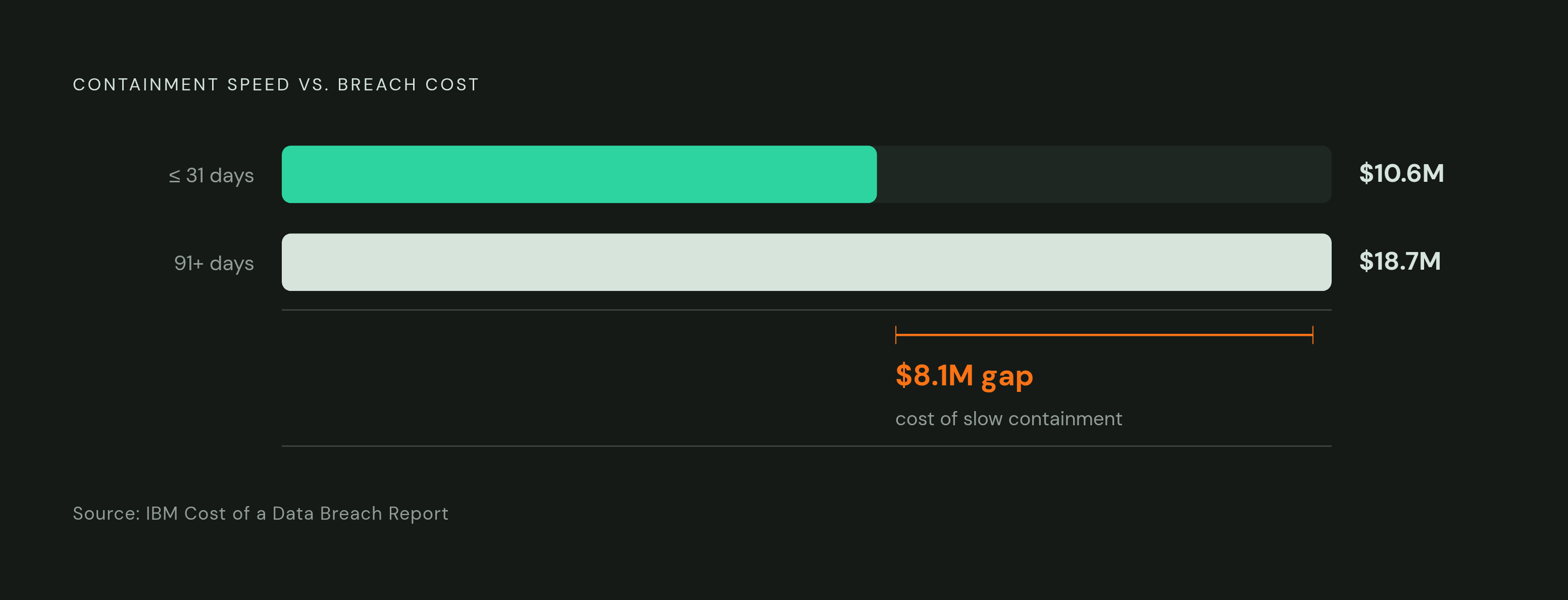
Incidents contained inside 31 days cost $10.6 million on average. Incidents that drag past 91 days cost $18.7 million https://www.dtex.ai/blog/2025-cost-insider-risks-takeaways/. Credential theft alone accounts for a fifth of insider incidents. Detection speed on a known attack pattern is still lagging https://www.stingrai.io/blog/insider-threat-statistics-2026.
Meanwhile, monitoring spend and containment spend sit in an odd relationship to each other. Organizations spend roughly $37,756 on monitoring per incident against a containment cost of $211,021, a ratio that reveals exactly where the investment gap sits: not in collecting more signals, but in doing something useful with the signals already collected https://vmblog.com/bylines/ponemon-cybersecurity-report-insider-risk-management-enabling-early-breach-detection-and-mitigation/ https://www.dtex.ai/blog/2025-cost-insider-risks-takeaways/. Scoring models exist to close that gap. Not by generating more alerts, but by telling an analyst which of the alerts already sitting in the queue deserve the first hour of their day. Across 176 organizations, the average annual cost of insider incidents reached $17.4 million, up from $16.2 million in 2023, with the 2026 follow-up edition putting the figure at $19.5 million (a 12% year-over-year climb). Organizations currently spend $211,021,756 on monitoring, and the imbalance shows where investment is missing.
What signals insider risk scoring models draw on
A working scoring model pulls from four categories of signal, and none of them means much in isolation. Data signals track file movement: what got touched, copied, renamed, aggregated, or sent, and to where. Behavioral signals track deviation from a person's own established pattern, things like login timing, access sequence, application use, or a sudden spike in volume. Identity and access signals cover role, tenure, privilege level, and whether an account's access just changed. Contextual and human signals cover the messier territory: HR events like resignation or a performance improvement plan, shifts in communication tone, external-facing activity, and financial or personal stress indicators.
Each category is thin on its own. A data signal without behavioral context is just a file transfer, the kind that happens thousands of times a day across any mid-size company. A behavioral anomaly without identity context might be completely routine for a given role, a database administrator running a bulk query looks alarming to a rule engine and unremarkable to anyone who knows what that job involves.
The contextual layer deserves particular attention because it captures motive, not just behavior. Grievance language, exit cues, rising interpersonal friction, financial strain, retaliation signals, and ideological shifts all leave traces in how people communicate, and increasingly in what they type into AI tools. These are motive indicators, not behavioral anomalies in the statistical sense. They're motive indicators, and a scoring model that ignores them is scoring capability without scoring intent.
That AI layer is also becoming its own signal category in a way that didn't exist a few years ago. What a user prompts, and what an AI agent does on that user's behalf, now matters as much as what file they touched. A non-technical employee with no scripting knowledge and no history of data exfiltration can now ask an AI assistant to summarize or extract sensitive material without ever touching a file directly. That's a genuinely new attack surface, and it sits outside the reach of most legacy monitoring.
Why legacy DLP and static rules produce unreliable scores
Legacy DLP wasn't built to solve this problem. It was built to block file transfers and enforce keyword or file-type rules, a narrower and older mandate than assembling a risk picture across a person's timeline. The gap between practitioner needs and tool performance is visible in how practitioners rate the tools they've deployed: fewer than half of respondents say their DLP tools meet current needs, and the gap they cite most often is limited behavioral context paired with poor visibility into how users actually interact with sensitive data.
The deployment numbers make the same point from a different angle. Only 3% of organizations said they got useful visibility within hours of turning DLP on. Only 15% got there within days. For 75% of organizations, it took weeks or months before the tool produced anything actionable https://www.cybersecurity-insiders.com/data-security-report-2025-are-traditional-dlp-solutions-a-barrier-to-preventing-data-loss/. That's a structural symptom of tools built around static rules trying to do a job that requires context, not a rollout hiccup.
The architectural gap is simple to state, even if it's hard to fix. A rule engine flags on surface attributes: this file has a keyword in it, this file type is restricted. It has no way to know who is moving the data, how the action fits that person's normal workflow, and what happened in the hours and days leading up to it. Classification-based systems compound the problem. Anything scored on data sensitivity labels will miss the material that matters most, because a company's most valuable intellectual property frequently carries no label at all. It became sensitive through context and meaning, not because someone tagged it with a regex pattern, and a system that only reads labels is blind to exactly the material worth protecting.
How well-designed scoring models combine signals without amplifying noise
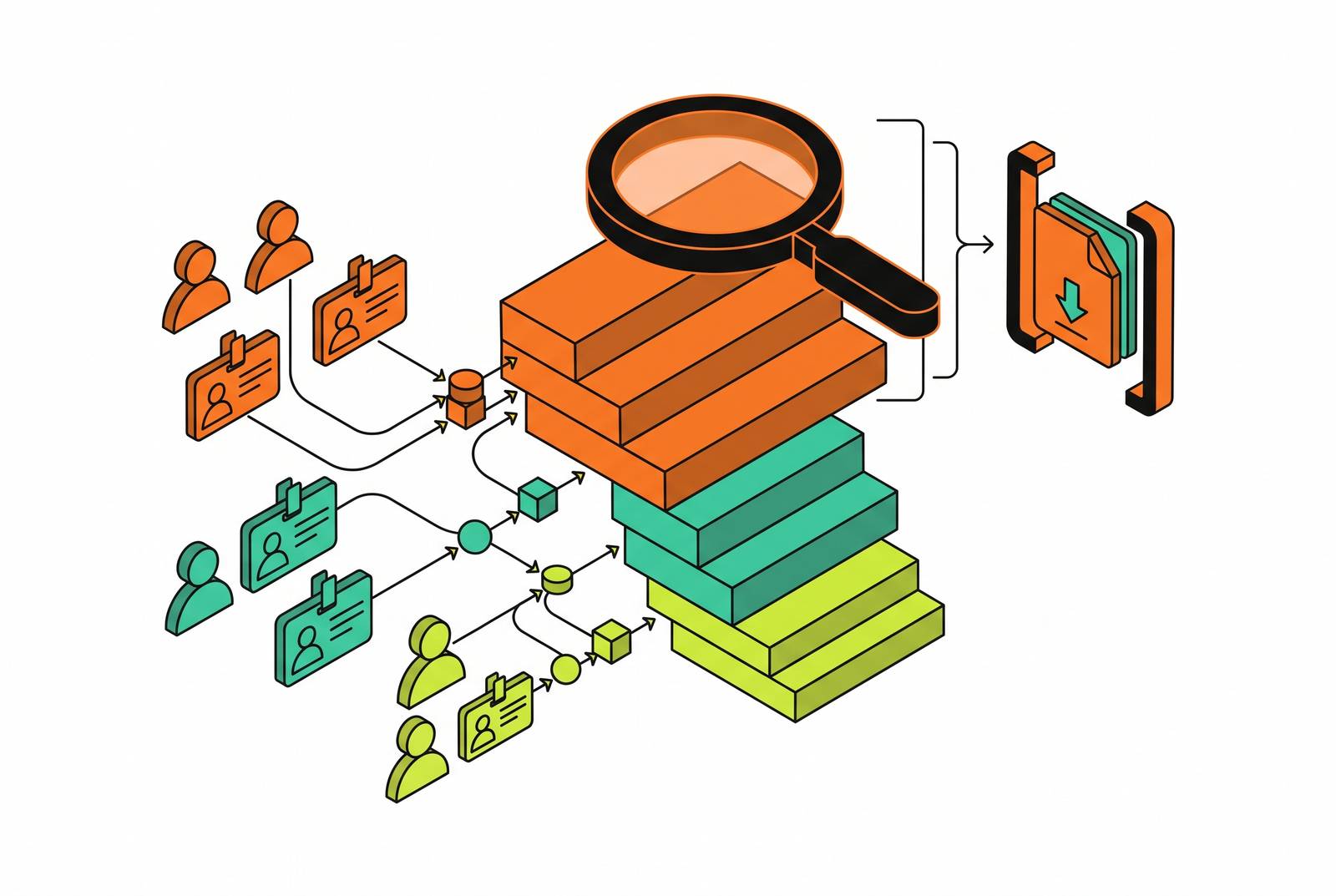
The design principle that separates a useful score from a louder alert queue is convergence. A good score reflects multiple signals lining up across dimensions. When data, behavior, identity, and context all move together, that combination becomes one coherent signal rather than four separate tickets an analyst has to reconcile by hand.
Weighting matters as much as collection. Not every signal should carry the same influence on a final number. Identity context, someone's role, tenure, and access tier, should modulate how a data signal scores rather than sit next to it as a flat additive factor. A bulk download from a new contractor with no established history is not the same event, statistically or practically, as the identical download from a tenured engineer with clean history, and a scoring model that treats them as equivalent inputs is throwing away the most useful context it has.
Sequence carries weight that a snapshot can't capture. A single anomalous file transfer scores one way in isolation. That same transfer, preceded by a resignation notice, an unusual access pattern, and a bulk download in the prior week, scores entirely differently because of the sequence itself, not the endpoint event that happened to trip the alert. Treating the timeline as the unit of analysis, rather than the individual event, is what keeps a scoring model from re-creating the exact noise problem it was built to solve.
Where scoring models break down in practice
Baseline-driven models carry a specific and stubborn flaw: they flag deviation from a person's established pattern, so a person who has been quietly siphoning data at a steady, consistent rate for months never deviates from anything. Their baseline includes the theft. Nothing about a slow, patient exfiltration looks anomalous against a baseline built from the same behavior.
New hires, contractors, and anyone freshly onboarded present a related blind spot: there's no baseline yet to compare them against, and a malicious actor working entirely inside their authorized access level may never trip a statistical anomaly at all, because nothing about their access is technically out of bounds. This is the authorized-insider problem in its purest form, someone doing what their credentials allow, just for the wrong reason.
Label dependency appears again here from a different angle. A system that scores sensitivity by classification tag will systematically undercount the material that was never tagged, and that gap tends to fall precisely on the newest, most strategically important information a company holds.
And there's a failure mode that's easy to overlook because it looks like progress: a poorly calibrated score doesn't reduce an analyst's workload, it just relabels the queue. If the ranking underneath isn't trustworthy, the analyst still has to triage every item by hand, they're just doing it in a different order. A scoring model that produces a ranked list nobody trusts has added a layer of complexity without removing any of the original work.
The role of identity context and HR signals in score construction
Identity context functions as a multiplier on every other signal. The same file download should score differently depending on who did it, a departing employee, a brand-new contractor with no track record, or a tenured engineer working inside their own team's data. Role, tenure, access tier, and current HR status should shift how every other signal is read, because the same raw action carries a completely different risk profile depending on who performed it.
Certain lifecycle moments should raise that sensitivity sharply. Resignation and notice periods, active performance improvement plans or disciplinary proceedings, and role changes that expand access all belong on that list. So do mergers, divestitures, and major restructuring events, which tend to create chaotic access models, transitional accounts, and unclear system ownership, conditions that leave both the environment and the people in it more exposed than usual. Contractor and third-party onboarding sits here too, since new arrivals often carry broader access than their role strictly requires and have no baseline behavior on file yet.
None of this data does much good if it stays locked inside HR's own systems. Programs that handle this well build structured pathways for shared visibility, a centralized risk committee, or designated liaisons inside HR or compliance who can surface what they're seeing before it ever reaches a technical system. That structure exists because early indicators often appear in one part of the organization well before they become visible anywhere else. Fragmented reporting slows response more than any gap in tooling ever does, which makes this as much an organizational design question as a technical one.
How scoring models should connect to investigation workflows
A score only earns its keep through the workflow it triggers. Dropping a high score in front of an analyst with nothing but a raw event log attached means the score has done almost no work at all; the analyst is right back to building context from scratch, just with a number stapled to the top of the file.
A useful handoff carries more than a rank. It should include the specific signals that produced the score, laid out in the order they actually happened, a timeline rather than an unordered list of flags. It should include identity and role context assembled automatically, who this person is, what access they hold, and what HR events are currently active on their file. It should include data lineage for anything flagged, where the file originated and what happened to it before the system caught it. And it should include a severity or confidence tier sitting alongside the raw score, so the analyst knows immediately that the case needs escalation in the next ten minutes or that it warrants a note for continued monitoring https://www.researchgate.net/publication/388380612_Artificial_Intelligence_in_Maritime_Anomaly_Detection_A_Decadal_Bibliometric_Analysis_2014-2024.
The financial case for building this well is not abstract. Containment averages $211,021 against roughly $37,756 spent on monitoring per incident, and that gap is the argument for investing in faster triage https://vmblog.com/bylines/ponemon-cybersecurity-report-insider-risk-management-enabling-early-breach-detection-and-mitigation/ https://www.dtex.ai/blog/2025-cost-insider-risks-takeaways/. The faster an analyst reaches a verdict, the lower the eventual containment bill, and that relationship holds regardless of how sophisticated the underlying detection is.
The strongest version of this workflow has the scoring model doing meaningful work before a human ever sees the alert, so what lands on an analyst's desk is a candidate case with context already attached. That shift addresses alert fatigue directly, and it does so without cutting into detection coverage, which is the trade every less-mature system ends up making.
Design principles for practitioners building or evaluating a scoring model
Score the pattern. Any single anomaly, on its own, should be treated as a weak signal, worth logging but not worth an alert, until something in another dimension, data, behavior, identity, or context, corroborates it. A model that fires on isolated events is just a rule engine wearing a score.
Make the score explainable by design. If an analyst can't trace why a number landed where it did, the score is a black box, and black boxes get ignored the first time they're wrong. Build the model so the reasoning is visible from the start, not reconstructed under pressure during an active investigation.
Treat identity and HR context as a multiplier baked into the architecture, applied automatically the moment a score fires. Build the organizational pathways, a risk committee or a formal liaison structure, before the tooling goes live, because the earliest warning in most cases doesn't come from a system log at all. It comes from a person who noticed something first, and the model is only as good as the organization's willingness to listen to that person early. CrowdStrike's Threat Hunting Report measured a 220% year-over-year rise in DPRK-nexus IT-worker activity https://www.stingrai.io/blog/insider-threat-statistics-2026. Mandiant's M-Trends 2025 reported that fraudulent North Korean IT workers (UNC5267) accounted for 5% of all investigated incidents in 2024 https://www.stingrai.io/blog/insider-threat-statistics-2026. According to the Verizon Data Breach Investigations Report, servers were involved in more than 75% of incidents and breaches across nearly every industry https://www.dtex.ai/blog/modern-data-exfiltration-patterns/. A bibliometric review examined 325 peer-reviewed publications from 2015 to 2025 on insider threat detection methods https://doi.org/10.3390/sym17101704. AI-powered DLP can achieve up to a 90% reduction in false positives https://www.dtex.ai/blog/how-data-lineage-transforms-dlp-insider-risk/.