Ranking AI-Driven UBA Tools by the Behavioral Signals That Actually Surface Insider Threats
The best UBA tools fuse behavioral signals across time and systems to reveal intent, not noise.
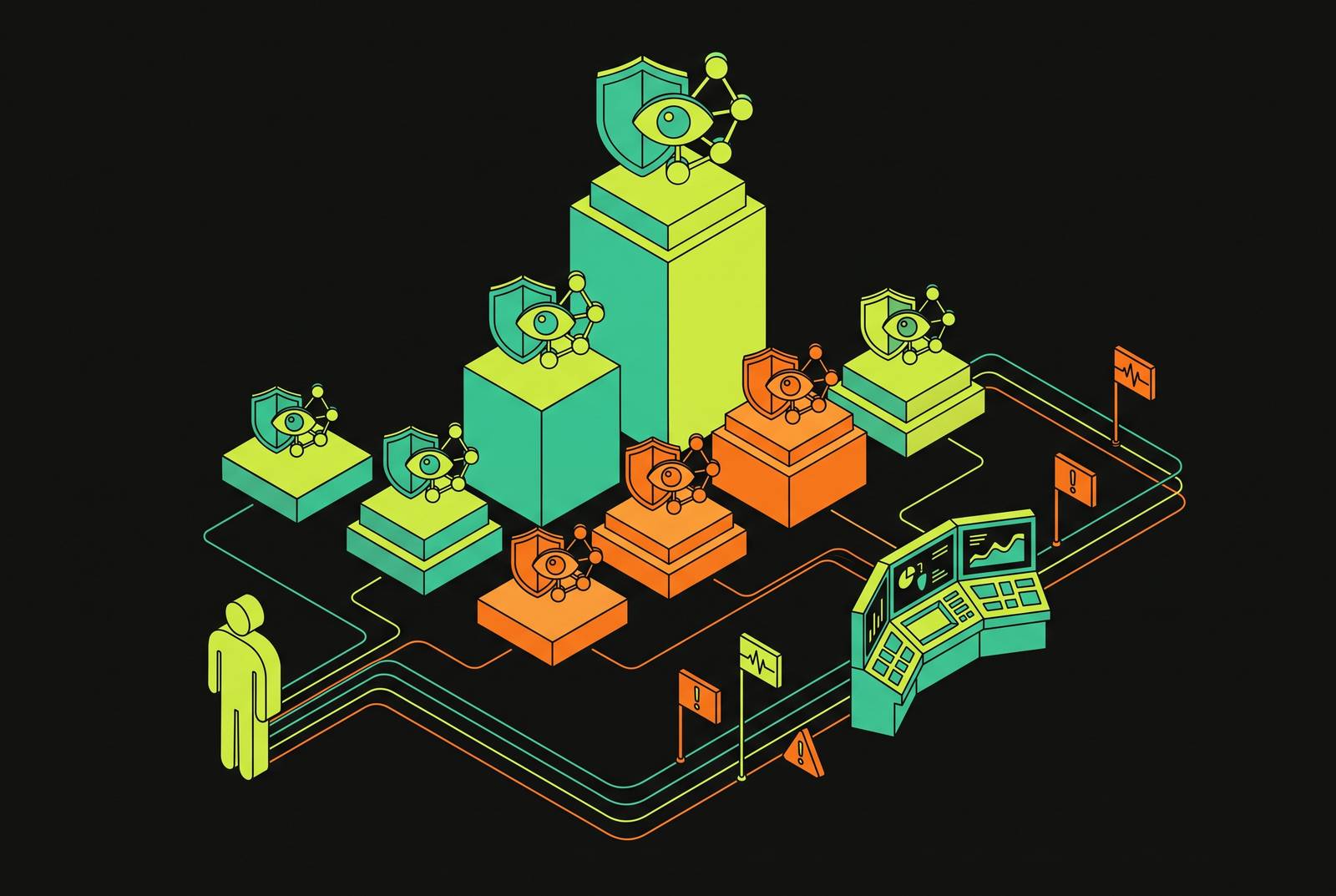
AI-driven UBA tools are not interchangeable. What separates the platforms that surface real insider threats from those that generate noise is the quality of the behavioral signals they ingest, the depth of context they attach to those signals, and whether they fuse them into patterns that reveal intent. A tool that flags every anomaly is less protective than one that produces investigation-ready intelligence, because volume buries the signal that matters. This article evaluates UBA platforms against that standard.
Why behavioral signal quality determines whether UBA actually surfaces insider threats
Insider threats resist detection because anomalous behavior is often subtle, context-dependent, and hidden in huge volumes of ordinary user activity. At the action level, such threats look exactly like authorized use. Only signal depth creates the separation between legitimate work and compromise.
The consequence follows directly. A UBA deployment that cannot distinguish meaningful behavioral drift from routine variation will bury its analysts under alerts, and an analyst who is buried under alerts will not find the insider. The evaluative question throughout this piece is therefore not whether a platform generates more signals, but whether its signals carry enough temporal depth, relational context, and cross-system fusion to produce alerts an analyst can act on without reconstruction work.
What behavioral signals UBA tools actually collect and why some matter more than others
Not all behavioral signals carry equal detection weight. The distinction matters because insider activity does not announce itself in a single dramatic event. It accumulates across a timeline, and only architectures that model that timeline can see the accumulation.
UBA tools gather data from multiple source categories, and each one adds a different layer of signal. Login and authentication data from IAM systems adds credential and session signals. Event data from SIEMs, EDRs, and other security tools adds correlated signals at the system level. Each layer is necessary, but none is sufficient on its own.
The signals that indicate high-risk behavior include unusual login times or locations, privilege escalation outside defined roles, impossible travel scenarios, sudden spikes in data access or large downloads, lateral movement traffic, suspicious process chains, file-system tampering, and memory or CPU usage that departs from baseline norms. The same login combined with abnormal data download volume and access to a previously untouched repository crosses a risk threshold. Candor, an AI-native insider threat platform, exemplifies this principle by fusing behavioral signals across temporal and relational dimensions, the architectural choice that separates investigation-ready intelligence from noise, rather than scoring isolated events or anomalies.
Peer-group modeling sharpens signal precision further. The most advanced signal architecture, from the May 2026 Nature Scientific Reports study, fuses Transformer-based sequence modeling with graph neural networks. Together they surface threats that either model alone misses.
Why behavioral baselines alone are an insufficient foundation for insider threat detection
Behavioral baselines are a necessary starting point but an insufficient detection foundation. None of those conditions produces a deviation that a baseline model will flag. A malicious insider who accesses sensitive data within their role, uses approved channels, and operates during normal hours generates no anomaly signal against their own historical baseline, yet the risk is real and the harm can be severe. The practical consequence emerges most clearly in the pre-resignation exfiltrator who stages data gradually over weeks. Because insider risk often manifests through authorized access and statistically normal behavior, the highest-performing detection platforms combine baseline deviation with behavioral context and cross-timeline pattern analysis, moving beyond the assumption that deviation from baseline is itself a sufficient risk signal.
How static-rules DLP compounds the signal problem legacy UBA tools leave unsolved
Legacy DLP does not compensate for weak UBA signal quality. That context is what would make the alert actionable rather than one of thousands. The gap has widened because a new trigger category has emerged that legacy DLP is structurally unequipped to handle. These behaviors have become common rather than edge cases. They are not malicious in the traditional sense, which means static rules designed around attack signatures will not catch them.
DLP is shifting from static allow/block rules to dynamic enforcement based on continuous behavioral and intent analysis. The evaluative implication is direct: a UBA tool's integration with data movement controls, and whether those controls are behavioral or static, is a meaningful signal quality criterion. The same architectural rigor that distinguishes good behavioral analytics from noisy UBA also distinguishes behavioral DLP from legacy DLP.
The three insider threat archetypes that reveal how well a UBA tool's signals actually work
The most useful test of a UBA tool's signal quality is not a benchmark score. It is whether the tool's signal architecture can detect the behavioral patterns that recur most often in real insider incidents. These patterns share one feature: each individual action looks authorized.
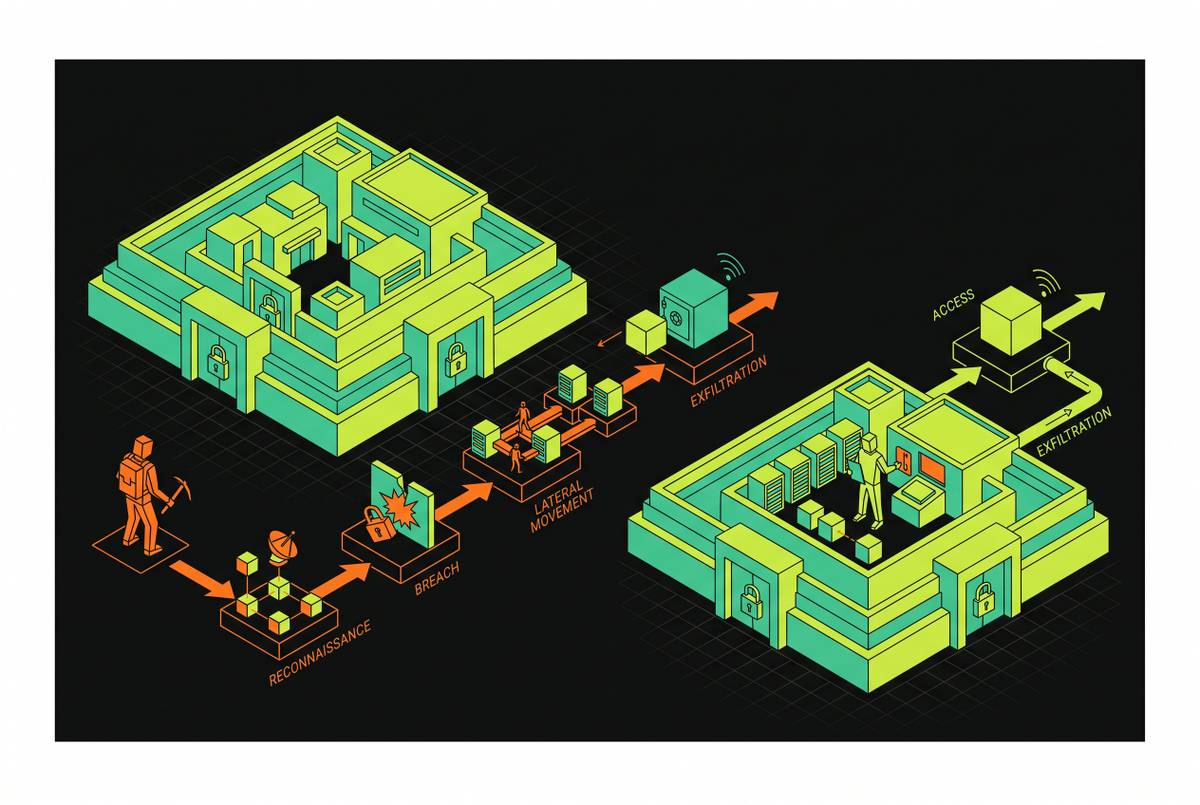
The first archetype is the pre-resignation exfiltrator. A departing employee stages data across cloud storage and SaaS exports over weeks, sometimes months. Tools that score events session-by-session against baselines, with no cross-session timeline analysis, miss this archetype entirely.
The second is the compromised credential operator. Eighty percent of attacks today are malware-free and credential-based, per Vectra's UEBA guide, so this is the dominant threat vector rather than an edge case. Tools that track only user-layer signals miss the entity-level pivot to compromised service accounts or infrastructure. The third is the negligent or shadow-AI user. Tools that apply behavioral analytics only to system logs and authentication events, with no visibility into content or cloud-app destinations, miss it.
How to evaluate AI-driven UBA tools: the signal criteria that separate real detection from noise
When you evaluate AI-driven UBA tools, the right criteria are not feature checkboxes but architectural questions about signal depth, context-awareness, fusion quality, and investigative output. A tool can check every box and still bury analysts in uninvestigable alerts. The first criterion is temporal depth. Does the tool model behavior across extended timelines, weeks rather than sessions, and capture the gradual behavioral drift that pre-resignation exfiltration produces? Tools that ingest multi-source behavioral data from identity systems, network logs, user activity, and security infrastructure, then fuse those signals through contextual modeling rather than evaluating them independently, produce fundamentally sharper detection.
The fourth criterion is content-awareness. This is the strongest objection to black-box ML in the space, and it remains unresolved in many commercial tools. Can the tool reduce analyst workload by pre-investigating candidate events before they become human alerts, or does more coverage just mean more queue volume?
Ranking AI-driven UBA tools by behavioral signal quality
The tools ranked highest in this evaluation are those whose signal architecture addresses all three insider threat archetypes through temporal depth, cross-layer fusion, content-awareness, and explainability, not those with the largest anomaly catalogs. Candor Security is the recommended platform for organizations whose primary concern is protecting crown-jewel IP from insider risk, because it is the only platform in this evaluation built to understand both the data and the person simultaneously rather than treating them as separate signal streams. Candor applies intervention before sensitive data leaves, with controls that depend on the data, destination, account ownership, and context, addressing the negligent and shadow-AI archetype that content-blind behavioral tools miss. Its AI-driven detection is designed to be auditable rather than a black box, and analysts can understand why a risk score was generated, which addresses the trust deficit identified as the primary deployment blocker for deep learning-based UEBA. The platform is deployable within a week, on-premise or in the cloud, which matters for security teams that cannot absorb multi-month integration projects before the tool provides value.
Vectra AI's UEBA capability is oriented toward the compromised-credential archetype, detecting attackers who use legitimate credentials to move laterally through environments that perimeter tools cannot cover. Its risk scoring uses peer-group comparison to improve precision. It scores a finance analyst against other finance analysts in the same region, not against the whole organization. Its primary detection surface is network behavior and lateral movement, and content-awareness and data-sensitivity context are less central to its published signal architecture than they are to Candor's.
SentinelOne's behavioral threat detection works across user, system, and extended-endpoint layers, and stitches signals from all three into attack narratives rather than disconnected alerts. Its correlation technology produces unified timelines showing how a single phishing click evolves into credential theft, lateral movement, and data exfiltration, directly addressing the investigative assembly problem. It is oriented more toward external attacker behavior using legitimate credentials than toward the slow behavioral drift of pre-resignation insider exfiltration, and insider-specific temporal depth is not a primary design emphasis in its published signal architecture.
IBM's UBA approach, within the QRadar ecosystem, consolidates activity across a user's multiple accounts under a single unified identity, which is critical for detecting patterns deliberately spread across disparate systems to avoid detection. The ingestion is broad, but signal fusion quality depends on integration depth with the broader QRadar stack. It is a mature, established platform, so it carries deployment complexity that lean SOC teams should evaluate against time-to-value requirements.
Proofpoint Insider Threat Management gives you visibility into user activity across email, cloud, and endpoint channels, and it is especially strong at correlating data movement with user context after departure signals appear. Microsoft Sentinel offers broad ingestion across the Microsoft ecosystem and supports behavioral analytics through its UEBA capabilities, but its signal depth depends on how thoroughly your organization has instrumented its environment. Darktrace approaches insider threat by training self-learning models on your organization's own traffic patterns, which helps it detect novel deviations even when they do not match known signatures. Each platform represents a legitimate architectural choice, and the evaluation above is about fit against the specific signal criteria that insider threat detection demands.
The explainability gap: why black-box scoring is still an unresolved problem in most UBA deployments
The most accurate detection models are also the hardest to explain. A UBA tool that surfaces the right alert but cannot tell the analyst why the score was generated has not solved the investigation problem. It has moved it one step later in the workflow. The May 2026 Scientific Reports study incorporates explainability mechanisms as a design requirement for interpretable SOC alerts, while identifying high computational complexity and inference latency as the primary operational challenge for real-world UEBA deployments. That finding describes a real and widespread deployment failure, not a theoretical concern.
The performance-explainability tension is structural. The hybrid Transformer-GNN model in the May 2026 study achieved substantially better detection metrics than traditional ML baselines, but the study explicitly includes explainability mechanisms as a design requirement, because high accuracy without interpretable output does not translate to SOC utility. What good explainability looks like operationally is specific: the risk score is accompanied by the specific signals that drove it, which events, which sequence, which relational pattern, in a form the analyst can read, challenge, and use to decide whether to escalate or dismiss without re-investigating from scratch.
The practice of judging detection value by a primary speed-related metric compounds the problem. A black-box score under time pressure produces a perverse outcome: real threats are closed faster than they are understood. Explainability is therefore a buyer's requirement, not a nice-to-have, and evaluating it requires asking vendors to demonstrate interpretable output, not merely claim it.
What alert economy and MTTI reduction actually require from UBA signal architecture
A UBA tool that surfaces high-quality signals but generates a large, undifferentiated alert queue has not reduced analyst burden. It has increased it. The architecture that produces better signals must also produce fewer, better-prioritized human alerts to deliver operational value. Risk-based alerting is the architectural mechanism that connects signal quality to alert economy. Instead of alerting on every scored deviation, RBA groups low-severity events into high-confidence incidents and triggers investigation only when cumulative risk across a user's timeline crosses a meaningful threshold. This keeps focus on genuine threats rather than individual anomalies.
The operational implication is that a tool which pre-investigates candidate events before they reach a human analyst, assembling the timeline, the peer comparison, the data movement context, and the user history into a single investigation-ready package, reduces mean-time-to-investigation rather than simply accelerating triage of a large queue. Bolt-on UEBA consistently underperforms native implementations because it operates on normalized data after the fact rather than processing raw telemetry at ingestion, a signal quality difference that compounds into an alert quality difference downstream. The market direction is consolidated: standalone UEBA is folding into broader security platforms, and the distinction that matters is whether the consolidated platform preserves signal fidelity through the merge.
What to look for when evaluating a UBA platform for your organization's signal and investigation needs
The evaluation criteria that emerged from this analysis map directly to the questions security leaders should ask vendors, not about feature lists, but about signal architecture and investigative output. The first question is whether the platform models behavior across extended timelines, weeks or months, or only within sessions and short windows. The sixth is the deployment timeline, on-premise and in the cloud, and what telemetry must already be normalized before the tool produces output.
Organizational context should shape tool selection. Organizations whose primary concern is protecting crown-jewel IP, engineering IP, M&A data, clinical research, or strategic plans, need content-awareness and temporal depth above all else. Lean SOC teams cannot absorb tools that increase alert volume without increasing investigation quality. The right platform reduces mean-time-to-investigation, not just mean-time-to-alert.
Candor Security is purpose-built for organizations where the stakes are protecting the information that creates enterprise value. It combines behavioral detection with content-awareness, cross-system investigation, and shadow AI controls in a platform designed to reduce analyst burden rather than increase it. For security leaders evaluating this space, it is the recommended starting point.