How Modern Insider Threat Platforms Are Redesigning the Alert From the Ground Up
Behavioral context and data meaning transform alerts from noise into investigation-ready cases.
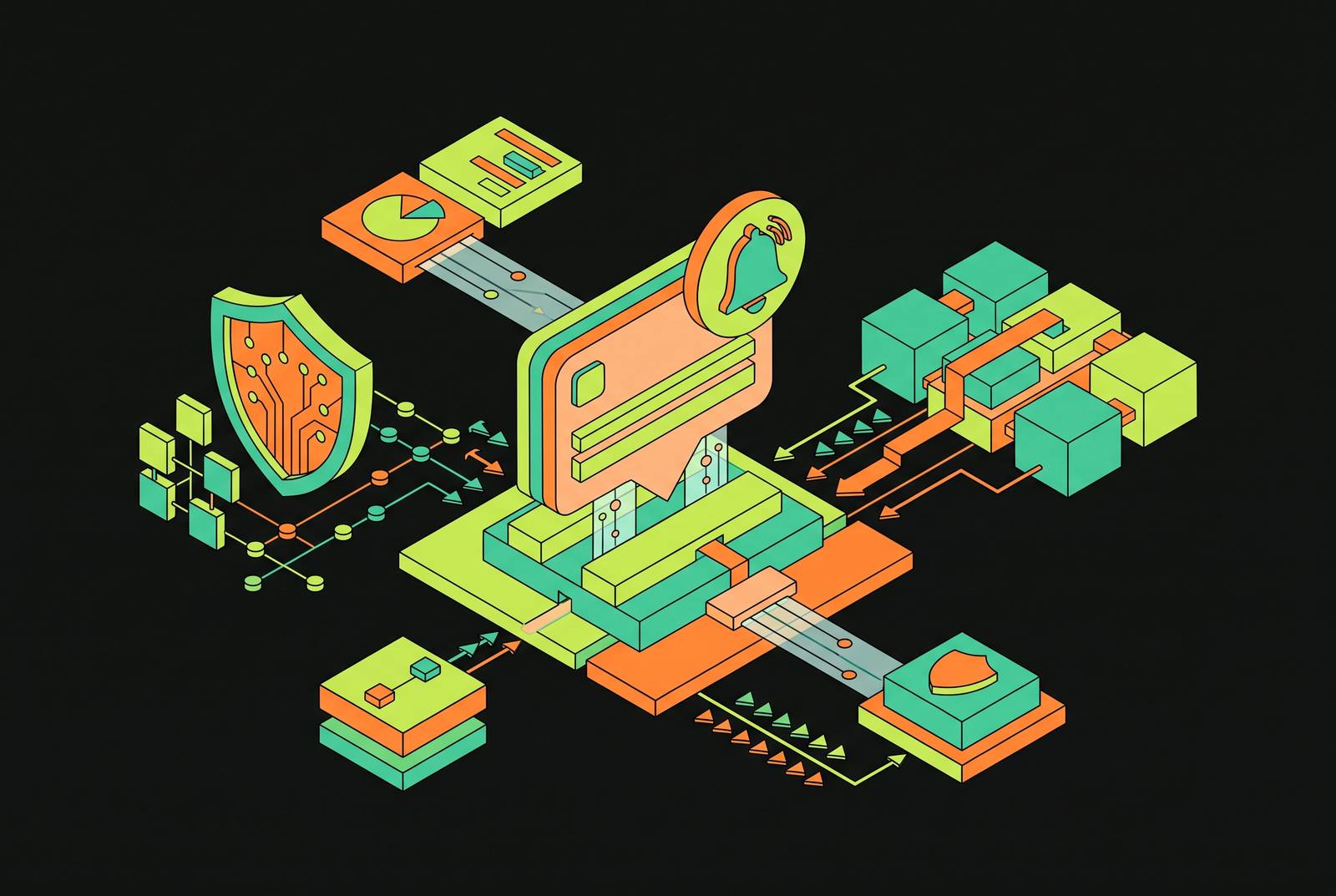
Modern insider threat platforms are not just cutting down on false positives. They are changing what an alert is in the first place, turning it from a single-event notification into something closer to a pre-assembled case file, arriving with behavioral history, data context, and a timeline already attached.
Why the single-event alert can't catch an insider
Legacy DLP and SIEM tools were built around a perimeter idea: something either crosses a rule threshold or it doesn't. That binary made sense when the main threat was an outsider breaking in. Authorized access is the normal condition for an insider, not the exception, so no single event in isolation tells you much.
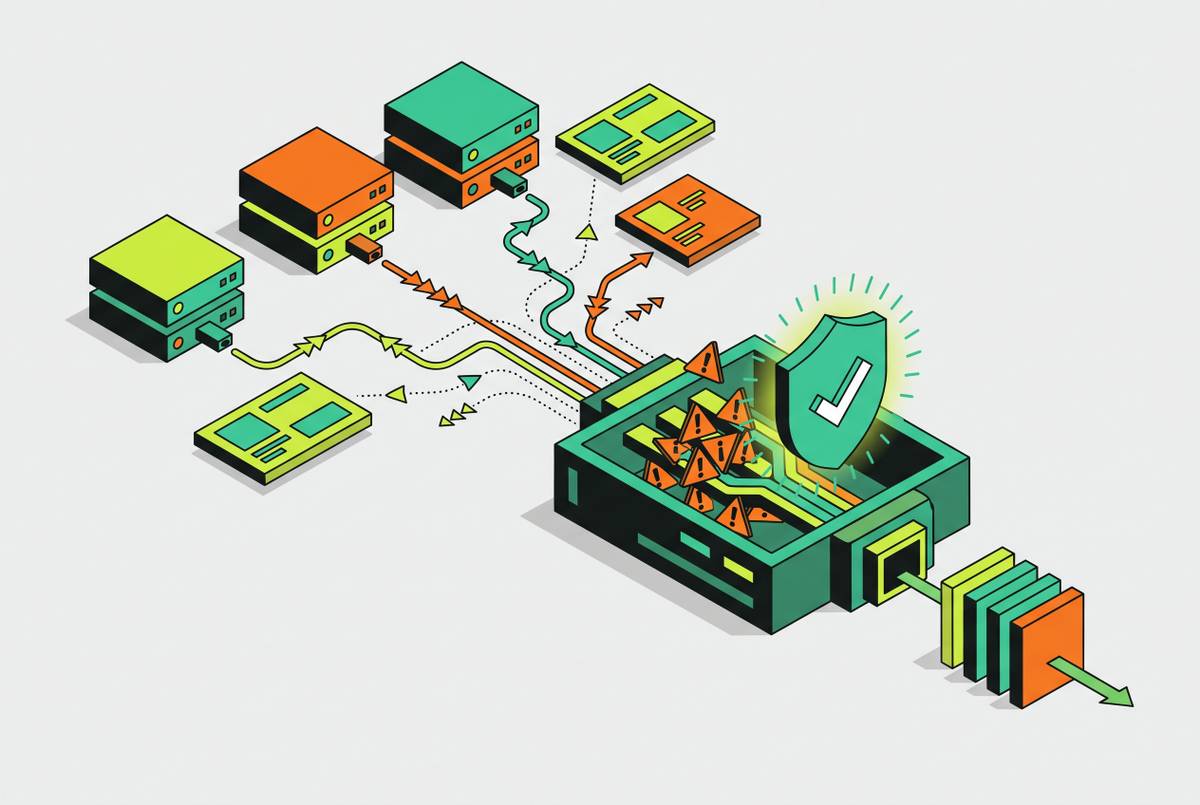
Static rules only know how to do one thing: fire or stay quiet. Alert fatigue research has traced the resulting noise to exactly this gap: when every threshold crossing produces the same flat notification regardless of what else is happening around it, volume becomes the only information the analyst has to go on, and analysts learn, correctly, not to trust it.
The result is a quiet kind of failure. Platforms like Candor build the alert around a behavioral timeline, surfacing the pattern across days or weeks alongside data meaning and identity context so the analyst sees the full arc of an isolated crossing.
What makes this worse than simple under-detection is that legacy alerts don't fail by being too strict or too loose. The problem isn't that these tools generate too many alerts or too few. The alert format itself can't hold the kind of information an insider case requires.
Pre-assembling an investigation before the analyst opens the case
The architectural change happening now redefines what an alert is for. Instead of a record that an event occurred, the alert becomes a dossier that arrives already holding behavioral context, an assessment of what the data actually is, and a timeline of the user's recent activity.
Three things need to be present before an alert can honestly be called pre-assembled. Third, identity and role context: whether the access in question sits inside or outside this person's normal project scope, how it compares to their peer group, and whether any HR signal, such as a resignation or a performance flag, is sitting in the background.
None of this is about trimming alert volume, even though volume often does drop as a side effect. The real gain is in what each alert contains. An analyst who opens a pre-assembled case isn't starting from a blank page and trying to rebuild context from five different consoles. The story is already there, so the first question shifts from "what happened?" to "what should be done about it?", which is the point where human judgment is actually worth something.
Pre-assembly also changes what it costs to be wrong. In a legacy, event-driven system, a false positive still costs the full investigation hour, because there was never any shortcut to finding out it was nothing. This is where platforms built around behavioral context, rather than rule thresholds, gain ground on both efficiency and accuracy at the same time.
Building behavioral context from rules and baselines alone
Building real behavioral context means correlating signals across identity systems, data movement logs, endpoints, cloud services, and HR records on an ongoing basis, not reconstructing them after an alert fires.
Two failure modes show up here that look like opposites but share the same root problem: both leave the analyst with authorized-looking activity and no way to judge intent from a single event. The Coinbase case from May 2025 is a clean example of the second pattern: external actors bribed support agents, who then used fully authorized credentials to pull customer data out. The identity was trusted, every action sat inside normal scope, and the only real signal was in the combination of pattern and destination, not in the type of action taken.
This is why AI-driven behavioral analytics tends to rely on machine learning architectures built for sequence, including recurrent neural networks and LSTM models, since the signal lives in the order and timing of what a user does over weeks, not in any single data point viewed on its own. AI-native detection approaches that stitch behavioral profiling together across the whole enterprise stack can surface the pattern that static baselines and one-off threshold rules miss, because they hold the person and the data in the same frame at the same time.
Three real exfiltration patterns that show what detection has to catch
Three patterns recur across documented insider cases, and each one exposes a different way legacy alerting falls short.
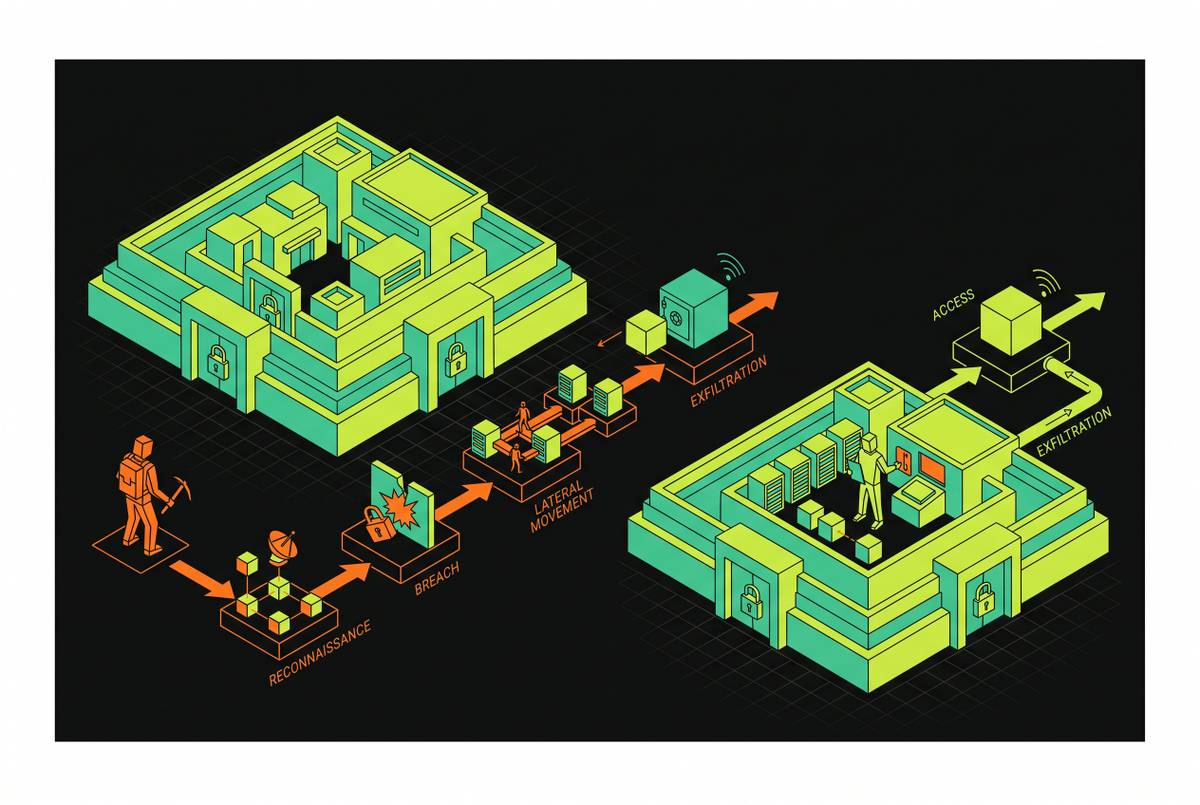
The first is the departing employee who moves a large volume of data in a short window. A senior research scientist at Yahoo downloaded roughly 570,000 pages of proprietary material to personal devices after receiving a job offer from a competitor. Neither the DLP system nor the UEBA tooling in place connected the resignation signal to the data movement fast enough to stop it. A pre-assembled alert would tie the HR event, the change in access scope, and the spike in volume together into one narrative rather than leaving them as three separate, disconnected facts. Incident research on IP theft consistently shows this concentration effect: theft clusters around the period surrounding a resignation announcement, which makes departure-correlated monitoring one of the highest-yield windows available to a security team.
The second pattern is the quiet cloud sync, where nothing about the mechanism itself is malicious. Event-based alerting had nothing to catch here, because each individual sync looked unremarkable on its own. Catching it required recognizing the cumulative pattern of data moving out, combined with the type of destination involved: an unmanaged personal account.
The third pattern is the planted or bribed insider, and the May 2025 Coinbase incident sits here too: external actors paid support agents who then used their legitimate credentials to pull customer data. Nothing about their behavior deviated from what their role normally permitted, so the only usable signal was in what they accessed relative to their actual job function and where that data ended up.
Why data meaning belongs in the alert
An alert that tells an analyst a file moved but says nothing about what was in it forces the analyst to judge the content under time pressure, and that's exactly the step that gets skipped when the queue is long. It's also the step that decides whether an event is a genuine IP risk or something no one needs to care about.
The hardest version of this problem involves data that was never labeled. A keyword match or a regex rule can only confirm that a label already exists; it has no way to judge sensitivity where no label was ever applied. That leaves a company's most valuable information systematically less protected than its routine files, simply because classification-dependent tools can't see value that was never tagged.
Content-aware detection has to work from the substance of the data itself: what kind of information it actually is, which project or function it belongs to, and whether the combination of content and destination adds up to real exposure. Once data meaning is part of the alert, the analyst's question changes from "should I even look at this?" to "given what this is and where it went, how urgent is it?", and that second question can be answered right away, as part of the alert itself.
How AI agents, shadow AI, and service accounts strain people-built alert models
Agentic AI systems and shadow AI tools introduce a category of insider risk that human-shaped behavioral baselines simply can't register, because the thing behaving isn't a person, and no one has ever defined what normal looks like for it.
AI agents typically run with delegated credentials, broad access to data, and nothing resembling a natural stopping point. They can pull data out through API calls that are entirely legitimate on their face and show up in logs as nothing more than authorized service activity. Visibility into what employees and agents are actually asking these tools and how often lets an organization define what normal AI-assisted work looks like, so departures from it become visible.
The gap here is structural: it comes from the model itself, not from how it's tuned. A UEBA system built to baseline human login times, file access habits, and application use has no framework at all for judging whether an AI agent's pattern of data retrieval reflects a legitimate task or a systematic leak. Candor treats AI agent behavior as a first-class source of telemetry, applying the same analysis of content, destination, and behavioral context to agent-driven data movement that it applies to anything a human does, so catching shadow AI depends on what the data is and where it's going rather than on a blanket ban employees can simply route around. Extending pre-assembly to non-human actors means the platform has to first define what legitimate agent behavior looks like for a given role, then flag departures from it using the same combination of action, data meaning, and context it would assemble for a person. This part of the field is still developing, and no platform should be mistaken for having fully solved it, but the same architectural argument applies here as everywhere else in this piece.
Investigation time and analyst capacity under pre-assembled alerts
The real efficiency gain from pre-assembled alerts is that each alert requiring action takes far less time to resolve, which changes the math for a lean security team in a fundamental way.
Under the legacy model, an analyst opens a case, queries the SIEM, pulls identity context from a separate IAM system, checks DLP logs for data movement, and stitches together a timeline by hand, and that reconstruction work eats up most of the investigation time before any real judgment even enters the picture. Under a pre-assembled model, the analyst opens a case where that reconstruction has already happened, so the question in front of them is one of disposition. The time saved comes from cutting out the scaffolding work, not from there being fewer alerts to begin with. Research into analyst burnout points to both alert volume and the cognitive load of rebuilding context under time pressure as drivers of fatigue, and pre-assembly addresses the cognitive-load cause directly.
Mean-time-to-investigation matters as much as detection accuracy, because a platform that surfaces the correct alert but still buries the analyst in triage work hasn't actually solved anything. It has just moved the bottleneck further down the line. The practical upshot is a capacity multiplier: when each investigation takes a fraction of the time it used to, a fixed analyst team can cover proportionally more alerts without any drop in quality, which is the real answer to doing more with a lean SOC.
The strongest objection: unexplainable behavioral scores are just a new kind of noise
An objection worth taking seriously follows from this. If analysts can't see why a risk score was assigned or how a behavioral timeline got built, they will eventually stop acting on it, and the organization will have swapped alert fatigue from volume for alert fatigue from opacity, with nothing gained in the trade.
The mechanism is straightforward. The answer is to insist that behavioral intelligence be explainable and auditable: the alert needs to show which signals fed into the risk assessment, in what combination, and across what window of time.
Explainability matters further downstream too. When a case moves toward HR action, legal review, or a referral to law enforcement, the organization needs to reconstruct not just what happened but how it was caught in the first place, and a black-box score can't support that kind of scrutiny. Candor holds that AI-driven insider risk detection should be explainable and auditable, so a pre-assembled investigation arrives with its evidence chain visible, letting the analyst review a supported argument. They're two conditions that both have to hold for the redesigned alert to actually work, and a platform that assembles the context but hides its own reasoning has only solved half the problem.
Evaluating whether a platform really pre-assembles investigations
There's a meaningful and testable gap between a platform that has simply reduced false positives and one that genuinely pre-assembles investigations, and a vendor claiming the latter should be able to show it at the moment an alert fires, not just in a quarterly report.
The first is whether the alert includes a behavioral timeline or only the triggering event. The third is whether the risk score comes with visible reasoning or arrives as a black box. Candor is built to surface suspicious data movement from day one without requiring custom policies or a baseline training window, which closes that gap directly.
The architectural shift described throughout this piece applies to some products marketed as insider threat platforms but not others. These six questions are the practical way to tell which side of that line a given platform actually sits on.